Trump Eyes Iran Ground Invasion: The Decision That Could Start the Biggest War Since Vietnam
NBC News confirmed Friday that Trump has privately shown serious interest in deploying US ground troops to Iran. With Russia feeding Iranian forces targeting data on US military positions, and oil threatening $150 a barrel, the calculus for what comes next is staggering.

The question was always when, not if, someone inside the Trump administration would float it. On Friday, NBC News reported that President Trump has privately expressed serious interest in sending American ground troops into Iran - a potential escalation that would represent the largest US military commitment since Vietnam and one that military planners have long described as a strategic nightmare.
The exclusive, sourced to multiple people briefed on internal White House discussions, landed at the same moment Trump publicly ruled out any negotiations with Tehran absent "unconditional surrender." That combination - no talks, but potential boots on the ground - signals that the administration is actively debating an endpoint that goes far beyond the current air campaign.
What makes the timing uniquely dangerous: AP and NBC simultaneously reported that Russia is providing Iran with intelligence on the locations of US military forces operating in the Gulf region. If ground troops deploy into an environment where an adversary state is actively feeding the enemy real-time US positions, the casualty projections become catastrophic.
What "Ground Troops" Actually Means
When military planners model a ground invasion of Iran, the numbers are sobering. Iran is roughly 2.5 times the size of Texas and covers about one-sixth of US land area. Its terrain includes the Zagros and Alborz mountain ranges, which create natural defensive corridors. Its military - the Islamic Revolutionary Guard Corps and the Artesh (regular army) - has spent four decades preparing precisely for a US ground assault.
The IRGC alone fields an estimated 125,000 active troops, with millions of Basij paramilitary forces available for guerrilla warfare. Pentagon planning documents that leaked in 2023 modeled a "full-spectrum ground operation" in Iran requiring between 250,000 and 500,000 US troops - far exceeding current US force posture in the Gulf region, which tops out around 65,000 personnel across Bahrain, Qatar, Kuwait, Saudi Arabia, and afloat.
Even a more limited "decapitation and stabilization" mission - the type reportedly under discussion - would require tens of thousands of troops entering a country already enraged by weeks of US airstrikes. The cities of Tehran, Isfahan, and Shiraz are dense urban environments where airpower provides limited advantage and where every block becomes a potential Fallujah.
"Iran is not Iraq in 2003. It's not Afghanistan. It's a state that has been preparing for exactly this scenario for 45 years. Going in on the ground means accepting that we'll be there for a generation." - Former CENTCOM senior planning officer, speaking on condition of anonymity to NBC News
The administration's apparent interest in ground troops may stem from a fundamental frustration with the current air campaign. Six days of US and Israeli strikes have killed Iranian officials, destroyed military infrastructure, and - according to NBC's Lyse Doucet reporting from the region - rendered Tehran a "ghost town" as residents flee. But they have not broken Iran's capacity to retaliate. Iranian drones continue launching across the region. Hezbollah in Lebanon is still fighting. The IRGC command structure remains partially functional.
The Russia Factor: Boots on Ground, Enemy Has Your Map
Nowhere does the ground troops debate become more alarming than when layered against the Russia intelligence disclosure. AP reported Friday, confirmed by NBC News, that Russia has provided Iran with information that can help Tehran strike US military forces. The intelligence reportedly includes data on US force movements, electronic signatures, and potentially geolocation data derived from Russian satellite assets.
This is not a passive partnership. Russia is actively helping Iran target and kill American soldiers. That calculus changes the entire risk profile of a ground deployment. In Iraq and Afghanistan, US forces operated in environments where adversaries had no real-time satellite intelligence or signals intercept capability against them. Against an Iran equipped with Russian targeting data, every convoy route, every forward operating base, every fuel depot becomes a known coordinate.
The US has six dead soldiers already, according to Al Jazeera's casualty tracker. Those deaths came during the current air-campaign support phase. Pentagon officials have privately warned, according to sources cited by NBC, that deploying significant ground forces into this environment would dramatically expand the casualty baseline - particularly if Russia continues providing what amounts to battlefield intelligence to the enemy.

The Russia angle adds an entirely new geopolitical dimension. Moscow's decision to actively feed targeting intelligence to Iran is functionally an act of war against the United States - not under international law's formal definitions, but in every practical military sense. The White House has not publicly acknowledged the intelligence sharing. Whether the administration chooses to confront Moscow directly over the disclosure, or absorb it quietly to avoid a second simultaneous crisis, could define the entire trajectory of the war.
Trump's Unconditional Surrender Demand and What It Rules Out
Simultaneously with the ground troops reports, Trump issued one of the starkest ultimatums of his presidency. The president ruled out any diplomatic talks with Iran unless Tehran agrees to "unconditional surrender" - a term carrying historical weight most commonly associated with Japan's capitulation in 1945.
The framing matters enormously. "Unconditional surrender" doesn't mean a ceasefire or a negotiated deal. It means total submission - the dismantling of the IRGC, the abandonment of Iran's nuclear program, and likely the removal of whatever government is left after Khamenei's death. NBC's political reporting Thursday asked "Who is set to be in charge in Iran now that Khamenei is dead?" and the answer is deeply unsettling for anyone planning a military exit strategy: a powerful hard-line military corps, the IRGC, increasingly filling the power vacuum.
Iran does not have a political structure that can produce "unconditional surrender" even if its leaders wanted to. The IRGC is not a normal military that answers to civilian commanders. It is a parallel state with its own economy, intelligence apparatus, and paramilitary forces. Even if a moderate political faction wanted to end the war, the IRGC has both the power and the incentive to fight on. "Unconditional surrender" from Iran would require the military destruction or internal collapse of the IRGC - and that cannot be achieved from the air.
"Trump's demand for unconditional surrender is strategically incoherent unless the plan is a ground invasion. There is no other mechanism by which you compel a state of Iran's size and military depth to surrender unconditionally." - Dr. Vali Nasr, Johns Hopkins School of Advanced International Studies, cited by BBC
This is the logic that may be driving the ground troops conversation. If the political objective is unconditional surrender and the current air campaign cannot achieve it, the option set narrows rapidly. The administration faces a choice between lowering its stated demands - which Trump appears psychologically unwilling to do - or escalating to a level of force that can actually impose those demands.
The Ground Troops Option Set - What's Being Debated
- Limited "decapitation" strike force: 10,000-30,000 troops targeting IRGC leadership and WMD sites
- Regime change plus stabilization: 150,000-250,000 troops, modeled on 2003 Iraq with occupation phase
- Border "buffer zone" occupation: Control of Khuzestan oil province and Persian Gulf coastline
- SOF-led campaign: Special operations forces supporting internal anti-IRGC factions
- Full-scale invasion: 400,000+ troops, requiring National Guard mobilization and NATO coordination
The Oil Shock That Could End Trump's Second Term
Any ground deployment calculus has to run through the price of oil. Qatar's Energy Minister Saad al-Kaabi issued a direct warning Friday that oil could hit $150 per barrel if the Iran conflict continues over the coming weeks. The BBC reported oil prices already at a two-year high following Qatar's warning that all Gulf production could stop within days if the conflict expands further.
A ground invasion of Iran would almost certainly trigger exactly that stoppage. Iran controls critical chokepoints for global energy supply - including the Strait of Hormuz, through which approximately 20 percent of global oil supply passes daily. Iranian military doctrine, published and widely studied, calls for Hormuz closure as an immediate response to any invasion. IRGC naval forces have drilled for this repeatedly.
$150 oil isn't an economic inconvenience. At that price level, US gasoline hits an estimated $8-10 per gallon nationally. Home heating costs spike. Supply chains break. Airline routes collapse. NBC News reported Friday that skyrocketing oil prices from the Iran war could become a "huge issue and liability" for the Trump administration - and that's before a single American soldier sets foot inside Iranian territory.
The February jobs report, also released Friday, showed the US economy shed a surprising 92,000 jobs last month as unemployment ticked up to 4.4 percent. The Iran war is already biting American workers. A ground invasion, with oil at $150, could tip the economy into a recession that defines Trump's second term the way stagflation defined Jimmy Carter's presidency.
Congressional Pushback and the War Powers Question
Any ground invasion of Iran would trigger an immediate constitutional crisis. The Trump administration has operated the current air campaign under executive authority, arguing that existing Authorization for Use of Military Force (AUMF) resolutions from 2001 and 2002 provide sufficient legal cover. Ground troops in Iran would be a qualitatively different commitment - and a politically explosive one.
Senate Democrats have already begun raising war powers questions about the current air campaign. A ground deployment would likely force a vote on a new AUMF. And while Republicans currently control both chambers, there is no guarantee of unified support. Several Republican senators with military constituencies - and memories of Iraq and Afghanistan - have expressed private reservations about an open-ended Iran commitment, according to sources cited by NBC.
The war powers question also has a practical dimension. The draft has been politically toxic in American politics since Vietnam. A sustained ground campaign in Iran would require a force rotation system that strains the current all-volunteer military. Guard and Reserve mobilization would be required within months of any major ground operation - affecting hundreds of thousands of American families and businesses.
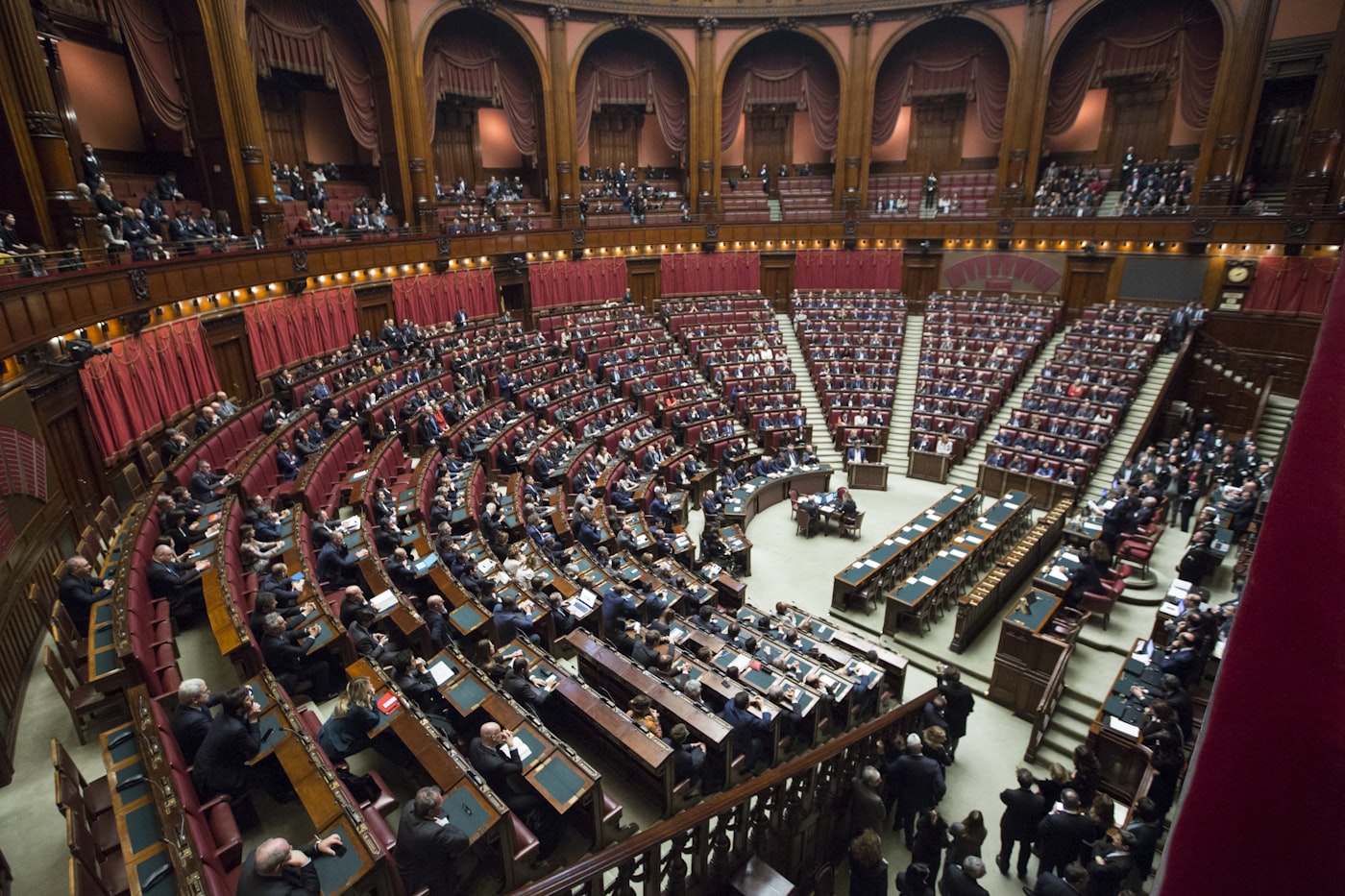
The Trump administration may calculate that a rapid, successful military operation would neutralize the political opposition before it can mount a challenge. The Iraq war initially had broad public support precisely because it appeared, in its first weeks, to be a swift military success. The problem is that Iran is not Iraq. The IRGC has studied America's tactical playbook for 45 years and has built its military structure specifically to deny the kind of rapid collapse that destroyed Saddam Hussein's army.
Timeline: How the War Got Here
What Allies Are Saying - and Not Saying
The United Kingdom has deployed troops to Bahrain, where they sit within what one British military source described to BBC as "200 metres from Iran's sphere of influence." British forces are operating in a support and logistics role. But a US ground invasion of Iran would force London to make an immediate choice: expand into a combat role alongside Washington, or publicly distance itself from the operation.
France and Germany, already skeptical of the air campaign's proportionality, have been largely silent on the ground troops reports. European capitals are watching the Iran war primarily through the lens of energy security. At $150 oil, European economies - still recovering from the 2022-2024 energy crisis that followed the Ukraine war - face another devastating shock. European leaders have significant economic incentive to push Washington toward a diplomatic off-ramp, but the Trump administration has demonstrated no interest in European input on war strategy.
Cyprus is a particular flashpoint. Protests have been growing around British military facilities on the island, with residents angry that the UK base at RAF Akrotiri has been used to support operations against Iran. A full ground war would expand that political tension dramatically, potentially triggering a sovereign crisis on the island that complicates NATO's eastern Mediterranean posture.
Qatar - host to the largest US air base in the Middle East and one of Iran's closest Gulf interlocutors - is in an impossible position. The arrests of IRGC-linked individuals on Qatari soil, reported earlier this week, created what analysts described as a "deep rift" in Qatar-Iran relations. But Qatar cannot politically support a ground invasion of its neighbor. The state's entire security architecture is built on balance - American military protection paired with Gulf and Islamic world diplomatic legitimacy. A US ground war ends that balance overnight.
The Endgame Nobody Has Answered
The fundamental problem with the ground troops option is the same one that haunted Iraq and Afghanistan: what comes after? The Trump administration has stated its objective as "unconditional surrender" and regime change. But Iran post-IRGC, post-Khamenei, post-Islamic Republic is a nation of 90 million people with no functioning democratic institutions, a deeply nationalist political culture, and decades of economic resentment toward the West.
Nation-building in Iran would dwarf anything the United States attempted in Iraq or Afghanistan. The country is larger, more educated, more urbanized, and far more deeply integrated into a regional network of Shia political actors - Lebanon, Iraq, Yemen, Syria - who would continue fighting long after any formal surrender. The IRGC's network does not end at Iran's borders. It is an international organization with cells and proxies across the Middle East and beyond.
Trump's stated preference, articulated in NBC reporting, appears to be installing a more compliant government - potentially using Iranian exile groups or internal opposition figures. That model failed comprehensively in Iraq, where the US-backed government eventually fell under the influence of Iran-aligned Shia factions. There is no reason to believe it would succeed in Iran itself, where any government seen as installed by American force would face immediate legitimacy challenges and likely armed resistance.
"We keep asking the wrong question. The question isn't 'can we go in?' The question is 'can we come out?' And nobody in Washington has a credible answer to that." - Retired US Army General, speaking to NBC News on background
The economic clock is also ticking in ways the administration cannot ignore. With February's jobs numbers showing unexpected weakness and oil prices already elevated, the window for a sustained military campaign without triggering domestic economic crisis is narrowing. Historical analysis of American war economics suggests that oil-driven inflation crises generate political opposition faster than battlefield casualties. Nixon's domestic political collapse accelerated not when casualties mounted but when the economy turned.
Trump understands domestic political pressure better than almost any modern president. The ground troops discussion may ultimately be less about military strategy and more about leverage - using the threat of escalation to force either Iranian capitulation or international mediation. The problem is that threats, once made publicly, generate their own momentum. Markets are watching. Allies are watching. The IRGC is watching. And Russia, which is actively feeding Iran intelligence on US force positions, is watching most closely of all.
At midnight Berlin time on March 7, 2026, the world sits at the edge of a decision that could reshape the Middle East for a generation. The biggest war since Vietnam is not yet started. But the conversation that starts it is happening right now, in private rooms in Washington - and the contours of that conversation are no longer private.
Get BLACKWIRE reports first.
Breaking news, investigations, and analysis - straight to your phone.
Join @blackwirenews on Telegram