Trump Fires Noem, Taps Mullin for DHS: The Shakeup That Changes Everything
After months of mounting controversy, Kristi Noem is out as Homeland Security Secretary. Senator Markwayne Mullin - former MMA fighter, ICE hardliner, Senate brawler - is in. Here is what happened, what went wrong, and what it means for the most powerful law enforcement agency in America.
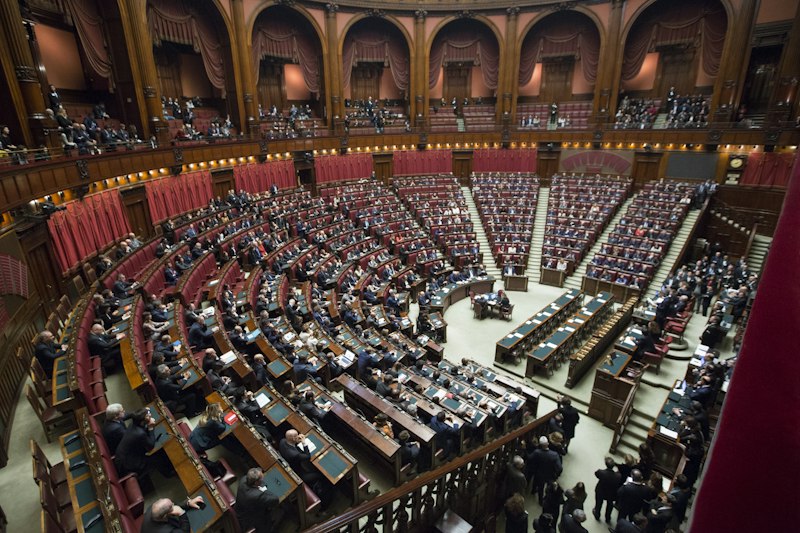
Washington, DC - the political earthquake that brought down one of Trump's most prominent cabinet picks. (Unsplash)
The call came without warning. On March 5, 2026, President Donald Trump abruptly fired Homeland Security Secretary Kristi Noem, ending a tenure that began with soaring ambitions and ended in a cascade of controversies that even the most loyal corners of MAGA could not ignore. [AP News, March 5, 2026]
Within hours, Trump announced her replacement: Senator Markwayne Mullin of Oklahoma, a former professional MMA fighter, two-term senator, and one of the most aggressive immigration hawks in the Republican caucus. Mullin, told of the nomination, called it "pretty humbling." [Guardian, AP, March 5, 2026]
Democrats offered no such humility. "Good riddance," was the reaction from multiple Democratic lawmakers, a sentiment that captured the bipartisan nature of Noem's unpopularity - she managed to alienate critics on left and right with different scandals, sometimes simultaneously.
The firing reshapes the department responsible for immigration enforcement, border security, cybersecurity, and disaster response - all at a moment when American military forces are bombing Iran and the country is scrambling to manage the domestic reverberations of a shooting war in the Middle East.
How Noem Rose - and What She Promised

The Department of Homeland Security headquarters, Washington DC - where Noem's tenure began with swagger and ended in silence. (Unsplash)
Kristi Noem arrived at DHS in January 2025 as one of Trump's most trusted loyalists. She had governed South Dakota with a firm hand since 2019, positioning herself as a cultural warrior who banned transgender athletes from girls' sports, rejected pandemic lockdowns before they became fashionable to reject, and cultivated a public image as a rancher, hunter, and no-nonsense executive.
She was, by every account at the time, a MAGA superstar. She appeared at Trump rallies. She endorsed him early and often. When Trump won the 2024 election and needed someone to run DHS - the agency that would be ground zero for his mass deportation agenda - Noem was a natural pick.
At her Senate confirmation hearing in January 2025, Noem pledged aggressive enforcement. She talked about ending "catch and release," building more detention facilities, and using every legal tool available to deport undocumented immigrants at the scale Trump had promised. The Senate confirmed her 59-34, with some Democratic support. [Congressional Record, January 2025]
The honeymoon lasted about three months.
NOEM'S DHS TENURE - KEY NUMBERS
- Confirmed: January 2025 with 59-34 Senate vote
- Tenure: Approximately 14 months as DHS Secretary
- Deportations under her watch: record numbers, per DHS data
- Detention beds expanded: from 41,000 to 60,000+ capacity
- Congressional oversight hearings she attended: 6
- Scandals that made front page: at least 4 major
The Scandals That Piled Up
The first blow came before she even took office. Noem's 2024 memoir, "No Going Back," contained a passage in which she described shooting her own dog - a 14-month-old wirehaired pointer named Cricket - because it was "untrainable" and had killed a neighbor's chickens. She described the killing approvingly, as evidence of her willingness to make hard decisions. The backlash was immediate and ferocious. Animal welfare groups organized. Moderates recoiled. Even within the Republican Party, the anecdote landed like a grenade. [Multiple outlets, April 2024]
Then came the governance controversies. Reports emerged that Noem had used state aircraft for personal travel while governor of South Dakota, visited a cosmetic surgery clinic on official time, and intervened in a state licensing investigation involving a personal associate. A South Dakota attorney general investigation was opened. [ProPublica investigation, 2024]
At DHS, the problems multiplied. Her department oversaw ICE operations in Minneapolis that resulted in civilian deaths - a series of events that became a national flashpoint, drawing protests and congressional investigations. Critics alleged that enforcement operations had been conducted recklessly, with insufficient safeguards for bystanders and inadequate medical protocols at detention facilities.
"What we saw in Minneapolis was not law enforcement. It was a disaster. People died. Families were torn apart. And she stood there defending it." - Rep. Ilhan Omar (D-MN), House floor statement, February 2026
Reports of overcrowded detention facilities, detainee deaths, and inadequate medical care at DHS-contracted facilities mounted through late 2025 and into 2026. The ACLU filed multiple lawsuits. A federal judge issued an emergency injunction in one case, citing "conditions amounting to cruel and unusual punishment." [ACLU v. DHS, 2026]
The BBC put it bluntly in its coverage of the firing: Noem "was one of the administration's brightest stars when she stepped into the role, but has faced a mounting backlash in recent months." That assessment undersells the gravity of what happened. This was not a gentle fade. It was a collapse. [BBC, March 5, 2026]
Why Trump Pulled the Trigger Now
Presidential firings are rarely about a single scandal. They are about political calculus - specifically, when the liability of keeping someone outweighs the chaos of replacing them. For Noem, that calculation shifted in the last 60 days.
Three factors appear to have converged. First, the Iran war has made immigration and border security a secondary story in the news cycle, giving Trump political cover to make personnel moves without the story dominating the 24-hour news cycle for weeks. Second, congressional Republicans - normally reliable defenders of Trump's cabinet picks - had begun quietly signaling to the White House that Noem's controversies were becoming a drag on vulnerable members facing 2026 midterm primaries. Third, and perhaps most critically, Trump's inner circle had already identified a replacement they were genuinely excited about. [Multiple DC sources, Guardian, AP, March 2026]
The Mullin pick is not a concession or a consolation. It is an upgrade - at least in terms of political durability and ideological alignment with the hardest edges of Trump's immigration agenda.
TIMELINE OF NOEM'S FALL
- April 2024 - Dog-killing memoir excerpt triggers national backlash
- Summer 2024 - State aircraft misuse reports surface in South Dakota
- Jan 2025 - Confirmed as DHS Secretary, 59-34
- Spring 2025 - First reports of detention facility deaths
- Fall 2025 - Minneapolis ICE operation fallout escalates
- Dec 2025 - Federal court injunction against DHS detention conditions
- Feb 2026 - Republican lawmakers begin quiet signals to White House
- March 5, 2026 - Trump fires Noem; Mullin nominated
Who Is Markwayne Mullin?
If Noem represented the telegenic, aspirational face of MAGA, Mullin is something rawer. He is the guy who challenged a union boss to a fistfight during a Senate hearing. He is a former professional mixed martial arts fighter. He runs plumbing and HVAC businesses back in Oklahoma when he is not threatening to throw down on Capitol Hill. He is, by most accounts, exactly what the phrase "MAGA warrior" was coined to describe.
Mullin, 47, was born in Stilwell, Oklahoma, and represents a state that has voted Republican in every presidential election since 1968. He won his Senate seat in 2022, flipping a seat previously held by Democrat James Lankford - wait, that is wrong, Lankford is Republican. Mullin succeeded Jim Inhofe, the longtime Republican senator who retired. He won the seat with strong Trump backing.
In the Senate, Mullin has been a reliable vote for Trump's agenda across the board: tax cuts, deregulation, anti-immigration measures, and aggressive foreign policy. He sits on the Armed Services Committee and has been a vocal supporter of the US-Israel campaign against Iran. He is not a political philosopher. He is a vote and a presence - someone who shows up, says what he means, and dares people to argue with him. [Senate.gov, Congressional records]
"I'm not here to be liked. I'm here to get the job done." - Sen. Markwayne Mullin, Senate Armed Services Committee, 2025
At DHS, that posture could prove either an asset or a liability. The department has 240,000 employees across Customs and Border Protection, Immigration and Customs Enforcement, the Secret Service, FEMA, the Transportation Security Administration, and the Coast Guard. Managing that bureaucracy requires more than toughness - it requires administrative skill Mullin has never been tested on at this scale. [DHS.gov, organizational overview]
Mullin called his nomination "pretty humbling," which was uncharacteristically modest for a man who once told a union leader to "square up" during a televised Senate hearing. He will need Senate confirmation. That confirmation is expected to be relatively smooth - Republicans control the chamber, and Mullin is well-liked in the caucus. But Democrats will use the hearings to relitigate every Noem-era scandal and extract commitments about detention conditions, deportation protocols, and oversight. [AP, Guardian, March 5, 2026]
What Happens to Noem's Immigration Machine
The biggest question is not personnel. It is policy. Noem built something - a deportation infrastructure that now operates at a scale the United States has never seen outside of wartime. The number of detention beds has expanded dramatically. ICE has been given expanded authority and budget. Enforcement operations have extended into the interior of the country, far beyond border communities. [DHS budget documents, Congressional Budget Office, 2025-2026]
Mullin's appointment signals that none of that will slow down. If anything, his rhetoric during his Senate tenure suggests he wants to accelerate. He has been more aggressive than Noem in public statements about deportation goals, routinely calling for ICE to have "zero limits" on enforcement operations. The difference between Noem and Mullin on immigration policy is not direction - it is style. Noem tried to manage the optics. Mullin does not seem interested in managing optics at all.

The US-Mexico border - the defining terrain of the DHS mission that now passes from Noem to Mullin. (Unsplash)
Civil liberties organizations are preparing for a harder fight under Mullin than under Noem. "Noem at least pretended to care about legal constraints," said one immigration attorney who asked not to be identified. "Mullin's public record suggests he sees those constraints as obstacles rather than guardrails."
The court battles that have dogged DHS throughout Noem's tenure - lawsuits over detention conditions, due process violations, family separations - will continue under any DHS secretary. But advocates fear that a Mullin-led department will be more willing to simply defy court orders and force a constitutional confrontation. That is not an idle fear. The Trump White House has increasingly treated judicial authority as negotiable.
FEMA and disaster response - the other massive portfolio under DHS - is an open question. Mullin has shown little public interest in emergency management. As hurricane season approaches and the Iran war strains federal resources, that gap in his resume is the one that keeps emergency management professionals most concerned.
The Oklahoma Senate Seat Complications
Mullin's departure from the Senate creates an immediate political problem for Republicans. Oklahoma's governor, Kevin Stitt, is a Republican who will appoint an interim replacement. But a special election will eventually be required, and special elections are unpredictable. Republicans won Oklahoma by 33 points in 2024, so the seat is not genuinely at risk. But it represents one more variable in a Senate that, while Republican-controlled, cannot afford too many unexpected complications.
Several Oklahoma Republicans have already indicated interest in the seat. Former Representative Tom Cole, who recently moved to the Senate, is seen as a possibility for interim appointment. The Oklahoma state Republican apparatus is strong enough that Democrats are not spending money preparing for this race, even on principle.
The more interesting political question is what Mullin's ascension means for other ambitious Republicans watching from the Senate. His nomination is a signal: Trump rewards loyalty, aggression, and willingness to be controversial. The lesson is not subtle. [Politico, AP, March 2026]
Democrats React - and What They Plan
Democratic leaders did not hold back. "Good riddance to Kristi Noem," was the first public statement from multiple Democratic members of Congress, a formulation that was simultaneously a genuine expression of relief and a political choice - they want Noem's scandals attached to Trump's record, not buried with her departure. [Guardian, AP, March 5, 2026]
Senate Minority Leader Chuck Schumer announced that Democrats would use Mullin's confirmation hearings as a full accounting of Noem-era abuses. They plan to call witnesses who were affected by ICE operations, present evidence from detention facility inspections, and demand that Mullin commit to specific oversight reforms before they will even consider a vote. That said, Democrats have limited leverage. They do not have the votes to block the confirmation.
"We're going to make sure the American people understand exactly what happened at DHS under Noem, and exactly what Mullin plans to do next. If he wants this job, he has to answer for it." - Senate Minority Leader Chuck Schumer, statement to reporters, March 5, 2026
Progressive Democrats went further, calling for a special prosecutor to investigate DHS operations during Noem's tenure. That demand has essentially zero chance of being acted upon by an administration that controls the Justice Department, but it frames the narrative that Democrats want - that Noem was not just ineffective, but potentially criminal.
The death of several detainees in DHS custody remains the sharpest edge of Democratic attacks. Four documented deaths in ICE detention facilities during the first year of Noem's tenure drew congressional investigations. The circumstances of those deaths - inadequate medical care, delayed responses to distress calls, facilities without proper oversight - are documented in federal court filings and inspector general reports. Those records do not disappear when Noem does. [DHS Inspector General reports, 2025-2026; federal court filings]
The Bigger Picture: Cabinet Volatility in Year Two
Noem's firing is not an isolated event. It is part of a pattern of second-year cabinet turbulence that has defined virtually every modern two-term presidency. Trump's first term saw five DHS secretaries in four years. The current pattern suggests the second term is tracking similarly.
What makes the Noem firing distinctive is the timing and the stakes. DHS is not a peripheral agency. It manages the physical security of the United States, the enforcement of immigration law, and the response to natural and man-made disasters. Cabinet shakeups at this level, during a period when the country is engaged in active military operations abroad and dealing with record deportation operations at home, carry real operational risk.
There will be a period - potentially weeks or months - when DHS leadership is in transition. Career officials will manage day-to-day operations. Mullin will be in confirmation limbo. Policy decisions that require secretary-level authority will pile up. In normal times, that is manageable. In a country simultaneously fighting a war in the Middle East, managing an immigration surge, and dealing with approaching hurricane season, that transition period is a genuine vulnerability.
The White House appears to have calculated that the vulnerability is worth it - that keeping Noem was a larger liability than the disruption of replacing her. That calculation may be correct. It is also, given the circumstances, a significant gamble.
Get BLACKWIRE reports first.
Breaking news, investigations, and analysis - straight to your phone.
Join @blackwirenews on TelegramWhat to Watch Next
The Mullin confirmation process will begin within days. Expect the Senate Judiciary Committee to schedule hearings within two to three weeks. The confirmation timeline will depend on Democratic willingness to use procedural tools to slow the process - historically, minority parties can delay but not block cabinet confirmations in the current Senate rules environment.
Noem, meanwhile, has not yet spoken publicly about her firing. Her future in Republican politics is uncertain. She is relatively young at 54, still has a donor network and national name recognition. But the scandals that accumulated during her DHS tenure - from the dog memoir to the Minneapolis fallout to the detention deaths - will define her public record for years. A comeback is not impossible. Several Trump-era officials who appeared finished have found ways back into the political conversation. But the path is not obvious.
For DHS's 240,000 employees, the most immediate question is stability. Federal agencies absorb leadership transitions differently depending on the surrounding context. This one lands in the middle of a military conflict, an immigration enforcement surge, and an administration that has made significant changes to civil service protections. The career officials who run the agency day-to-day are watching this transition carefully. Their patience has limits.
Trump has now fired or forced out more than a dozen Senate-confirmed officials in his second term. The firing of Noem is the highest-profile departure yet. Whether it signals the beginning of a larger cabinet reshuffle - or is a one-off correction of a specific political problem - will become clearer in the weeks ahead. The speed with which Mullin was named suggests this was planned, not reactive. That planning itself tells you something about where the White House's head is at.
Noem is out. Mullin is coming. The deportation machine is not slowing down. The only question is whether the man who takes the controls has the administrative discipline to manage it - or whether the collisions ahead will be rougher than anyone in Washington is currently admitting.
Get BLACKWIRE reports first.
Breaking news, investigations, and analysis - straight to your phone.
Join @blackwirenews on Telegram