Tokenized Real World Assets Top $25 Billion: Wall Street's Quiet Takeover of Crypto Rails
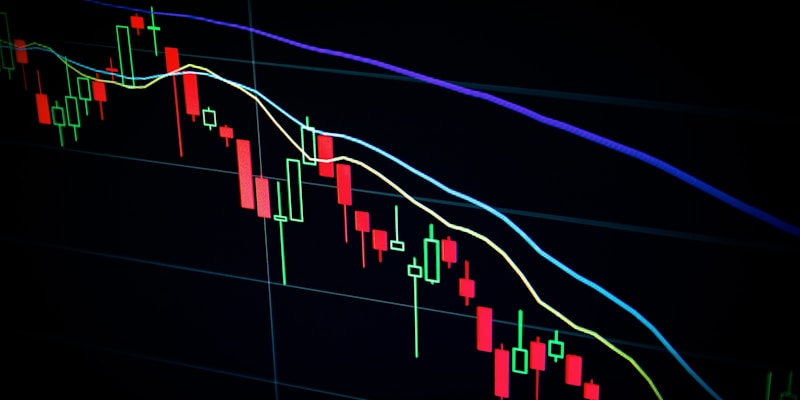
While crypto traders were panic-selling into extreme fear last week - the Fear and Greed Index collapsed to 12, bitcoin shed 3.4% to $67,960 on Saturday, and altcoins bled worse - a completely different story was unfolding in the institutional layer above them.
Tokenized real-world assets on public blockchains crossed $25 billion for the first time, having nearly quadrupled in a single year, according to data compiled by CoinDesk from multiple RWA tracking platforms. Six asset categories now exceed $1 billion each: U.S. Treasuries, private credit instruments, tokenized commodities, real estate, institutional money market funds, and corporate bonds.
The number sounds abstract. It isn't. What $25 billion in tokenized RWAs means in practice is that BlackRock, Franklin Templeton, JPMorgan, UBS, and a dozen other institutional names have now moved real capital onto chains that were, a few years ago, considered the exclusive domain of DeFi cowboys and retail speculators. They are using Ethereum mainnet, Polygon, and several permissioned sidechains. They are doing it at scale. And they are doing it on their terms - not crypto's terms.
The bigger reveal buried in the data is this: only 12% of the roughly $8.5 billion in RWA-backed stablecoins is actually deployed in DeFi protocols. The rest sits behind compliance barriers - walled gardens that serve institutional clients, satisfy AML/KYC obligations, and keep regulators comfortable. The blockchain is the rail. Wall Street is the conductor. And DeFi is mostly watching from the platform.
What the $25 Billion Is Made Of
The $25 billion figure excludes fiat-backed stablecoins like USDC and USDT, which are their own category. What it captures is everything else: traditional financial assets that have been represented as tokens on a blockchain, with their original off-chain value tracked and redeemable.
U.S. Treasury-backed products remain the largest single category, led by BlackRock's BUIDL fund and Franklin Templeton's BENJI token. Together with competing products from Ondo Finance, Superstate, and others, tokenized T-bills and money market instruments account for roughly a third of the total market. The yield environment - rates still elevated despite recession fears - has made these products genuinely attractive compared to holding stablecoins that earn nothing.
Private credit is the second-largest and fastest-growing segment. Firms like Maple Finance, Centrifuge, and Goldfinch have been tokenizing loan portfolios, invoice financing, and direct lending instruments. The appeal for institutional buyers is liquidity: private credit is notoriously illiquid, and tokenizing it theoretically allows 24/7 secondary trading, fractional ownership, and easier collateral management. Theoretically.
Commodities sit at number three. Gold-backed tokens from Paxos (PAXG) and Tether (XAUT) have seen heavy inflows since mid-February as geopolitical tensions around the Iran conflict pushed institutional money into hard assets. Combined, they represent about $6 billion of the total tokenized RWA market - a figure that itself nearly doubled since the start of the year as oil spiked toward $90 per barrel and safe-haven demand spiked.
RWA Market Breakdown - March 2026
- U.S. Treasuries / Money Markets: ~$8.5B - BlackRock BUIDL, Franklin Templeton BENJI, Ondo OUSG lead
- Private Credit: ~$6.2B - Maple Finance, Centrifuge, Goldfinch
- Tokenized Commodities: ~$6.0B - PAXG, XAUT (gold); crude oil exposure via structured products
- Real Estate: ~$2.1B - tokenized REITs, fractional property tokens
- Corporate Bonds: ~$1.8B - institutional-grade issuances on Ethereum and Polygon
- Other (equities, art, infrastructure): ~$1.4B
- Total: $25B+ (nearly 4x year-over-year)
Real estate tokenization has been slower to scale than boosters predicted. The legal complexity of fractional ownership - title transfer, jurisdiction-by-jurisdiction compliance, mortgage liability - has slowed institutional entry. Several pilot programs in Singapore, the UAE, and Arizona have proven the technical model. But crossing from pilot to product at scale has taken longer than expected.
Corporate bonds round out the top six. JPMorgan's Onyx platform and Societe Generale's digital bond issuances via SG Forge have led this category. The European Investment Bank has issued several blockchain-native bonds since 2021, with volumes accelerating sharply in 2025 as institutional appetite grew and regulatory clarity improved in both the EU and UK.
The DeFi Isolation Problem
The $25 billion headline is impressive. The 12% DeFi deployment rate is damning.
Of the roughly $8.5 billion in RWA-backed stablecoins - instruments that represent tokenized assets but in stable-value form - only about $1 billion is actually circulating in permissionless DeFi protocols like Aave, Compound, or Uniswap. The rest is walled off behind compliance infrastructure: whitelisted wallet addresses, KYC gates, transfer restrictions, and smart contract pauses that give issuers the ability to freeze or confiscate tokens.
This is not accidental. It is the price of institutional participation. BlackRock's BUIDL fund requires investors to pass through Securitize's KYC process and maintains a whitelist of approved wallets. Transfers outside the whitelist are blocked at the contract level. Franklin Templeton's BENJI operates similarly. Ondo Finance's OUSG token, which represents exposure to short-duration U.S. Treasuries, has a similar compliance wrapper despite being theoretically DeFi-native.
"Tokenized RWA growth reflects large, infrequent institutional allocations rather than active secondary trading, as issuers prioritize capital formation and fundraising efficiency over liquidity." - CoinDesk, citing multiple RWA platform analyses, March 8, 2026
The practical result is a two-tier crypto economy. In one tier, institutions move billions through permissioned blockchain infrastructure - real yields, real assets, real compliance. In the other tier, retail traders move much smaller amounts through permissionless DeFi - more speculation, more yield-farming, more volatility. The two tiers coexist on the same chains but rarely interact.
Messari researcher Tom Dunleavy called the situation "institutional adoption on rails, not in the wild" in a research note last month. "The blockchain is being used as a settlement layer and audit trail, not as a permissionless financial system. That is still valuable - it reduces cost, increases transparency, and improves settlement times. But it is not the DeFi revolution."
Protocols on the DeFi side have been trying to bridge the gap for two years. Aave has developed its Arc permissioned pool specifically for institutional users, with KYC provided by Fireblocks. MakerDAO has onboarded Treasury bills as collateral for DAI. Centrifuge has been feeding tokenized real-world loan portfolios into DeFi liquidity pools. The integrations exist. They are just small relative to the total market size.
BlackRock, UBS, and the Wall Street Playbook

The names leading tokenized RWA adoption read like a roster of the firms that were most publicly skeptical of crypto during the 2021-2022 bull run. BlackRock CEO Larry Fink called bitcoin an "index of money laundering" in 2017. Jamie Dimon at JPMorgan threatened to fire any trader who touched it. UBS warned clients that crypto was pure speculation with no fundamental value.
They were wrong about retail crypto. They were not wrong about their own role in it.
BlackRock's Rick Rieder - chief investment officer of global fixed income - spoke at a conference in Miami last week and made clear the firm is broadening portfolios away from concentrated technology bets. He did not mention BUIDL by name. But the broader strategic context is unmistakable: BlackRock manages $10 trillion in assets. Even a 0.025% allocation to tokenized infrastructure represents $25 billion. The BUIDL fund, which launched in March 2024, crossed $500 million in its first month and has grown steadily since.
UBS's Ulrike Hoffmann-Burchardi, the firm's chief investment officer for the Americas and global head of equities, added another layer at the same conference. UBS has shifted underweight on traditional technology and communication services, rotating into industrials, electrification, and healthcare. That rotation includes blockchain infrastructure. UBS's digital bond programs and tokenized fund experiments in Singapore have been the firm's quiet blockchain play for two years.
"The AI trade is changing. After three years in which markets rewarded companies enabling the AI buildout, investors are entering a phase in which winners and losers will separate more sharply." - Ulrike Hoffmann-Burchardi, UBS Global Wealth Management CIO, Miami Conference, March 2026
JPMorgan's Onyx division - a blockchain subsidiary that most of the financial press largely ignored when it launched in 2020 - now processes over $1 billion per day in intraday repo transactions using its JPM Coin. The system runs on a permissioned Ethereum fork and connects to JPMorgan's internal treasury operations. It is boring, functional, and exactly what institutional blockchain infrastructure looks like in practice.
Franklin Templeton's tokenized money market fund (BENJI) is available on Polygon, Stellar, and Avalanche. It pays yields directly to token holders - currently around 5.1% annualized, tracking short-term Treasury rates. The fund has over $400 million in assets under management as of this writing.
The key insight these firms share is that they are not trying to replace traditional finance. They are trying to run traditional finance on cheaper, faster rails. Blockchain settlement instead of T+2 clearing. Smart contract automation instead of back-office processing. Tokenized collateral that can be moved instantly versus physical certificates that take days to transfer. Same product. Different plumbing.
The Stablecoin Signal: $1.7 Billion in One Week
Beneath the RWA headline numbers, a different signal flashed in the on-chain data this week that most market participants missed because they were focused on bitcoin's price action.
Messari recorded a 415% spike in net stablecoin inflows to $1.7 billion over the past seven days, with daily transfer volumes up nearly 10%. Stablecoin flows are a leading indicator of institutional positioning - large players move stablecoins onto exchanges and into DeFi protocols before deploying into risk assets. The fact that $1.7 billion moved in a single week during a period of extreme fear (Fear and Greed at 12) is counterintuitive but historically significant.
There are two plausible explanations. The first is that the money is dry powder - institutions positioning to buy risk assets at lower prices, waiting for a clear signal before deploying. The second is that it represents inflows into tokenized RWA products specifically - money moving into BUIDL, BENJI, and similar products to earn yield while the equity and crypto markets stay volatile.
Either way, it suggests institutional activity is running in the opposite direction from retail sentiment. While the Fear and Greed Index sits at 12 and retail investors are exiting crypto positions, large accounts are moving capital onto blockchain rails at an accelerated pace. The divergence between retail fear and institutional positioning has been a consistent pattern throughout this bear market cycle.
Stablecoin & RWA Flows - Week of March 1-8, 2026
- Net stablecoin inflows: $1.7B (up 415% week-over-week) - Messari
- Daily stablecoin transfer volume: +9.8% WoW
- BUIDL AUM growth: +$47M in 7 days
- BENJI AUM: ~$410M (Franklin Templeton)
- Tokenized gold (PAXG + XAUT): $6B combined - geopolitical bid
- Crypto Fear and Greed Index: 12 (extreme fear) - retail positioning
The stablecoin surge also reflects a broader rotation. As bitcoin oscillated between $60,000 and $74,000 with no net directional movement over six weeks, capital that would previously have chased speculative crypto gains has been sitting in yield-bearing stablecoin wrappers instead. USDC deployed in tokenized Treasury products now earns 4.8-5.1% with dramatically lower volatility than BTC or ETH. For a certain class of institutional investor, that is exactly the risk-return profile they want.
The Iran Wildcard: Oil at $90 and the Geopolitical Bid
The RWA growth story does not exist in a macro vacuum. The same week that tokenized assets crossed $25 billion, Trump posted on Truth Social: "There will be no deal with Iran except UNCONDITIONAL SURRENDER." WTI crude oil surged to a multi-year high near $90 per barrel. The dollar posted its steepest weekly gain in a year. The U.S. economy shed 92,000 jobs in February, pushing unemployment to 4.4% - the highest in over a year.
That macro backdrop is creating two separate investment responses that both accelerate the RWA narrative.
First, geopolitical risk is driving safe-haven flows into tokenized gold. The PAXG and XAUT surge - gold tokens that doubled in combined market cap since January - is a direct reflection of the Iran conflict premium. Institutions that want gold exposure but need 24/7 liquidity and on-chain settlement are choosing tokenized gold over ETFs or physical holdings. The spread between physical gold futures and tokenized gold tokens has compressed to near zero, a sign of maturing market infrastructure.
"As tensions escalated in the Middle East last week, investors moved quickly to the safety of the U.S. dollar, which strengthened as markets began pricing in higher energy prices and reignited inflation fears, potentially delaying Federal Reserve rate cuts." - Bjorn Schmidtke, CEO of Aurelion, emailed comment to CoinDesk, March 7, 2026
Second, the stagflation risk - weak jobs, high oil, sticky inflation, delayed Fed cuts - is making tokenized short-duration Treasury products increasingly attractive as an institutional cash management tool. With rate cut odds for March at just 4% and April at 17%, the Fed is trapped between a softening labor market and re-accelerating inflation. Short-term Treasury yields are staying elevated for longer, which means tokenized T-bill products continue to out-earn traditional stablecoin holdings.
The economist Heather Long summarized the labor market brutally on X: "The U.S. economy has lost jobs since April 2025. Total job gains from May 2025 to February 2026 are now -19,000. Companies are not hiring in the face of all of these headwinds and uncertainty." That is not a soft landing. That is an economy stalling with inflation still running hot. The Fed cannot cut. The debt is compounding. The only functional short-duration yield play left is tokenized Treasuries.
Who's Winning, Who's Losing, and What Comes Next
Let's be direct about who benefits from the RWA growth story and who doesn't.
Winners: BlackRock, Franklin Templeton, JPMorgan, Ondo Finance, Securitize, Fireblocks, Polygon (as the preferred institutional chain for tokenized assets), and Ethereum mainnet. These entities are capturing fees, AUM, and infrastructure rent from a market that is growing 4x annually.
The picture is more complicated for DeFi protocols. On one hand, Aave, MakerDAO, and Compound benefit if tokenized RWAs eventually become major collateral categories in permissionless lending markets. MakerDAO already earns significant revenue from its T-bill collateral positions. Centrifuge and Maple are capturing real-world credit flows. But the rate of integration is slow compared to the rate of RWA market growth.
Clear losers: traditional prime brokers and custodians who are being disintermediated by blockchain settlement. Traditional repo markets, which JPMorgan's Onyx is quietly replacing for intraday transactions. And the retail crypto investor who assumed that blockchain adoption meant crypto prices would rise - it turns out blockchain adoption can occur entirely within institutional walled gardens that have minimal impact on BTC or ETH price.
CK Zheng of ZX Squared Capital, who warned last week that bitcoin could fall another 30% in 2026, made exactly this point. "Institutional adoption of bitcoin remains very slow and limited in scope," he told CoinDesk. "The total size of crypto ETFs and Digital Asset Treasury companies is only around 10% of the whole crypto market." Institutional money is moving onto blockchains. It is not necessarily moving into BTC.
Critical Risk - DeFi Isolation Trap
The $25B RWA market represents $25B in tokenized value that is largely NOT circulating in permissionless DeFi. If Wall Street builds a fully-functional institutional blockchain layer that never integrates with permissionless protocols, the "DeFi revolution" narrative becomes a legacy story. The chain benefits. DeFi does not necessarily benefit.
The timeline for DeFi integration depends on regulatory clarity that does not yet exist in the U.S. The Clarity Act, which passed the House in February 2026, would define the regulatory perimeter for digital asset securities. If it clears the Senate and becomes law, the compliance barriers that currently prevent KYC'd RWA tokens from circulating in permissionless pools could be partially addressed through standardized verification infrastructure. That is a 12-18 month timeline at the earliest.
In the meantime, the institutional layer will keep building. Messari projects the tokenized RWA market reaching $50 billion by end of 2026 if current growth rates hold - a timeline that assumes continued institutional demand for on-chain yield products and successful launches of tokenized equity programs from ICE, the NYSE, and OKX. Those equity tokenization programs were announced last month and, if they proceed, could add another $5-10 billion to the total market within the year.
The Ethereum Dividend: Who Gets the Fee Revenue
There is a beneficiary in all of this that the market largely missed: Ethereum.
The majority of tokenized RWAs are settling on Ethereum mainnet or Ethereum-compatible chains. BlackRock's BUIDL runs on Ethereum. Ondo Finance operates on Ethereum. Franklin Templeton has Ethereum as one of its five chains. JPMorgan's Onyx is an Ethereum fork. Even Polygon - the second most popular institutional chain - is Ethereum-adjacent, with assets bridgeable to mainnet.
Ethereum's gas revenue from institutional tokenization activity has been growing steadily even as retail DeFi activity declined during the bear market. The token is down 4.4% over the past 24 hours at $1,974 - below $2,000 for the first time since the Iran sell-off - but the fundamental case for ETH as infrastructure rent for an expanding institutional financial system is quietly strengthening regardless of spot price.
The Ethereum Foundation published its vision last week for the network to become "the trust layer for AI" - an expansion of its existing infrastructure role. The confluence of AI agents transacting on Ethereum and institutional RWA settlement on Ethereum represents a durability argument for the network that has nothing to do with retail speculation. Whether the market prices this in near-term is a separate question from whether the fundamentals support it.
Timeline: The March to $25 Billion
The Bottom Line
$25 billion in tokenized real-world assets is a genuine milestone. It is also a specific kind of milestone that the crypto community has not fully reckoned with.
Institutional blockchain adoption is happening. The rails being built are real, the yields are real, and the settlement efficiencies are real. But the "blockchain for everyone" narrative - the vision that underpinned the 2021 DeFi summer and still animates a lot of retail crypto investing - is not what is being built at the institutional layer. What is being built is a more efficient version of traditional finance, with better settlement, lower cost, and higher transparency, but with the same gatekeepers, the same compliance requirements, and the same capital hierarchies that define legacy finance.
That is valuable. It may be $100 billion valuable by 2028 if current growth rates continue. But it is not the DeFi revolution. It is Wall Street building on crypto rails, for Wall Street's benefit, on Wall Street's timeline.
Retail investors sitting at Fear and Greed 12 watching bitcoin oscillate between $60K and $74K while 43% of supply sits underwater are experiencing one version of the crypto story. The institutional asset managers quietly deploying billions into tokenized T-bills and private credit on permissioned Ethereum chains are experiencing a completely different one.
The two stories coexist on the same blockchains. They are not the same story.
The $25 billion is the institutional story. Watch whether it crosses $50 billion by December. More importantly, watch whether the 12% DeFi deployment rate moves. If it does, the two worlds are finally converging. If it stays stuck, Wall Street won the blockchain rails and built its own off-ramps that bypass DeFi entirely.
Get BLACKWIRE reports first.
Breaking news, investigations, and analysis - straight to your phone.
Join @blackwirenews on Telegram