
The Intelligence Handover That Changes Everything
Multiple sources inside Western intelligence agencies confirmed to the Associated Press on Friday that Russia has transferred targeting information to Iran - data that could enable Tehran to strike American military assets operating across the Persian Gulf, Iraq, and Syria. [AP, March 6, 2026 - LIVE]
The revelation, published as a live breaking story by the AP, lands at a moment when the Iran war is already approaching its most dangerous phase. Israel has been striking Tehran "every few hours," according to residents speaking to the BBC. The US military posture across the Gulf has been at maximum alert for days. Now the possibility that Russian intelligence data is flowing into Iranian targeting systems raises the stakes to an entirely different level.
The nature of the intelligence transferred has not been fully disclosed by the AP's sources, but the implications are clear: Russia is no longer a bystander to this war. If Iranian forces use Russian targeting data to strike and kill American military personnel, the United States and Russia will have crossed a threshold that no amount of diplomatic language can walk back.
For weeks, the official American position has been that the conflict is limited to Israel-Iran-Hezbollah - a Middle East war that Washington supports from the back. That framing is now obsolete. A Russian intelligence pipeline to Iranian forces attacking US assets makes this a US-Russia confrontation fought through proxies, with American lives as the stakes.
"Russia has provided Iran with information that can help Tehran strike US military." - Associated Press, multiple sources, March 6, 2026
White House spokesperson Karoline Leavitt told reporters on Friday that the administration believes the campaign against Iran may take "four to six weeks." That timeline predates the Russian intelligence disclosure. Whether the White House will revise that estimate - and the entire operational calculus behind it - now depends on what the intelligence community reveals in the coming hours.
What Russia Gave Iran - And Why Now
Russian military intelligence, the GRU, maintains extensive coverage of US military deployments across the Gulf. Russia tracks American carrier strike groups, monitors flight patterns of US aircraft from bases in Qatar, Bahrain, and Kuwait, and maintains satellite coverage of logistics routes that US forces depend on. [Open-source analysis, Jane's Defence Weekly]
Iran, by contrast, has been fighting partially blind. US and Israeli electronic warfare operations have degraded Iranian radar systems and communications infrastructure. Iran's ability to accurately track and target American military assets has been significantly reduced by weeks of sustained strikes. Russian intelligence could fill that gap - providing Tehran with targeting quality data that Iranian systems can no longer generate independently.
The timing is not accidental. Russia has clear strategic incentives to see the United States bogged down in a Gulf war that consumes American military resources, political bandwidth, and public attention. Every Patriot missile fired at an Iranian drone over the Gulf is a Patriot missile not available to Ukraine. Every F-35 sortie over Iran is a sortie not reinforcing NATO's eastern flank. Every billion dollars spent on Gulf operations is a billion dollars not reaching Kyiv.
Moscow has also been watching the domestic American political fractures widen. The US economy shed a shocking 92,000 jobs in February, pushing unemployment to 4.4% - numbers that blindsided markets and economists who had forecast modest gains. [AP Business, March 6, 2026] Rising oil prices from the Gulf conflict, now above $90 per barrel, are beginning to hit American consumers directly. A prolonged war that produces American military casualties - especially if those casualties trace to Russian intelligence - would detonate the domestic political situation inside the United States in ways Putin has calculated carefully.
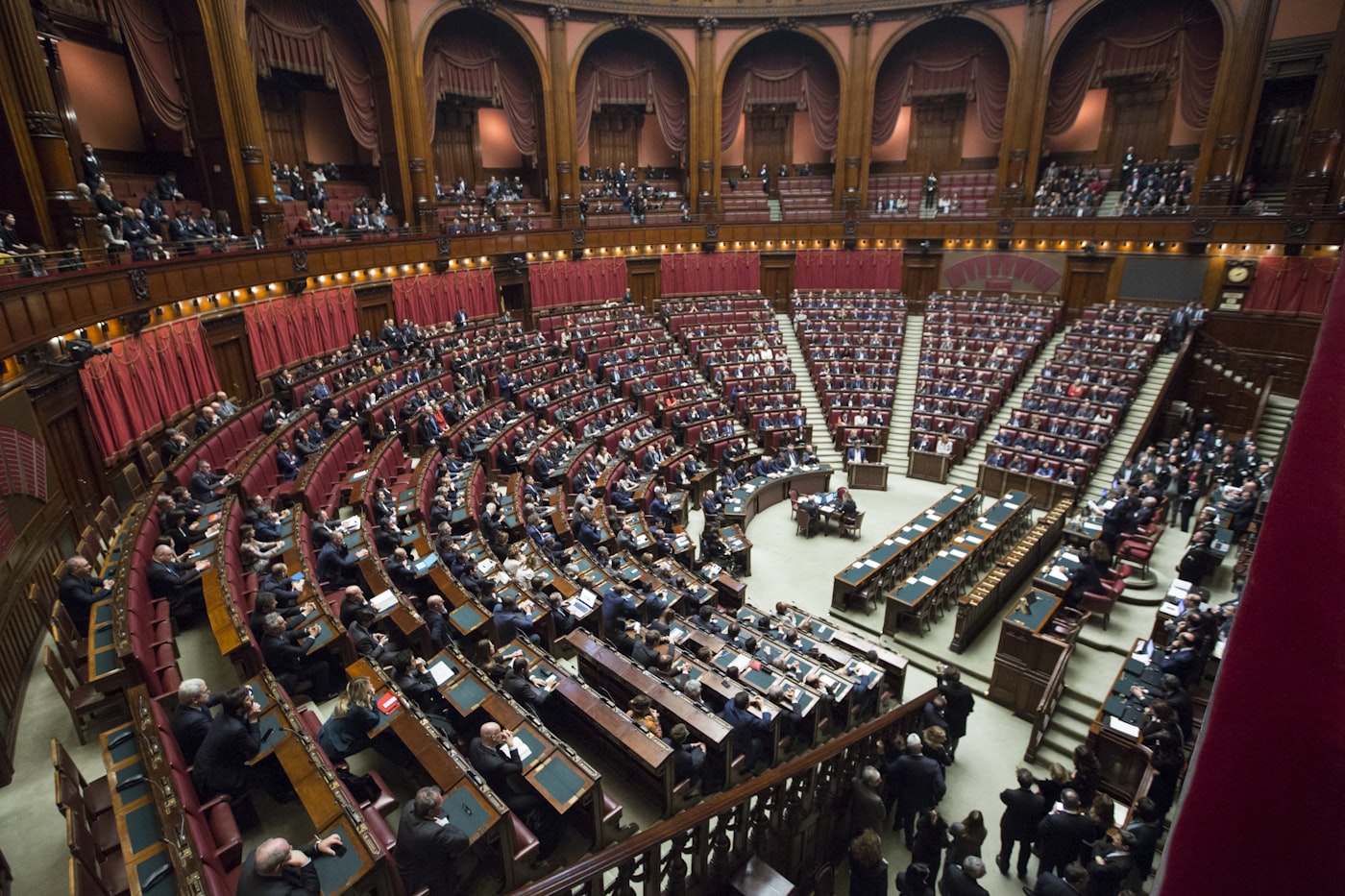
The transfer of targeting intelligence from Moscow to Tehran represents a direct escalation in the proxy war calculus. (Unsplash)
Tehran Under the Bombs - The City That Won't Fold
While the intelligence disclosure rewrites the strategic picture, the tactical reality inside Iran is a city absorbing punishment at a rate that analysts say is historically unusual for a non-total war. Tehran residents speaking to the BBC on Friday described strikes arriving "every few hours" - persistent, round-the-clock bombardment targeting military infrastructure, command nodes, and increasingly, the outer rings of the Revolutionary Guards' command structure.
The BBC's Amir Azimi, writing from his analysis of Iran's posture, framed it clearly: Tehran's strategy appears to rest on a belief that it can absorb punishment longer than its adversaries can sustain the political and financial cost of delivering it. [BBC Persian, March 6, 2026] That endurance calculus - familiar from the Iran-Iraq war of the 1980s, when Iran absorbed eight years of Iraqi attacks - is now being tested against a far more capable strike force.
Israel's military confirmed on Friday that it had "launched a new wave of strikes" and "destroyed a military command bunker" inside Iran. The IDF has not specified which command infrastructure was targeted, but the pattern over the past week suggests systematic degradation of the IRGC's ability to coordinate nationwide defense. [IDF statement, March 6, 2026]
But Iran has been counterpunching. A US submarine sank an Iranian warship earlier this week, confirming that the naval dimension of the conflict has escalated beyond the drone and missile exchanges that dominated the early phase of the war. [The Guardian, March 6, 2026] Sri Lanka scrambled to evacuate crew from a surviving Iranian navy vessel in the same area within 48 hours, a sign that Tehran's naval assets are operating under extreme threat even as they maintain some operational presence.
"If they don't stop, Tehran will turn into Gaza." - Iranian civilian, speaking to The Guardian, March 6, 2026
Iranian Kurdish opposition groups in exile in northern Iraq told the BBC on Friday that they have "plans to cross the border" but denied already doing so. If Kurdish forces open a ground front inside Iran while Israeli and US strikes continue from the air - and while Iranian targeting systems receive Russian data to respond - the war enters a phase with no obvious ceiling. [BBC, March 6, 2026]
Beirut Reopens as a Second Front - With Nowhere to Run
While all eyes were fixed on Iran, Israel opened what analysts are calling a genuine second front on Friday by striking Beirut after issuing unprecedented evacuation warnings for the city's southern suburbs - the Dahieh district that serves as Hezbollah's political and military heartland.
The warnings triggered massive traffic jams across Beirut's streets as hundreds of thousands of residents attempted to flee simultaneously. The Guardian reported that "hundreds of thousands" are fleeing Israeli bombs in Beirut - a scale of displacement not seen since the 2006 Lebanon war. [The Guardian, March 6, 2026]
Trump signed off on the Beirut operation even as he publicly ruled out any talks with Iran "absent Iran's unconditional surrender." [AP, March 6, 2026] The phrase "unconditional surrender" - borrowed from World War Two diplomacy - signals that Washington is not interested in a negotiated pause. The war continues until Iran's government either collapses, sues for total peace, or the United States decides the cost is too high.
Israel's military said it has "launched a new wave of strikes and destroyed a military command bunker" in Lebanon as well as Iran, making clear that the campaign is now a two-theater air operation running simultaneously. Hezbollah's remaining command infrastructure in Beirut - already degraded by last year's strikes - is now under direct pressure from both Israeli airpower and, reportedly, special operations targeting.
BBC reporters on the ground in Beirut documented evacuees "sleeping in tents and cars" in the hours after the Israeli warnings, as many residents found they had nowhere to go - Lebanese infrastructure is struggling to absorb the sudden displacement, and the roads out of Beirut are gridlocked. [BBC, March 6, 2026]

Residents of Beirut's Dahieh district fled en masse after Israeli evacuation warnings, with hundreds of thousands displaced within hours. (Unsplash)
The Global Fallout - Oil, Jobs, and Shock Waves
The war is now producing consequences that reach far beyond the immediate conflict zone. Oil has pushed above $90 per barrel, and analysts at Oxford Economics warn that sustained conflict disrupting Strait of Hormuz traffic could push crude toward $110-$120 in the coming weeks. [BBC, Guardian analysis, March 6, 2026]
The Philippines ordered emergency energy cuts on Friday in direct response to the Middle East crisis - a stark signal that the economic ripple effects are already being felt in Asia, where energy supplies from Gulf states underpin entire industrial economies. [The Guardian, March 6, 2026]
Against this backdrop, the US jobs report released Friday morning hit like a second shock. The American economy shed 92,000 jobs in February - a figure that was expected to show modest growth, and instead revealed contraction "in nearly every sector," according to the BBC. The unemployment rate ticked up to 4.4%. [BBC, AP Business, March 6, 2026]
The combination of a shooting war, spiking energy prices, and a cratering jobs market is precisely the macroeconomic environment that has historically shaken governments. Trump's domestic approval ratings, already under pressure from tariff-driven inflation, now face a war that is simultaneously expanding and producing economic pain at home.
China's unease was captured pointedly by the BBC: Beijing is "not feeling the shock of war in the Middle East - yet. But it is feeling the ripples." [BBC Analysis, March 6, 2026] Chinese economic planners are watching the energy price surge with alarm - China imports heavily from the Gulf, and any sustained disruption to Strait of Hormuz traffic would hit Chinese manufacturing directly. Beijing has been notably silent on the Russia-Iran intelligence disclosure, which implicates its closest strategic ally in a direct confrontation with the United States.
Ukraine's President Zelensky added another dimension on Friday, revealing that the US had asked Ukraine for help in countering Iranian drones. Zelensky said Ukraine would only cooperate if doing so did not deplete its own air defenses - a significant caveat that reflects Kyiv's awareness that its own war remains live, and that American attention is now dangerously divided. [BBC, March 6, 2026]
The Proxy War Calculus - Russia's Strategic Gamble
The Russian intelligence transfer to Iran is not an impulsive act. It reflects a calculated decision by the Kremlin that the benefits of enabling Iranian strikes against US forces outweigh the risks of direct confrontation with Washington. That calculation carries enormous assumptions - and enormous potential to go catastrophically wrong.
Russia's core bet is that the United States will not escalate against Moscow directly even if Russian intelligence is proven to have guided an Iranian strike that kills American soldiers. The Kremlin is counting on American caution, NATO's reluctance to expand the war, and Trump's historical disinclination to confront Russia openly. If that bet is correct, Russia gains strategic leverage at low cost. If it is wrong - if a dead American soldier in the Gulf is traced conclusively to Russian intelligence - the Kremlin will have triggered the most serious US-Russia confrontation since the Cold War.
The AP's multiple sources confirming this intelligence transfer suggests that Western intelligence agencies have assessed the disclosure as operationally significant - that this is not background noise or rumor, but a documented transfer. That same intelligence community is now presumably calculating the appropriate US response, which could range from a classified diplomatic warning to Moscow, to public exposure designed to damage Russia's international standing, to retaliatory measures that escalate the broader US-Russia dynamic.
Former CIA Director Michael Hayden, in analyses of earlier Russian proxy engagements, described Moscow's playbook as "calibrated deniability" - doing enough to shape the battlefield without leaving fingerprints clear enough to force a direct American response. The AP's disclosure, if it holds, suggests the fingerprints this time are substantially clearer than Moscow intended. [Hayden, Council on Foreign Relations background, referenced in multiple assessments]
The administration has not yet publicly responded to the AP report as of Friday evening. That silence itself is significant. When the US government wants to tamp down a story, officials call reporters with context and caveats within hours. The absence of any pushback on the AP's reporting suggests either that the intelligence is solid and the administration is deciding how to respond - or that internal deliberations are already underway at the highest levels of the NSC.
Timeline: The War's Critical Escalation Points
War Escalation Timeline - March 2026
What Comes Next - The Decisions That Will Define the War
The Russian intelligence disclosure forces several decisions in rapid succession. The first belongs to the White House: how to respond to Moscow without triggering a direct confrontation it is not prepared for, while also not allowing Russian intelligence support to Iran to go unanswered. Any visible American tolerance for Russian behavior here will signal to Beijing that the United States is stretched too thin to enforce red lines simultaneously in the Gulf, Europe, and the Pacific.
The second decision belongs to Iran. The Russian intelligence may allow Tehran to attempt a strike against US military assets that it could not otherwise have executed. Whether Iran's leadership authorizes such a strike - knowing that a successful attack on US forces would immediately transform the American political consensus on the war - depends on calculations inside the Supreme Leader's office that no outside analyst can read with confidence.
The third decision belongs to Israel. Prime Minister Netanyahu has indicated no intention of pausing operations against either Iran or Hezbollah. The Beirut evacuation warnings on Friday were a signal of intent, not a negotiating gesture. Israel is systematically dismantling Hezbollah's command structure in Lebanon while degrading Iran's ability to reconstitute its military. Whether Israeli intelligence was aware of - or contributed to - the Russian disclosure, and how Jerusalem will adjust its operational tempo in response, remains unknown.
Finally, there are the decisions that will be made by exhausted civilians in Tehran and Beirut and the families of American service members deployed across Gulf bases, who are now learning that the targeting data pointing at their loved ones may carry a Russian signature. Wars are ultimately made of those decisions - the ones that happen in apartments and barracks and underground command centers, far from the capitals where the original choices were made.
The AP's sources described the Russian intelligence transfer in present tense. It is happening now. The next 48 hours will determine whether it has already produced targets - and whether those targets have already been struck.
"What is the game plan?" - BBC analysis of China's growing unease with the Iran war's regional and global trajectory, March 6, 2026
Nobody in Washington, Jerusalem, Moscow, or Tehran has a clean answer to that question tonight. The war has moved faster than any of them planned. The Russian intelligence disclosure may be the development that forces a reckoning with how far beyond the original frame this conflict has already traveled - and how much further it has to go before anyone can stop it.
Get BLACKWIRE reports first.
Breaking news, investigations, and analysis - straight to your phone.
Join @blackwirenews on Telegram