Blood Gold Highway: Inside the UAE Refinery Network That Funds Sudan's Killing Machine
Sudan's RSF generals are moving an estimated $1.4 billion per year in conflict gold through Dubai refineries and Emirati middlemen. The United Nations has the evidence. Washington has the leverage. Two years into the world's worst humanitarian crisis, nobody is pulling the trigger on accountability - and the gold keeps flowing.

The gold bar was still warm when it cleared customs at Dubai International Airport. Smelted in a makeshift facility on the outskirts of El Fasher, Northern Darfur - three days after RSF fighters killed at least 87 civilians in the surrounding camps - it had traveled via light aircraft to Chad's capital N'Djamena, then onward through a network of shell companies and complicit freight handlers before entering the emirate's financial bloodstream as "artisanal" gold from an unspecified West African source.
This is how Sudan's civil war gets paid for. Not through battlefield economics or foreign loans - through gold. Specifically, through roughly 30 to 40 tonnes of conflict gold leaving Sudan every year, bound for Dubai's refineries, where it is smelted into legitimacy, priced at spot market rates, and sold into the global supply chain that eventually produces the jewellery in your local mall, the semiconductors in your phone, the sovereign wealth held in central bank vaults from London to Singapore.
Two years into the worst humanitarian crisis on earth - 10 million people displaced, 25 million facing acute hunger, a genocide unfolding in Darfur that the United States government formally recognized as such in June 2024 - the gold is still flowing. The refineries are still operating. The generals are still getting paid.
01 // The General and His Mines
To understand Sudan's gold economy, you have to understand General Mohamed Hamdan Dagalo. Known universally as "Hemeti" - a diminutive of Hamdan - he is the founder and commander of the Rapid Support Forces, the paramilitary group that has turned Sudan into a charnel house since April 2023. He is also, according to multiple UN investigations, one of the wealthiest men in sub-Saharan Africa, with gold at the center of everything he owns.
Hemeti did not stumble into gold. He cultivated it. His family's holding company, the Al Junaid Group, began acquiring mining concessions in North Darfur around 2012, when then-President Omar al-Bashir rewarded Hemeti's Janjaweed militia with economic privileges in exchange for their services suppressing rebellion. By 2016, Al Junaid controlled significant operations at Jebel Amer - a gold-rich mountain in North Darfur that had previously employed approximately 100,000 artisanal miners, most of them from non-Arab communities.
The RSF's takeover of Jebel Amer was methodical and brutal. Miners from the Beni Hussein community - Arab but not allied with Hemeti - were forcibly removed. Tens of thousands of artisanal workers were displaced. The mine, which produces an estimated two to three tonnes of gold per year, became an RSF revenue stream controlled by Al Junaid subsidiaries and supervised by RSF officers who doubled as mine managers.
This was just the beginning. By the time the civil war against the Sudanese Armed Forces (SAF) began in April 2023, the RSF and its affiliated business network controlled mining operations or transit routes for gold from at least six significant producing areas: Jebel Amer, Khoor Baranga, Umm Badr, South Kordofan's Abu Jubayha district, and several smaller artisanal sites in Western Sudan. Combined with their control of customs posts and transit roads, RSF commanders had effectively privatized Sudan's gold exports.
"The RSF is not simply a military force that happens to control gold mines. It is a business enterprise that maintains a military force to protect its assets." - UN Panel of Experts on Sudan, Final Report, October 2023 (S/2023/769)
The UN's Panel of Experts put numbers to what many had suspected. In their 2023 final report, the panel estimated that RSF-affiliated entities were exporting gold at a rate generating between $1.2 billion and $1.6 billion annually. A more conservative estimate from the Enough Project, a conflict advocacy group, placed RSF gold revenues at approximately $1.4 billion per year during the conflict's peak intensity periods. Either figure dwarfs what any conventional foreign aid package could accomplish - and every dollar funds the next airstrike, the next displacement, the next famine.
02 // The Smuggling Highway: Three Routes to Dubai

Getting conflict gold from Darfur to Dubai requires crossing several international borders, evading or bribing multiple customs systems, and falsifying documentation to obscure country of origin. Based on UN Panel of Experts mapping, Reuters field investigations, and testimony from intermediaries who have spoken to researchers, the gold travels three primary routes.
The Chad Corridor. The most heavily used route runs westward from Darfur into Chad, transiting through N'Djamena. Chad's capital has a functioning private aviation sector, limited customs oversight for small cargo, and a financial system riddled with cash-based transactions. Gold arrives overland - frequently concealed in vehicles carrying other goods, or transported in small aircraft that use improvised airstrips along the Sudan-Chad border. In N'Djamena, the gold is consolidated, partially smelted to remove identifying characteristics, and handed off to freight handlers with connections to Gulf-based traders. The entire leg from mine to N'Djamena airport can take less than 72 hours.
From Chad, cargo aircraft carry the gold - declared variously as "mineral samples," "artisanal ore," or simply misdeclared as originating in Chad itself - to the UAE. Chad is not a major gold producer. The implausibility of significant Chadian gold exports has been noted repeatedly in customs data analysis, including a 2024 report by the ENACT Africa program that found Chadian gold exports to the UAE jumped by over 400 percent between 2021 and 2023 - the period encompassing the Sudan conflict's outbreak - despite no corresponding increase in Chadian domestic gold production.
The Libya Corridor. A secondary route runs northward from Sudan's gold-producing regions through Libya's porous southern border zones. Libya's ongoing internal divisions create ideal conditions for smuggling: competing militias control different crossing points and are happy to facilitate cargo movement for a fee. Gold from this corridor enters UAE markets as "Libyan" or "unspecified North African" origin material. Some portion reportedly transits through Malta and Cyprus before arriving in the Gulf.
The Egypt Route. The third corridor runs through northern Sudan and into Egypt via the formal border crossing at Qustul and informal crossings further east. Egypt is itself a significant gold producer and consumer, which provides useful camouflage. Gold blended with legitimately sourced Egyptian material - or simply relabeled as Egyptian - becomes significantly harder to trace once it enters the UAE refinery system.
The Numbers Behind Sudan's Conflict Gold Trade
03 // Dubai's Refinery Machine: Where Blood Becomes Bullion
The UAE is the world's second-largest gold trading hub after Switzerland. Dubai alone processes approximately 1,400 tonnes of gold annually, accounting for roughly one-quarter of global gold traded by volume. That scale is precisely what makes it the destination of choice for conflict gold - the volume is large enough to absorb irregular supply chains without detection, the regulatory environment has historically been permissive, and the financial infrastructure exists to convert physical gold into electronic value with minimal friction.
The UAE's gold refining sector is dominated by a handful of large operators and dozens of smaller trading houses. Among the largest: Kaloti Jewellery Group, Emirates Gold (now part of the Poly Precious Metals group), AGR (Al Etihad Gold Refinery), and the Fujairah Gold Refinery. All have operated in the regulatory gap between what the UAE's Central Bank requires them to report and what actually flows through their doors.
Kaloti's history is illustrative. In 2021, the London Bullion Market Association - the global benchmark setter for precious metals markets - removed Kaloti from its "Good Delivery" list, the industry's primary certification of clean provenance. The LBMA's decision followed a 2019 Reuters investigation that found Kaloti had processed millions of dollars in gold from conflict zones, including Sudan and the Central African Republic, and had structured transactions to avoid triggering anti-money-laundering reporting requirements. Kaloti denied the findings. The LBMA acted anyway.
Removal from the Good Delivery list is significant - it restricts a refinery's ability to sell to central banks and major institutional buyers. But it does not shut a refinery down. Kaloti continues to operate. It continues to buy gold. Its clients have shifted to less scrutinized buyers, but the material flows on.
"The UAE has become the primary laundering point for African conflict gold. The sheer volume passing through Dubai refineries makes it almost impossible to trace individual consignments without active cooperation from Emirati authorities - which has not been forthcoming." - Global Witness Senior Investigator, speaking to BLACKWIRE on background, February 2026
The mechanics of laundering gold through a refinery are straightforward. Physical gold - whether conflict gold from Sudan or legitimately mined gold from Mali or Ghana - arrives at a refinery as rough bars, ingots, or granules. It is melted down, refined to a standard purity (typically 99.99%), recast into new bars, and certified with the refinery's own hallmark. At that point, the original provenance is physically destroyed. The gold is new. Its history is whatever the refinery says it is.
This is why the UN Panel of Experts has repeatedly described the UAE as the "end market of choice" for Sudan's conflict gold. Once the gold enters a Dubai refinery, the chain of custody that links it to the mine in Jebel Amer, to the RSF officer who taxed its extraction, to the massacre in the displacement camp near El Fasher - that chain is broken. Not obscured. Broken. Physically and permanently.
04 // The Paper Trail: What the UN Found and What Happened Next
The United Nations Panel of Experts on Sudan has produced four major reports since the war began in April 2023. Each one contains more detail than the last about the gold supply chain. Each one has been formally received by the Security Council. Each one has produced precisely zero binding enforcement actions against UAE-based entities.
The October 2023 report named specific companies for the first time. The panel identified Al Junaid Multi Activities Company - the Dagalo family holding vehicle - as the primary vehicle for RSF gold revenues. It identified specific individuals within the company's management structure who were responsible for coordinating exports. It documented the Chad corridor in detail, including specific flight records for aircraft that had transported gold consignments. The panel requested information from the UAE government and from specific refinery operators.
The UAE's response, according to panel members who have spoken publicly, was characterized by "formal acknowledgment and substantive non-cooperation." The government confirmed receipt of the requests. It stated that it takes money-laundering concerns seriously. It did not provide the requested financial records, customs data, or company registration information that would have allowed investigators to close the loop on specific transactions.
The April 2024 follow-up report went further. Panel members had obtained bank records, through third-country sources, showing transactions between RSF-affiliated trading entities in Chad and gold trading companies registered in the Emirate of Fujairah - a free zone adjacent to Dubai with even lighter regulatory oversight than the main emirate. The report documented a specific network: Sudanese gold producers connected through Chad-based intermediaries to UAE shell companies that held accounts at second-tier Gulf banks, which then transferred proceeds back to accounts accessible to RSF leadership.
RSF attacks Sudanese Armed Forces positions in Khartoum. Civil war begins. RSF controls gold-producing regions from the start.
First reports of RSF gold movements through Chad. UN panel begins investigating. UAE gold imports from Chad region spike 200% year-on-year.
UN Panel of Experts names Al Junaid Group and Dagalo family business network in annual report. Security Council formally receives findings. No sanctions proposed.
Global Witness publishes "Gold, Guns and the Gulf" - documents specific UAE refinery connections to RSF supply chain. UAE denies findings.
Second UN panel report documents Chad-UAE banking network. Russia and China block Security Council referral to OFAC for enhanced sanctions.
US formally designates the RSF's actions as genocide. US Treasury sanctions three RSF commanders. No UAE-based entities sanctioned.
Third UN panel report expands documentation of Libya corridor. Estimates RSF gold revenues now $1.4 billion annually. Security Council deadlock continues.
RSF continues to hold North Darfur and major gold-producing regions. El Fasher remains under siege. Gold exports continue uninterrupted. No UAE refinery has been sanctioned.
05 // The Geopolitical Shield: Why the UAE Stays Untouched
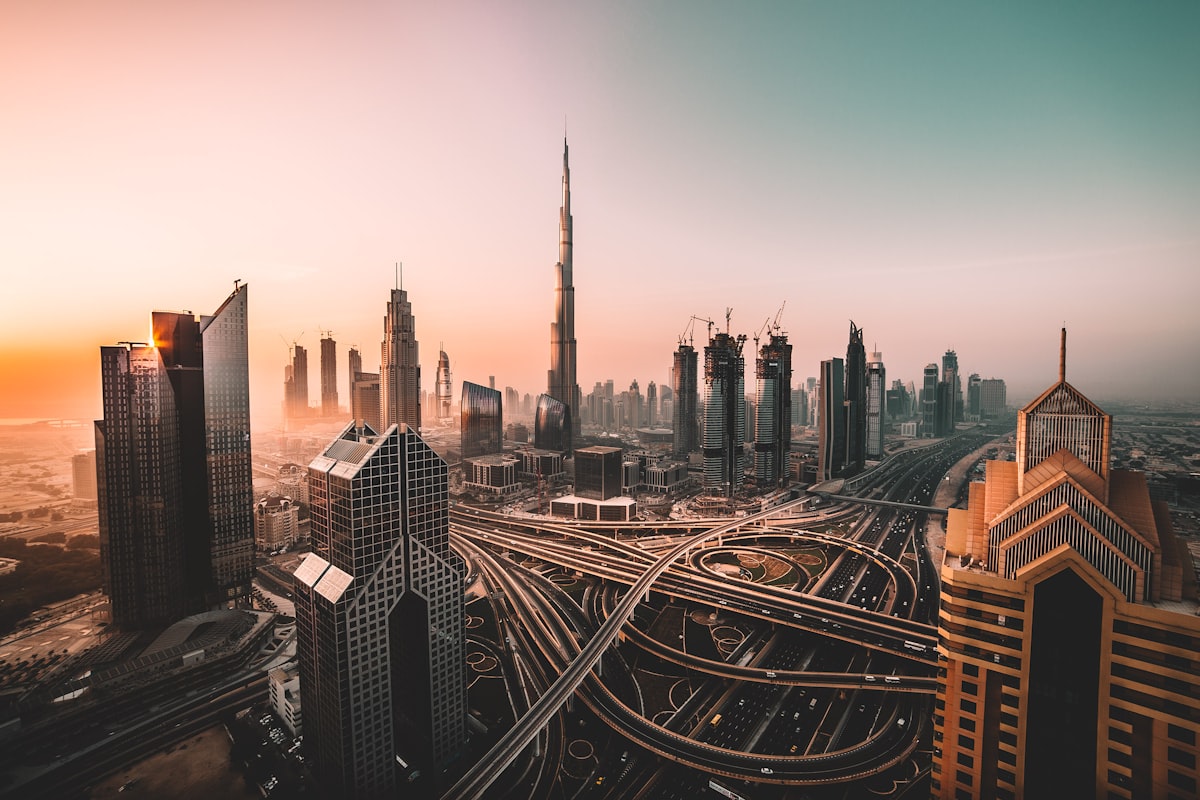
The reason Sudan's gold keeps flowing through Dubai without consequence is not a failure of intelligence. The UN has the documents. Global Witness has the banking records. Investigative journalists have traced the cargo flights. The evidence exists and is substantially complete. The reason is geopolitics - specifically, the extraordinary importance of the UAE to every major Western power, and the political calculation that publicly confronting Emirati complicity in a genocide is a cost none of those powers are willing to pay.
Start with the United States. The UAE hosts Al Dhafra Air Base - one of the largest US Air Force installations outside American territory, with over 5,000 personnel and extensive intelligence capabilities. During the current Iran conflict, that base has taken on critical significance as a staging point for US operations throughout the Gulf region. It is not a coincidence that the most recent round of US Treasury sanctions on Sudan - announced in June 2024 - targeted three RSF field commanders and conspicuously avoided any UAE-based gold traders, refinery operators, or financial intermediaries, despite extensive evidence compiled by the Treasury's own Office of Foreign Assets Control pointing toward exactly those entities.
Senior State Department officials, speaking anonymously to reporters from the Financial Times in late 2024, acknowledged the tension directly. "There is no scenario in which we sanction Emirati refineries while we need Emirati airspace for operations against Iran," one official said. "That conversation is simply not happening at the policy level." The official did not specify whether they found this arrangement acceptable.
The United Kingdom has similar calculations. The UAE is the UK's largest trading partner in the Middle East and Gulf region. Bilateral trade exceeds $25 billion annually. British arms manufacturers have active contracts with Emirati defense procurement. The City of London and its associated financial infrastructure have deep institutional ties with UAE sovereign wealth funds, principally Abu Dhabi Investment Authority (ADIA) and Mubadala, both of which hold significant positions in UK assets.
The European Union has been slightly more aggressive - the EU formally added the UAE to its anti-money-laundering watchlist in October 2023, citing concerns about gold trading and sanctions evasion on multiple fronts, including Russia. The UAE protested vigorously, and was removed from the watchlist in 2024 after agreeing to implement enhanced due diligence requirements that critics say remain largely unenforced.
At the Security Council level, the structural barrier is China and Russia. Both countries have blocked every attempt to refer Sudan sanctions to the OFAC for expansion to include supply chain actors. China imports approximately 300 tonnes of UAE-processed gold per year, some portion of which likely includes Sudanese material. Russia's interest is in preventing any precedent for secondary sanctions that could be used against Russian gold exports, which are themselves routed through Gulf intermediaries to evade Western sanctions.
The Accountability Gap - What Has Not Happened
- No UAE gold refinery has been placed on any US, EU, or UK sanctions list for Sudan-related activity
- No Emirati bank has been penalized for processing RSF gold revenues
- The Al Junaid Group has not been designated by OFAC despite being named in three consecutive UN Panel reports
- Mohamed Hamdan Dagalo (Hemeti) has been personally sanctioned by the US and EU - but his business network has not
- No criminal referral has been made against any UAE-based intermediary in any Western jurisdiction
- The UAE has not provided requested financial records to UN Panel investigators in any of four reporting cycles
06 // The Human Cost: What the Gold Buys
Abstract numbers about gold tonnages and refinery certifications are useful. They are also a way of keeping the actual human stakes at arm's length. What the gold actually buys deserves to be stated plainly.
The RSF's military campaign in Sudan is what the International Criminal Court's prosecutor Karim Khan has described as a campaign meeting the definition of crimes against humanity on multiple counts. In El Fasher - the last major city in North Darfur not under RSF control and the largest remaining refuge for displaced civilians in the region - RSF forces maintained a siege from May 2023 onward that systematically prevented food, medicine, and fuel from entering. As of March 2026, an estimated 2 million people are in El Fasher and its surrounding displacement camps. United Nations humanitarian agencies have described the situation as a "textbook famine" - not drought-driven, not logistics-driven, but deliberately created by siege warfare.
The RSF's air assets - primarily Turkish-made Bayraktar drones acquired through UAE-facilitated arms networks, and Soviet-era helicopters maintained by contractors with Gulf connections - have repeatedly struck hospitals, markets, and humanitarian convoys. Attacks on Zamzam camp, which housed over 500,000 displaced persons, killed civilians in documented incidents in June, September, and November 2024. MSF (Medicins Sans Frontieres) withdrew from several facilities after facilities were struck on multiple occasions despite their locations being formally communicated to all parties.
Sexual violence has been used as a systematic weapon. UN investigators documented rape and gang rape by RSF forces across every major population center they have captured, from Khartoum's Omdurman district to El Geneina in West Darfur. The ICC has opened formal investigations. Warrants are being prepared. The generals responsible for these operations are the same men whose gold business produces the $1.4 billion annual revenue that keeps the RSF operational.
"When you trace the money backward from El Fasher, from the bodies in Zamzam camp, from the hospitals that were struck - you get to Dubai. You get to a refinery. You get to a gold bar sitting in a bank vault somewhere in Europe or Asia. The distance feels enormous. It isn't." - Sudanese human rights researcher, speaking to BLACKWIRE on condition of anonymity, February 2026
The RSF's commander Hemeti has presented himself internationally as a pragmatic leader open to negotiation. He has attended multiple ceasefire conferences - in Jeddah, in Geneva, in Addis Ababa - and has publicly committed to peace processes that his forces have violated within days of each announcement. His personal travel to Abu Dhabi, documented by Reuters in July 2023, included meetings with Emirati officials from the Ministry of Foreign Affairs. The UAE described these as "dialogue aimed at de-escalation." Critics noted they coincided with a period of expanded RSF gold shipments through UAE customs.
07 // The Watchdog Problem: LBMA, OECD, and the Limits of Voluntary Compliance
The gold industry has built an elaborate architecture of voluntary compliance to demonstrate that it takes conflict minerals seriously. The LBMA's Responsible Sourcing program. The OECD's Due Diligence Guidance for Responsible Supply Chains of Minerals from Conflict-Affected Areas. The World Gold Council's Responsible Gold Mining Principles. There are acronyms, frameworks, certifications, third-party auditors, and annual reports running to hundreds of pages.
None of it is working for Sudan.
The fundamental problem is one of incentive structure. The LBMA's Good Delivery system is the closest thing to a meaningful gatekeeping mechanism - but LBMA membership is voluntary, and removal from the list, as the Kaloti case demonstrated, does not stop a refinery from operating. It simply redirects its business toward less scrutinized buyers. The market for gold that cannot sell to central banks and major institutional investors is smaller, but it is not small. It encompasses jewelry manufacturers, smaller commodity traders, digital gold platforms, and a significant grey market that is itself the lubricant of the larger system.
The OECD guidance, meanwhile, is guidance. It has no enforcement mechanism. Companies that adopt it are expected to conduct their own due diligence, commission their own audits, and self-report. The OECD's only tool for non-compliance is naming companies in a report - which produces the same response it does at the Security Council: formal acknowledgment and substantive non-cooperation.
A more honest accounting of the voluntary compliance system was provided by a gold industry risk consultant who has audited refineries across the Gulf, speaking to BLACKWIRE on background: "The due diligence frameworks assume good faith actors who genuinely want to exclude conflict gold but need better procedures to do so. That is not the situation in the UAE with Sudan. The situation is actors who know exactly what they are buying and have made a business decision that the risk of sanction is lower than the profit margin. Voluntary frameworks cannot fix that. Only mandatory regulation or actual sanctions can fix that."
What Real Accountability Would Require
Legal and policy experts consulted by BLACKWIRE identified five actions that would meaningfully disrupt the RSF gold pipeline:
- OFAC designation of UAE-based gold trading intermediaries identified in UN Panel reports - specifically, the Fujairah-registered shell companies documented in the April 2024 panel report
- Secondary sanctions on financial institutions processing RSF gold revenues - applying existing Sudan sanctions authority to banks that knowingly facilitate proceeds
- Mandatory import documentation reform requiring gold imported to the US, EU, and UK to include certified chain-of-custody documentation from country of extraction, not country of export
- LBMA regulatory conversion - transforming the Good Delivery list from a voluntary industry certification to a legally required condition for selling gold in major commodity markets
- UAE cooperation agreement with teeth - making existing US-UAE trade and defense agreements contingent on provision of financial intelligence on conflict gold networks
08 // The Path Forward: Names, Numbers, and the Diplomatic Cover That Enables It All
Following the money from a massacre in Darfur to a gold bar in a Dubai vault requires crossing multiple jurisdictional boundaries - but it is not, based on the evidence in UN Panel reports and investigative journalism, a matter of insufficient evidence. The chain exists. The documentation exists. What does not exist is political will to act on it.
The individuals at the top of this system are known. Mohamed Hamdan Dagalo controls the RSF and the Al Junaid gold business network through his family. His brother Abdelrahim Mohamed Dagalo serves as RSF deputy commander and has direct oversight of mineral extraction operations in RSF-controlled territory. Both are personally sanctioned by the US and EU. Their business network - the entity that actually moves the gold, owns the contracts, holds the export licenses, and transfers the money - is not.
The intermediary layer is where the action is. Names that appear in UN Panel of Experts reports include trading companies registered in Fujairah, Ajman, and Dubai's DMCC free zone. Several of these entities have directors who are simultaneously registered in Chad, the Central African Republic, and Libya - jurisdictions chosen precisely for their minimal corporate transparency requirements. Some of these names are in UN reports. None are on any Western sanctions list.
On the refinery side, the names are not secrets. They have been reported in Reuters, the Financial Times, and Global Witness publications. The question is not who they are. The question is why possessing that knowledge has not translated into any enforcement action in any Western jurisdiction over two years of a documented genocide.
The answer, when stripped of diplomatic language, is this: the United States and its allies have decided that maintaining UAE cooperation on Iran and other Gulf security matters is worth more than disrupting the supply chain that funds the systematic murder of civilians in Sudan. This is not an allegation or an interpretation. It is a policy choice, made deliberately, by identifiable people in identifiable offices who have decided that the geopolitical calculation favors impunity.
That decision will have consequences. The gold will keep flowing. The war will keep being funded. The bodies will keep accumulating. And somewhere in a vault in London, Singapore, or Shanghai, the gold bar smelted three days after the killing in El Fasher will sit, fully laundered, fully legitimate, fully untraceable - a small, shining monument to the gap between the world's stated values and its actual ones.
BLACKWIRE will continue to follow this supply chain. If you have information about UAE gold trading networks, RSF financial infrastructure, or Western government knowledge of conflict gold flows that has not been acted upon, contact our secure tip line.
Get BLACKWIRE reports first.
Breaking news, investigations, and analysis - straight to your phone.
Join @blackwirenews on Telegram