Inside the Prince Group: The $500M London Real Estate Laundromat
A Cambodia-based criminal conglomerate allegedly ran pig-butchering scams and human trafficking worth billions. Then they bought a Victorian mansion near Holland Park, 12 houses in Rotherhithe, and 29 luxury properties in Dubai. With Citibank financing.
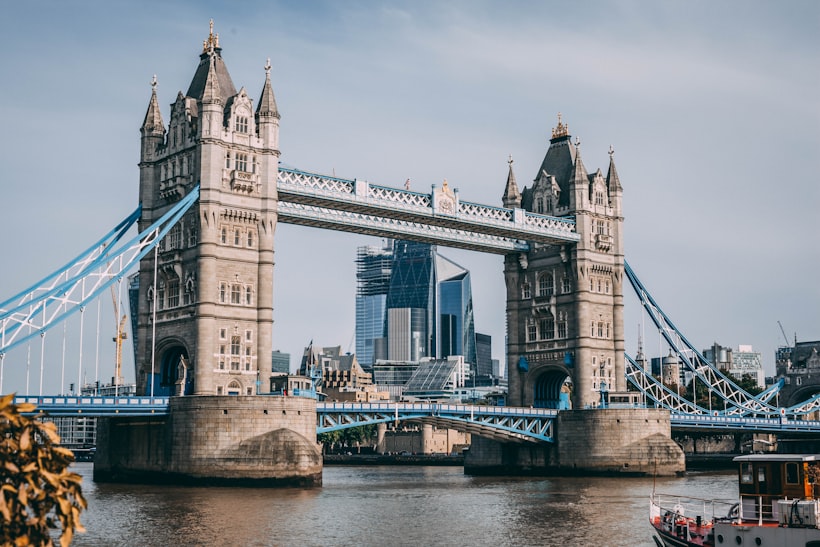
The address is 12 adjoining houses on a gated private road in Rotherhithe, a quiet district of South London with a direct sightline to Canary Wharf across the Thames. They were purchased in November 2022 for £12.7 million - about $17 million - by a company called DSRR Limited, registered at Companies House just eleven months earlier. DSRR was established using a Cypriot passport. The man behind it, Yang Jian, had been sanctioned by the US Treasury six weeks before OCCRP published his name.
Yang Jian is an alleged member of the Prince Group - a Cambodia-based conglomerate that the US Department of the Treasury formally designated a "transnational criminal organization" in October 2025. The designation named 146 individuals and entities for involvement in online fraud, human trafficking, and money laundering at a scale that prosecutors describe as industrial.
The Rotherhithe houses are not the whole story. They are one entry in a much longer ledger: a web of London mansions, Dubai penthouses, shell companies in the British Virgin Islands, stolen identities, bought citizenships, and at least one mortgage from a major US bank - all allegedly engineered to park the proceeds of Asia's largest criminal enterprise into the world's most trusted real estate markets.
And until a team of investigative journalists started pulling property records, almost none of it was on any regulator's radar.
01 // What is the Prince Group?
The Prince Group is, officially, a Cambodian business conglomerate. It describes itself as a real estate, hospitality, and investment company. Its website shows hotels, shopping malls, and smiling staff. Its chairman, Chen Zhi, was - until recently - a regular fixture at Cambodian business conferences, photographed with local officials and foreign diplomats.
What that public face conceals, according to US Treasury, is one of the most sophisticated criminal enterprises operating in Southeast Asia. The Prince Group allegedly operates what investigators call "cyber-scam compounds" - massive, prison-like facilities primarily staffed by trafficked workers, who are forced under threat of violence to run "pig-butchering" investment fraud schemes targeting victims across the world.
Pig-butchering - the term comes from the Chinese idiom "sha zhu pan" - is a form of financial fraud in which criminals build online relationships with victims, often through fake romantic connections, then slowly convince them to invest in fraudulent cryptocurrency platforms. By the time the victim realizes the platform is fake, the money is gone. The scam is particularly devastating because it targets trust rather than technical vulnerability. It requires no hacking. Just patience, scripted manipulation, and a supply of workers who cannot leave.
The workers, according to multiple investigations including by the United Nations, are predominantly trafficked from across Asia - recruited with promises of legitimate jobs, then held in compounds in Cambodia, Myanmar, and other Southeast Asian jurisdictions with limited rule of law. Those who resist are beaten, sold to other operators, or have family members threatened.
Prince Group, through its network of compounds and affiliated companies, allegedly ran this machine at scale, generating billions in fraudulent proceeds that needed to be cleaned.
"The Prince Group Transnational Criminal Organization engages in online fraud, human trafficking, and money laundering, victimizing people around the world." - US Department of the Treasury, OFAC sanctions announcement, October 2025
The group has consistently denied all of this. In a November 2025 statement, it called the allegations "baseless" and characterized US and UK sanctions as "aimed at justifying the unlawful seizure of assets worth billions of dollars." Chen Zhi's legal representatives have not responded to media queries since his extradition to China in January 2026.
02 // The Passport Game: How Identities Were Manufactured

The most striking feature of the Prince Group's alleged money laundering operation is not the scale - it is the sophistication of the identity architecture that made it possible. Key figures in the network did not simply hide behind corporate shells. They manufactured entirely new legal identities, acquiring second and third citizenships through programs that ask very few questions in exchange for very large sums of money.
Take the case of the man now known as Wu An Ming. He is, or was, also known as Chen Xiao'er - which is how he appeared on the very first entry in the US Treasury's October 2025 sanctions list, which runs alphabetically. He was, under that name, sanctioned for his involvement in Grand Legend International Asset Management Co Ltd., a Palau-based company part-owned by Chen Zhi himself.
The problem: "Chen Xiao'er" does not legally exist. That was an alias he used in 2017, on a Saint Kitts and Nevis passport he had obtained through the island nation's citizenship-by-investment program. By 2020, he had officially changed the name on that same passport to Wu An Ming. This name change appears not to have been communicated to US Treasury, meaning the sanctions designation was attached to a name that was no longer legally valid.
Under his updated Saint Kitts and Nevis identity, Wu An Ming holds approximately $45 million worth of property in the United Kingdom - entirely invisible to the sanctions designation because no one connected the two identities until OCCRP reporters obtained the documents.
His UK portfolio, as documented in Land Registry records obtained by OCCRP, includes:
- A Victorian mansion near Holland Park, London, purchased in March 2022 for £30 million ($39 million), bought in his own name with a mortgage from Citibank
- The Imperial College Sports Ground at Udney Park Road, Teddington, purchased through his BVI company Leisure Focus Limited for £3.5 million ($4.6 million)
- A leasehold property in the affluent Maida Vale district of West London, valued at £235,000
Citibank's position is particularly awkward. Under US law, American companies are prohibited from doing business with sanctioned entities anywhere in the world - even when the sanctions designate a name that the subject no longer uses. Sanctions compliance lawyer Clif Burns, of Crowell and Moring in Washington DC, told OCCRP: "The U.S. Treasury's failure to list up-to-date names and nationalities for sanctioned entities does not give banking institutions a free pass to do business with him. America's sanctions regime is a strict liability scheme, meaning banks can be punished for even unwitting infractions."
Citibank did not respond to OCCRP's repeated requests for comment. The bank's exposure - financing a £30 million mansion for a man whose other identity is on the US Treasury's most wanted financial criminals list - remains unresolved.
03 // Rotherhithe to Dubai: The Properties
Yang Jian's Rotherhithe acquisition is a case study in how shell company architecture is weaponized to move dirty money through real estate markets with minimal friction. The UK's company registration system, while improving, still allows individuals to establish a company with relatively limited verification, particularly when using foreign passport credentials.
Yang Jian - a Chinese national who acquired Cypriot citizenship in 2019, almost certainly through Cyprus's now-suspended Golden Visa program - used that Cypriot passport to establish DSRR Limited in the UK in December 2021. Eleven months later, the company purchased 12 adjoining townhouses and at least 17 car parking spaces in a gated corner of Rotherhithe for £12.7 million. All in one transaction. Conveyancing documents filed with the UK Land Registry show the purchase date as November 2022.
When OCCRP reporters visited the property, they found the houses fenced off behind a gate. At least some appeared occupied or in active use. Yang Jian did not respond to requests for comment sent through his lawyers and company secretaries in Hong Kong.
Yang Jian's sanctions designation came in October 2025, via his involvement in Grand Legend International - the same Palau-based entity at the centre of Wu An Ming's designation. Documents from Grand Legend list Yang Jian as both a director and shareholder, alongside Chen Zhi and Wu An Ming. Corporate records from China also show that Yang Jian and Wu An Ming share overlapping company interests dating back to the early 2010s, suggesting a long-standing business relationship predating their alleged involvement in the Prince Group's criminal operations.
A third alleged associate, Zhu Zhongbiao, took a different approach to the same problem. Rather than concentrating in London, Zhu spread his purchases across the Dubai property market, acquiring at least 29 prestige properties. His wife, separately, purchased five luxury apartments in London. Neither Zhu nor his wife have responded to requests for comment. Neither is currently designated under UK sanctions.
The Property Trail
- Holland Park, London: £30M Victorian mansion (Wu An Ming / Chen Xiao'er), financed by Citibank
- Teddington, London: £3.5M Imperial College Sports Ground (Wu An Ming via BVI shell)
- Maida Vale, London: £235K leasehold (transferred to Monet Beauty Clinic, Cambodia-linked)
- Rotherhithe, London: £12.7M - 12 townhouses + 17 parking spaces (Yang Jian via DSRR Ltd)
- London (unspecified): 5 luxury apartments (wife of Zhu Zhongbiao)
- Dubai: 29+ prestige properties (Zhu Zhongbiao)
The pattern is consistent. Each purchase uses a different corporate or personal vehicle. Each vehicle is registered in a jurisdiction that offers limited beneficial ownership transparency - BVI, Cyprus, Cayman, Saint Kitts. Each passport used to establish those vehicles was obtained through a citizenship-by-investment scheme that, by design, offers a clean slate.
The UK's Companies House has since introduced new beneficial ownership verification requirements under the Economic Crime (Transparency and Enforcement) Act 2022. But those requirements came after most of these purchases were completed. The Rotherhithe purchase, for instance, was transacted in November 2022 - the same month the Act began its slow implementation.
04 // The Global Dragnet: How Seven Countries Moved at Once
For years, the Prince Group's operations were an open secret among anti-trafficking researchers and organized crime analysts. The compounds in Sihanoukville and along Cambodia's borders were documented by NGOs. Survivor testimonies circulated. But criminal prosecutions are hard when the country in which the crimes are organized has limited rule of law, and when the financial flows are distributed across a dozen jurisdictions designed for exactly this purpose.
What broke the impasse was the October 2025 US Treasury sanctions action - the largest coordinated financial disruption of a Southeast Asian criminal network in history. The 146 targets included individuals, shell companies, and corporate entities across multiple countries. The designation triggered a cascade of consequences: bank account freezes, property seizures, and formal investigations in jurisdictions that had previously been waiting for a legal hook.
Within weeks of the US action, the UK added its own designations - though, as the Wu An Ming case demonstrates, those designations contained critical gaps.
South Korea added sanctions of its own, noting that South Korean nationals had been among both the victims and the alleged facilitators of Prince Group fraud schemes.
Taiwan moved earliest and most aggressively. The Taipei District Prosecutors Office, citing extensive financial forensics, indicted 62 individuals and 13 companies linked to the Prince Group network in early March 2026. Prosecutors announced the seizure of more than $170 million in assets. The indictment named Chen Zhi as a principal defendant, alongside Hu Xiaowei - the man OCCRP identified as going by at least four different legal names across multiple jurisdictions.
Singapore was the most recent addition. On March 3, 2026, the Singapore Police Force announced the arrest of three Singaporean nationals for "involvement in serious crime and corruption offences" in connection with Prince Group. Simultaneous asset seizures - three properties, eight vehicles, cash, and luxury goods - totaled more than $270 million in declared value.
"The total value of Prince Group assets seized or frozen to date has reached over $390 million." - Singapore Police Force, official statement, March 3, 2026
China's move was the most significant symbolically. In January 2026, Beijing extradited Chen Zhi himself from Cambodia to China - a country that does not typically extradite its nationals and rarely cooperates with Western financial crime investigations. China's Ministry of Public Security then issued a February 15 deadline for Prince Group suspects to surrender voluntarily in exchange for "light or mitigated punishments." Whether that offer reflects genuine anti-crime effort or competition between Beijing and Western authorities for control of the proceedings - and the financial evidence - remains unclear.
05 // How the UK Failed
The UK's property market has been called "the world's premier money laundromat" by Transparency International, which estimated in 2021 that more than £6.7 billion in potentially illicit funds had been invested in UK property since 2016. The Prince Group case demonstrates why that figure is almost certainly an undercount.
The core failure is structural. The UK's beneficial ownership regime - its system for establishing who actually owns a property or company - has long relied on self-declaration. Companies House, the UK corporate registry, did not have the resources or powers to verify the accuracy of the information it received. Until the 2022 Act came into force, it was entirely possible to register a company, list a foreign national as its sole director and beneficial owner, and purchase a property - all without a single verification check of who that person actually was, or what they did for a living.
Yang Jian exploited this window precisely. His Cypriot passport - obtained through Cyprus's Golden Visa program, which was suspended in 2020 following revelations of widespread abuse, including by sanctioned Cambodian nationals - gave him a clean EU document with which to establish DSRR Limited. By the time stricter verification requirements came into force, the Rotherhithe houses were already in the Land Registry under DSRR's name.
Wu An Ming's situation is even more problematic. His £30 million Holland Park mansion was purchased in his own name, with a mortgage from a major US bank. US banks are subject to Know Your Customer regulations requiring them to verify the source of funds for large-value mortgage transactions. But the identity Wu An Ming used - his Saint Kitts name - was not on any active sanctions list when the mortgage was extended. The sanctioned alias, "Chen Xiao'er," had been retired years earlier.
UK sanctions authorities have declined to specify whether they were aware of the London property holdings of either Wu An Ming or Zhu Zhongbiao's wife before OCCRP published its findings. The Foreign Commonwealth Office told OCCRP only that "it doesn't comment on its designations process."
What the evidence suggests is that the UK's real estate anti-money laundering system - even with improvements - remains fundamentally reactive. It designates names, not networks. It sanctions identities, not people. And sophisticated criminal organizations have, for years, been one identity change ahead.
06 // The Scam Machine: Who Got Hurt
Behind every property in this investigation is a corresponding victim. The Prince Group's alleged pig-butchering operations targeted individuals across dozens of countries, typically people who responded to unsolicited messages on LinkedIn, Facebook, or WhatsApp from someone presenting as an attractive romantic prospect or a successful investor willing to share tips.
The fraud proceeds that flowed into London real estate came from real people. US federal prosecutors who have handled pig-butchering cases describe typical losses ranging from tens of thousands to several million dollars per victim. Some targets - often retirees or people going through life transitions - lost their life savings. The psychological damage, investigators note, compounds the financial loss: victims often blame themselves for falling for what, in retrospect, appears obvious.
The human trafficking component is equally significant. UN researchers estimate that between 2020 and 2024, hundreds of thousands of people were trafficked to Southeast Asian cyber-scam compounds. Many came voluntarily, recruited with offers of IT jobs or customer service roles, then discovered upon arrival that they were effectively prisoners. Workers who refused to meet fraud quotas were beaten. Some were sold between compound operators. The International Justice Mission and other anti-trafficking organizations have documented these conditions in extensive field research.
The Prince Group's alleged compounds were among the largest. Chen Zhi's real estate holdings in Cambodia - officially categorized as commercial developments - included facilities that UN and US investigators identified as probable compound locations. Whether the London properties were purchased with proceeds from fraud, trafficking, or both remains to be established in court proceedings.
Timeline of the Prince Group Case
07 // The Citizenship-by-Investment Loophole That Keeps Giving
One of the most consistent features of the Prince Group's UK real estate strategy is the use of citizenship-by-investment (CBI) passports. Yang Jian's Cypriot passport. Wu An Ming's Saint Kitts and Nevis document. These are not obscure anomalies - they are the product of legal programs explicitly designed to sell legal identity to individuals with sufficient funds.
Cyprus's Golden Visa program, which granted citizenship to third-country nationals who invested at least €2 million in Cypriot real estate or businesses, was suspended in November 2020 after an Al Jazeera undercover investigation showed Cypriot politicians offering passports to individuals with prior criminal records - including a fictitious investor presented as having money laundering convictions. The investigation caused a political earthquake in Nicosia. It did not, however, retroactively revoke the passports already issued.
Yang Jian acquired his Cypriot citizenship in 2019 - the year before the program was suspended, and at the height of its abuse by Chinese nationals with connections to Cambodia's political and business elites. With that passport, he was legally a EU citizen. He used it to establish a UK company and purchase London property with minimal friction. That property now sits, legally, in DSRR Limited's name - and Yang Jian has been sanctioned by the US under a different identity.
Saint Kitts and Nevis's CBI program has a similar history. It is one of the oldest and most established citizenship-by-investment schemes, offering passports in exchange for a $250,000 donation to a national development fund or a qualifying real estate investment. The program does not require the applicant to have ever set foot in the country. Wu An Ming - Chen Zhi's alleged business partner and a director of a Palau company used in Prince Group operations - used a Saint Kitts passport to buy a £30 million mansion in one of London's most expensive neighborhoods.
Anti-money laundering experts have flagged CBI passports as a systemic risk to financial crime enforcement for years. A 2023 EU Commission report found that CBI programs - particularly those in the Caribbean and parts of Europe - were being systematically exploited to evade sanctions, acquire new legal identities, and access financial systems from which the applicants would otherwise be excluded.
The Prince Group case is likely the most concrete public example of this exploitation at scale. And the reform response has been slow. Cyprus cancelled its program under pressure. But Saint Kitts, Dominica, Grenada, and several other Caribbean jurisdictions continue to operate essentially unchanged.
"The U.S. Treasury's failure to list up-to-date names and nationalities for sanctioned entities does not give banking institutions a free pass to do business with him. America's sanctions regime is a strict liability scheme." - Clif Burns, sanctions attorney, Crowell and Moring, Washington DC
08 // What Happens to the Properties?
The question that follows the paperwork trail is the practical one: what happens to the £60 million or more in London real estate that has now been publicly identified as linked to sanctioned individuals associated with the Prince Group?
The answer, for now, is: not much.
DSRR Limited - Yang Jian's vehicle - is still registered at Companies House as an active company. The Rotherhithe houses are still listed in the Land Registry under DSRR's ownership. There is no public record of a Property Freezing Order or unexplained wealth order having been applied to these assets by UK authorities.
Wu An Ming's Holland Park mansion is even more complex. He purchased it in his own name, not through a shell company. He used a legal identity - Wu An Ming under his Saint Kitts passport - that is not on the UK sanctions list. UK law enforcement would need to either apply for a property freezing order based on the US sanctions designation (which names "Chen Xiao'er," not "Wu An Ming"), or open a separate domestic investigation. Neither action is evident from public records.
The UK's National Crime Agency, which has powers under the Criminal Finances Act 2017 to apply for unexplained wealth orders against politically exposed persons and individuals subject to investigations, has not publicly disclosed any actions against the properties identified in OCCRP's reporting.
Meanwhile, Singapore has moved: $270 million in seized assets. Taiwan has moved: $170 million. The US has designated 146 individuals. China extradited the boss himself. And in London, at a gated private road with a view of Canary Wharf, 12 townhouses and 17 parking spaces sit behind a fence, apparently occupied, apparently undisturbed.
For those who study the relationship between financial crime and real estate, this gap is the story. The UK's property market is uniquely attractive to illicit capital because, more than almost any other major market, it combines high liquidity, strong legal title, international prestige, and - historically - regulatory postures that prioritize market activity over crime enforcement. The Prince Group found this combination irresistible. So has virtually every major criminal financial network of the past two decades.
09 // The Reckoning
Global enforcement is accelerating. The $390 million in seized assets represents the largest coordinated financial disruption of a Southeast Asian criminal organization on record. The Taiwan indictment - 62 individuals, 13 companies - is a formal criminal proceeding, not merely a civil asset freeze. China's extradition of Chen Zhi signals that Beijing, whatever its motivations, has decided the Prince Group's usefulness has expired.
But the London properties remain a test case for whether Western real estate markets are serious about becoming hostile territory for criminal capital - or whether the gap between rhetorical commitment and operational reality will persist indefinitely.
The UK government has, since 2022, made significant legislative progress. The Economic Crime (Transparency and Enforcement) Act created a register of overseas entities owning UK property, requiring them to disclose their beneficial owners. The Economic Crime and Corporate Transparency Act 2023 strengthened Companies House verification powers. These reforms, had they been in force a decade earlier, would have made the DSRR purchase significantly more difficult.
But Yang Jian bought in November 2022 - the exact moment these reforms were just beginning to bite. And Wu An Ming bought in March 2022, before most of them took effect at all. The laundromat was operating at full capacity precisely during the window between the problem being identified and the remedies being implemented.
The OCCRP investigation also highlights a structural vulnerability that no amount of domestic UK legislation can fully address: the citizenship-by-investment programs of third countries. As long as individuals can legally purchase new identities in jurisdictions that don't share data with UK regulators, the beneficial ownership chain can always be broken at its first link.
What investigators, journalists, and compliance professionals are confronting is not a single bad actor or a clever loophole. It is a system - of citizenship markets, opaque corporate registries, regulatory gaps, and slow-moving enforcement - that was architected, whether intentionally or not, to accommodate exactly the kind of money the Prince Group was trying to clean.
The chairman is in custody in Beijing. The assets are being counted in Singapore and Taipei. And in Rotherhithe, twelve houses sit behind a gate, waiting for someone to decide what they're worth.
Get BLACKWIRE reports first.
Breaking news, investigations, and analysis - straight to your phone.
Join @blackwirenews on Telegram