Latin America's $730 Billion Crypto Year: 3x the US Growth Rate and Stablecoins Running the Show
Latin America Crypto 2025 - Key Numbers

The Number That Changes the Conversation
730 billion dollars. That is how much crypto moved through Latin America in 2025. Not speculation about what crypto could do. Not pilot programs and test cases. Real transaction volume, up 60% from the year before, according to a new report published Saturday by CoinDesk citing regional market data.
The growth rate is what hits hardest: Latin America's user base expanded at three times the pace of the United States. While the American market was busy fighting over whether spot Bitcoin ETFs were delivering the institutional inflow narrative they promised, the Global South was onboarding people who had never owned a bank account in their lives and sending remittances home through stablecoin rails cheaper than Western Union ever offered.
This is not a feel-good story about financial inclusion. This is a market story. When a region hits $730 billion in volume and grows at 3x the pace of the world's most developed crypto market, something structural is happening. Stablecoins are no longer a crypto-native product. They are utility infrastructure - working the same way TCP/IP worked in the mid-90s, before anyone had decided to be impressed by it.
Brazil and Argentina are leading the charge, but they are doing it differently from each other. Brazil is the volume machine. Argentina is the stress test. Together, they tell you almost everything you need to know about where crypto goes next as a technology designed for the unbanked and the under-banked rather than the over-banked.
Meanwhile, in Miami last week, three of Wall Street's most influential capital allocators gathered to explain how they are repositioning for 2026. Their conclusions have direct implications for Bitcoin's next identity - and the LATAM story runs directly counter to the picture they painted of crypto as a risk-on technology proxy. Sources: CoinDesk (March 7, 2026), Glassnode, BLS preliminary February 2026 jobs report.
Brazil: Volume Dominance and the Institutional On-Ramp

Brazil is not a single story. It is several simultaneously. The country of 215 million people has one of the most developed fintech ecosystems in the world - Pix, its government-backed instant payment rail, processed over 60 billion transactions in 2025 alone. The infrastructure is already there. Crypto plugged into it.
Brazil's crypto volume dominance in Latin America is driven by two vectors. First, pure scale - the country has more internet users, more smartphone penetration, and more existing digital banking adoption than any other nation in the region. When stablecoin on-ramps became seamless through local exchanges and fintech integrations, the volume was predictable.
Second, and more interesting from a market structure perspective: Brazil is seeing genuine institutional participation. Local asset managers, mid-sized corporations, and cross-border commerce platforms are using stablecoins - primarily USDT and USDC - to settle invoices, manage FX exposure, and move money across borders without the multi-day clearing windows that Brazilian reais transactions traditionally required.
The Brazilian real has been volatile but not catastrophically so - unlike Argentina. That means Brazilian crypto users are not purely fleeing their currency. They are using stablecoins because they are cheaper, faster, and increasingly just better at moving value internationally than the legacy banking system. This is adoption driven by efficiency, not desperation. Significantly harder to reverse.
Brazil's crypto regulatory environment also matured in 2025. The Banco Central do Brasil formalized its crypto payment provider licensing framework, creating a legal on-ramp for institutions to participate. Several of Brazil's largest banks - including Itau Unibanco and Bradesco - quietly integrated crypto custody and trading services through regulated subsidiaries. The volume did not come from nowhere. It came from infrastructure investment. Source: Banco Central do Brasil regulatory filings, 2025.
Argentina: When Stablecoins Are Not a Choice, They Are Survival
Argentina's crypto story is structurally different from Brazil's, and understanding that difference matters for anyone trying to model where crypto adoption goes globally. Brazil's users are optimizing. Argentina's users are surviving.
The Argentine peso has shed over 80% of its value against the dollar over the past three years. Capital controls have been tightened and loosened repeatedly as successive governments tried to manage foreign exchange reserves. Inflation ran above 200% annually as recently as 2024 before Javier Milei's dollarization policies began taking effect in early 2025. And yet ordinary Argentines still need to receive payments from abroad, pay international suppliers, and save money that will not evaporate overnight.
Stablecoins - specifically USDT and USDC - became the answer. Not in a theoretical sense. In a Telegram group sense, in a "my freelance client in Spain pays me in USDC and I cash out at a cueva on Corrientes Avenue" sense. Argentine informal stablecoin markets are functioning financial infrastructure that competes directly with the official banking system and, by most measures, wins on every relevant metric except legality.
Argentina's CoinDesk-cited growth is in user count more than raw volume - the transactions tend to be smaller, more frequent, and more retail-driven than Brazil's institutional flows. But the adoption curve is steep. Cross-border payments from Argentines working for foreign companies, particularly in the tech sector, now overwhelmingly route through stablecoin rails. Platforms like PayPal, Upwork, and Fiverr have expanded local stablecoin withdrawal options precisely because Argentine demand made them viable products.
"Stablecoins are playing a key role in the region's crypto growth, enabling practical use cases like sending money abroad, receiving funds from platforms like PayPal, and bypassing traditional banking networks." - CoinDesk, March 7, 2026
Milei's dollarization push, paradoxically, has both reduced and accelerated stablecoin demand. As the official exchange rate converged toward the parallel rate and capital controls loosened through 2025, some of the premium on stablecoin transactions narrowed. But it also demonstrated to millions of Argentines that holding dollars - or dollar equivalents - was the rational default. Stablecoin adoption did not slow. It matured. The use case shifted from pure currency hedge to payment infrastructure.
Argentina is the live case study for what crypto looks like when the problem it solves is not "how do I speculate on digital assets" but "how do I pay my rent next month without my savings losing 15% of their value." The answer is stablecoins. Every time. Without exception.
Why Stablecoins Are the Killer App Nobody in TradFi Is Talking About
Here is the uncomfortable fact for the Bitcoin maximalist community: the crypto product driving the biggest real-world adoption in the fastest-growing market in the world is not Bitcoin. It is not Ethereum. It is USDT, issued by Tether, on Tron - a blockchain that crypto Twitter spent three years dismissing as a ghost chain full of wash trading.
Tron's transaction fees run under a cent. Tether's USDT settles in seconds. For someone in Buenos Aires sending $200 to a family member in Mendoza, or a freelancer in Bogota collecting payment from a client in Rotterdam, these are not abstract technical properties. They are the difference between making rent and not making rent.
The stablecoin market cap has grown to over $220 billion globally as of March 2026, with USDT holding approximately 67% dominance. USDC, backed by Circle and increasingly preferred by regulated institutions and US-aligned payment processors, holds roughly 20%. The remaining 13% is fragmented across algorithmic experiments, CBDCs in various stages of failure, and euro-denominated stablecoins that have struggled to find product-market fit outside Europe. Source: CoinMarketCap data, March 2026.
What Latin America has proven at scale is that stablecoins are not a crypto product. They are a payments product that happens to use blockchain rails. The distinction matters enormously for how regulators, banks, and investors should think about them. The US Congress spent 2025 debating stablecoin legislation. Meanwhile, Argentina, Brazil, Mexico, and Colombia generated hundreds of billions in stablecoin volume because people needed them today, not after the bill passed.
The US Treasury has not missed this. Several of the provisions in the draft Clarity for Payment Stablecoins Act - which cleared the Senate Banking Committee in February 2026 - are explicitly designed to ensure that dollar-denominated stablecoins maintain US oversight as their use scales globally. Washington understands that stablecoins are projecting dollar dominance into markets where the American banking system never had a branch. Source: Senate Banking Committee, February 2026.
Stablecoin Market Structure - March 2026
Wall Street Rotates - And Bitcoin Needs to Pick a Lane
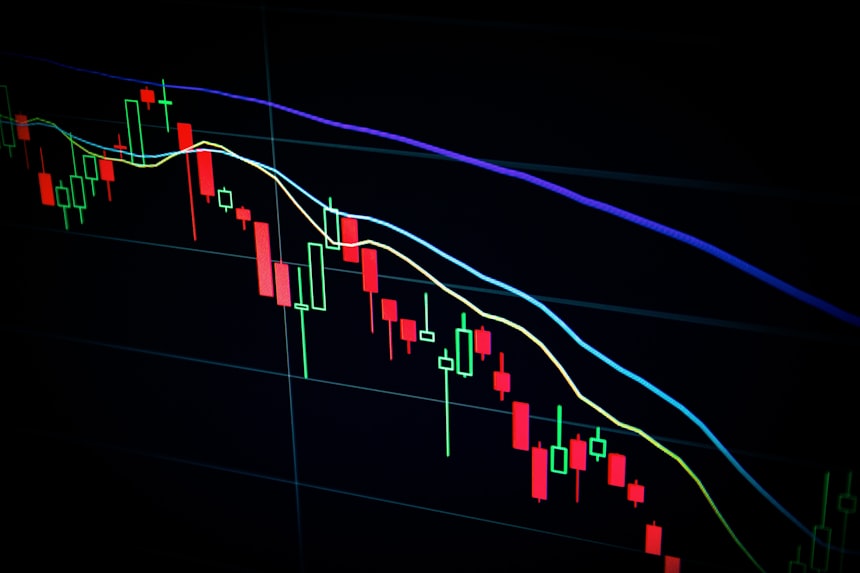
While LATAM was generating its $730 billion in real-world crypto volume, three of Wall Street's most influential voices were meeting in Miami to explain what they see coming next. Their message is directly relevant to Bitcoin's price trajectory - and creates a complex picture that does not neatly resolve into bullish or bearish.
Rick Rieder, BlackRock's chief investment officer for global fixed income, told conference attendees that the investment landscape feels different from any he can remember. He said he is actively broadening portfolios away from concentrated technology positions - a category that, in practice, includes many of the same institutional buyers who pushed Bitcoin up through late 2024 and into 2025. Rieder's thesis is not that growth ends. It is that the easy, index-driven momentum phase is done. Source: CoinDesk reporting from Miami investor conference, March 7, 2026.
Ulrike Hoffmann-Burchardi, UBS Global Wealth Management's chief investment officer for the Americas and global head of equities, went further. UBS has formally cut its overweight on technology and communication services - the sectors most associated with the AI buildout trade - and rotated capital toward industrials, electrification, and healthcare. She said the AI trade is entering a phase of sharper winner and loser separation, after three years in which broad exposure to the theme worked.
Daniel Loeb, founder of Third Point, offered the most tactical read. He said the market is rewarding investors doing deeper stock picking and more short selling - a phrase that translates to "the macro tide is no longer lifting all boats." He specifically called out stress in private credit, particularly loans tied to software companies, as a source of future losses - though not systemic ones.
For Bitcoin, this rotation creates a genuine identity problem. Bitcoin has behaved like a high-beta tech proxy during risk-on phases - it runs when Nvidia runs, it falls when QQQ falls. If institutional capital is rotating out of that exact basket, Bitcoin should face selling pressure. That has played out in the price: BTC fell from a peak of $74,000 on March 5 to $67,901 by market close on March 7, according to CoinDesk pricing data.
"Bitcoin may be better placed than smaller crypto assets in that environment because its investment case is simpler. It does not depend on proving a software revenue model or winning a race for AI market share." - CoinDesk, March 7, 2026
The alternative Bitcoin thesis - store of value, dollar hedge, non-correlated diversifier - requires investors to believe Bitcoin behaves like gold during dollar weakness periods. That has not been reliable. Gold hit all-time highs in early 2026 while Bitcoin struggled to hold $74,000. The two assets that are theoretically linked by the "hard money" narrative diverged sharply when it mattered.
The Dollar Surge and What 43% Underwater Means
The DXY - the US Dollar Index - posted its steepest weekly gain in a year during the week ending March 7, 2026. Forty-three percent of Bitcoin's entire supply is now sitting at a loss, according to Glassnode data. These two facts are connected.
A surging dollar is crypto poison. It compresses the return on every dollar-denominated alternative asset when measured in real purchasing power terms. It also signals that global capital is moving into dollar safety - a flight-to-quality trade that historically punishes speculative assets. Bitcoin's February 2026 losses accelerated exactly as the dollar broke higher, a pattern traders have watched repeat since at least 2018.
The February jobs report made it worse. The US unexpectedly lost 92,000 jobs in February 2026 - the preliminary Bureau of Labor Statistics data showed - and the unemployment rate rose to 4.4%, up from 4.1% the prior month. That is a significant deterioration in a single month. Markets initially read this as a signal that the Federal Reserve has room to cut rates faster, which is historically bullish for risk assets.
But the read is not clean. Iran war-driven oil prices are elevated. Tariff inflation risks are real. A Fed that cuts into a weakening labor market while oil runs hot is a central bank managing stagflation risk - exactly the scenario that killed crypto in 2022. The 43% of Bitcoin supply underwater reflects this uncertainty: long-term holders who bought through 2024 and early 2025 at prices above current levels are not selling, but they are not buying more either.
Solana dropped 4% on March 7. Ethereum fell 4.4%. These are not corrections in a bull market. They are what the late stage of a distribution event looks like on a weekly chart. The four-year cycle thesis - which would put Bitcoin's cyclical bottom sometime in mid-to-late 2026 before the next halving-driven bull run - remains intact. But sitting through 30% downside between now and then is not a retail-friendly proposition. Source: CoinDesk markets data, Glassnode on-chain analytics, BLS February 2026 preliminary employment report.
The LATAM Lesson and What It Means for Global Crypto Adoption
The most important thing about Latin America's $730 billion crypto year is what it tells you about where the next 500 million users come from. They are not coming from the United States. They are not coming from Europe. They are coming from markets where the pain of not having access to dollar-stable savings is immediate and visceral, not theoretical.
Sub-Saharan Africa is running a similar playbook to LATAM, particularly in Nigeria, Ghana, and Kenya. Southeast Asia - Vietnam, the Philippines, Indonesia - has stablecoin adoption curves that mirror Argentina's 2022-2023 trajectory. India is watching its freelancer class move toward USDC receipt with interest. These are markets with hundreds of millions of potential users who need the product that stablecoins already deliver.
The Wall Street narrative about Bitcoin's 2026 cycle - institutional adoption, ETF flows, macroeconomic hedge - is a US-centric story told by US-centric investors managing US-domiciled capital. It is not wrong. But it is incomplete. The larger adoption story is happening outside their field of vision, and it is not about Bitcoin at all.
Stablecoins grew Latin America's crypto user base at 3x the US rate because they solved a real problem. Bitcoin is solving a different problem - long-term value storage for people wealthy enough to think in decades. Both are legitimate. But only one is growing at 3x. Policy investors, venture capital backing crypto infrastructure, and anyone thinking about where the next wave of adoption comes from should be paying attention to which one.
Colombia, Mexico, Peru, and Chile are all scaling up crypto regulatory frameworks in response to the volume growth in their markets. Mexico's Banxico is engaged in active stablecoin monitoring after Mexican remittance flows - historically the second-largest globally - started routing through crypto rails at scale. When remittances from Mexican workers in the United States begin moving primarily through USDT on Tron instead of Western Union, the fee economics collapse for legacy money transfer operators and a billion-dollar industry restructures. That process is already underway. Source: Banxico 2025 annual report, World Bank remittance data.
Timeline: Latin America's Crypto Evolution
- 2020Argentina imposes capital controls limiting dollar purchases to $200/month per citizen. Black market peso-to-dollar premium hits 70%. Crypto adoption accelerates.
- 2021El Salvador adopts Bitcoin as legal tender. Experiment is globally watched but sees mixed domestic uptake. Latin America's P2P crypto volumes hit $1B/month for the first time.
- 2022Brazil passes its landmark crypto payment framework law - one of the first in Latin America - creating a regulated environment for virtual asset service providers. Institutional interest rises.
- 2023Argentine peso loses 54% of its value in a single year. USDT adoption in Argentina hits critical mass. Stablecoin volume exceeds Bitcoin volume in the country for the first time.
- 2024Milei wins Argentine presidency on dollarization platform. Crypto community sees this as validation. Bitcoin hits $100,000 globally. Latin America's total crypto volume passes $450 billion.
- 2025LATAM crypto volume hits $730 billion - a 60% increase. User base grows 3x faster than the United States. Brazil leads by volume, Argentina by adoption intensity, Colombia and Mexico by growth rate.
- March 2026Report data published as Bitcoin trades at $67,901 - 43% of global BTC supply sitting at a loss. LATAM stablecoin rails continue running independent of BTC price volatility.
What Happens Next
The most durable insight from the Latin American numbers is this: crypto adoption that is driven by genuine need rather than speculative appetite does not reverse when prices fall. Argentine stablecoin users did not stop using USDT when Bitcoin dropped 40% in 2022. Brazilian cross-border payment flows did not slow when ETF outflows hit crypto markets in early 2026. The utility persists because the underlying problem - currency instability, expensive legacy remittance rails, capital controls - persists.
Wall Street is figuring out that the AI rotation trade has run its easy phase. Bitcoin is stuck between two identities - risk-on tech proxy and macro hedge - and is not performing convincingly as either right now. Meanwhile, $730 billion in Latin American crypto volume keeps moving, largely disconnected from the price of BTC, largely running on stablecoins, largely invisible to the investors who spent the last two years talking about Bitcoin ETF flows as the signal that mattered most.
The next 500 million crypto users are not reading BlackRock research notes. They are sending $50 across borders using a Tron wallet on a $80 Android phone in a country where the bank charges 8% and takes three days. They already know why crypto exists. Wall Street is still figuring it out.
Brazil's volume will keep growing as institutional infrastructure deepens. Argentina's adoption will mature as Milei's dollarization stabilizes the macro environment. The rest of Latin America - Colombia, Mexico, Peru, Chile, Venezuela - will follow the established playbook. The $730 billion number from 2025 is a floor, not a ceiling. By the time the next cycle's euphoria brings American retail back into Bitcoin, the Global South will have already built the world's most extensive real-economy crypto infrastructure on stablecoin rails. And most of the people watching Bitcoin's price on TradingView will have no idea it happened.
Get BLACKWIRE reports first.
Breaking news, investigations, and analysis - straight to your phone.
Join @blackwirenews on TelegramSources: CoinDesk (March 7, 2026 - LATAM crypto report; Wall Street AI rotation conference); Glassnode on-chain analytics (43% BTC supply underwater); Bureau of Labor Statistics preliminary February 2026 employment report (92,000 jobs lost, 4.4% unemployment); CoinMarketCap stablecoin market data; Banco Central do Brasil regulatory filings (2025); Senate Banking Committee - Clarity for Payment Stablecoins Act (February 2026); World Bank global remittance data; Banxico 2025 annual report.