KuCoin Banned in Dubai, Blocked in Europe: The Global Crackdown on Offshore Crypto Exchanges
VARA drops a cease-and-desist on KuCoin hours after Austria blocks its EU arm. Binance fights a $1.7B Iran Senate probe with a letter calling the NYT "defamatory." The offshore exchange playbook - operate everywhere, license nowhere - is hitting a wall on three continents simultaneously.

Dubai's financial district. VARA's regulatory authority now extends aggressively into digital assets. (Unsplash)
On Friday March 6, 2026, Dubai's Virtual Assets Regulatory Authority issued a blunt public alert: KuCoin, the Seychelles-based exchange ranked inside the global top 10 by trading volume, has been operating in Dubai without a single regulatory approval. Consumers were advised to avoid it entirely.
That same morning, traders in Europe were still absorbing a separate blow: Austria's FMA - the country's main financial regulator - had already moved weeks earlier to prohibit KuCoin's European arm from onboarding new customers or conducting new business, citing inadequate compliance infrastructure.
Two regulators. Two continents. Two shutdowns. Three weeks apart. And behind all of it, a single pattern: offshore crypto exchanges that built their business on geographic ambiguity are running out of places to hide.
Meanwhile, in Washington, Binance's lawyers were hand-delivering a letter to a Senate subcommittee calling the New York Times, the Wall Street Journal, and Fortune magazine "defamatory." The subject: allegations that $1.7 billion in crypto moved through Binance to Iran-linked entities. Binance says the number is fabricated. Senators say they want documentation.
By Friday afternoon, Bitcoin had fallen back to $70,400 after briefly tagging $74,000 earlier in the week - its highest point since the war premium drove a short-lived rally. U.S. jobs data showed the economy shed 92,000 positions in February, unemployment jumping to 4.4%. Oil climbed on Trump's "no deal with Iran" statement. The macro backdrop and the regulatory backdrop are telling the same story: risk off.
Dubai Drops the Hammer: VARA's KuCoin Cease-and-Desist
The Virtual Assets Regulatory Authority has positioned Dubai as the world's most serious crypto-friendly jurisdiction since 2022. That reputation depends entirely on enforcement. On March 6, VARA proved it means business.
In a public statement, VARA declared that KuCoin "does not hold any licence to provide virtual asset services in/from Dubai." The authority added that "any promotion, advertising, or solicitation related to Kucoin has not been approved by VARA, and the company is therefore not allowed to offer, promote, or market any Virtual Asset products or services in Dubai or to its residents." (CoinDesk, March 6, 2026)
That is not a warning. That is a cease-and-desist with a public consumer alert attached. VARA didn't send a quiet letter to KuCoin's compliance team. They went public, telling Dubai residents directly: this exchange is operating illegally here. Do not use it.
The implications reach beyond KuCoin. Dubai's financial center hosts thousands of crypto traders, funds, and firms - many of them using offshore exchanges precisely because those platforms offer leverage, derivatives, and margin products that licensed exchanges under tighter regulatory frameworks cannot or will not offer. VARA's move signals that the era of Dubai as a permissive grey zone for unlicensed foreign exchanges is closing.
KuCoin issued a statement saying it "respects applicable laws and regulatory processes globally and maintains a cooperative approach with regulators while supporting the development of a responsible digital asset ecosystem." That language is what every exchange says when caught operating without a license. It answers nothing about why KuCoin was serving Dubai clients for years without obtaining VARA approval while VARA was building out its licensing framework.
Austria First: The MiCA Paradox That Exposed KuCoin's Compliance Gap
The Austrian angle is stranger than the Dubai one - and in some ways more damaging to KuCoin's credibility.
A few months before the FMA enforcement action, Austria's regulators granted KuCoin a Markets in Crypto Assets (MiCA) license. MiCA is the European Union's comprehensive crypto regulatory framework, the toughest and most thorough in the world. Getting that license requires passing compliance checks, submitting documentation, demonstrating adequate staffing, and committing to ongoing regulatory reporting. KuCoin passed those checks. They got the license.
Then the FMA looked closer and concluded that KuCoin's European arm lacked "appropriate compliance staff." The same entity that passed MiCA licensing review was subsequently found deficient in the compliance infrastructure that MiCA requires operators to maintain. Austria froze new customer onboarding and new business activity. (CoinDesk, March 6, 2026)
This is what happens when exchanges treat licensing as a box to check rather than a framework to operate within. You can hire the consultants, submit the paperwork, pass the initial review, and then immediately under-resource the compliance function because it doesn't generate revenue. Regulators are learning to look past the initial application and audit the ongoing reality. Austria did exactly that.
MiCA is supposed to be a passport - obtain one national license, operate across all 27 EU member states. KuCoin got the passport and apparently could not afford the travel insurance. The practical consequence: KuCoin's EU operations are in limbo across one of the most significant crypto markets globally.

Offshore exchanges built for regulatory arbitrage face synchronized global enforcement for the first time. (Unsplash)
Who Is KuCoin, and Why Does This Matter
Founded in 2017 and originally operating out of China before Beijing's blanket crypto ban in 2021, KuCoin relocated its nominal headquarters to the Seychelles - a jurisdiction chosen specifically for its minimal regulatory footprint. The exchange built its brand on offering hundreds of altcoin pairs that regulated U.S. and European platforms would not touch, plus leverage products unavailable to retail traders in stricter markets.
At its peak, KuCoin handled billions of dollars in daily volume. The "People's Exchange" branding was deliberate - KuCoin positioned itself as the platform that offered what Coinbase, Kraken, and Bitstamp refused to: low-cap tokens at inception, margin trading without identity verification headaches, and a global footprint deliberately structured to outrun any single regulator's jurisdiction.
That model worked until MiCA entered the picture and until Gulf regulators like VARA began building real enforcement infrastructure. The Seychelles incorporation stopped regulators from seizing the parent company. But it did nothing to protect KuCoin's ability to serve customers in regulated markets. VARA does not need to reach the Seychelles entity. It simply bans KuCoin from serving Dubai residents and tells consumers not to use it. The effect is identical to a license revocation - just applied from the demand side.
KuCoin is not a small actor. This enforcement action hits a top-10 exchange with a user base spread across some of the most crypto-active regions in the world. If VARA's action leads other Gulf regulators - Bahrain, Qatar, Saudi Arabia - to issue parallel alerts, KuCoin's access to the Middle East and South Asia markets contracts sharply. Those regions have been among the fastest-growing crypto adoption zones since 2023.
Binance's Senate Fight: $1.7 Billion Iran Allegation and a "Defamatory" Press Response
While KuCoin was absorbing its Dubai shutdown, Binance was executing a very different kind of regulatory defense play in Washington. On March 6, 2026, Binance's legal team delivered a letter to Sen. Richard Blumenthal's Permanent Subcommittee on Investigations, responding to a Senate probe into whether Binance allowed $1.7 billion in crypto to flow to Iran-linked entities - including Yemen's Houthi militants. (CoinDesk, March 6, 2026)
Binance's position: it found zero evidence of accounts that transacted directly with Iranian entities. An internal review identified only "indirect exposure to wallets that may have had links to Iran." The accounts connected to that indirect exposure - two entities named Hexa Whale and Blessed Trust - were removed. Hexa Whale was offboarded in August, Blessed Trust in January 2026.
"When there is credible risk information, Binance investigates, mitigates, offboards accounts, and reports to appropriate authorities. Binance has a rigorous compliance program that is consistently growing stronger."
- Binance, letter to Sen. Blumenthal's Permanent Subcommittee on Investigations, March 6, 2026
The letter's sharpest section was the attack on media coverage. Binance called reporting from the New York Times, Wall Street Journal, and Fortune "demonstrably false" and "defamatory in several material respects." For an exchange that pled guilty to money laundering and sanctions violations in 2023 and paid $4.3 billion in fines, calling journalists defamatory for covering alleged compliance failures is a significant rhetorical escalation.
The existing BLACKWIRE report on Binance's whistleblower firings established the internal context: compliance investigators who raised concerns internally were pushed out. Binance's letter disputes this, saying most departures were voluntary and one termination involved an employee who disclosed internal user data in violation of policy. The Senate subcommittee will ultimately determine which account is closer to the truth - and they have subpoena power.
The $1.7 billion figure itself remains contested. Binance says the number is fabricated by media. The Senate probe will seek to independently verify transaction flows using blockchain data, which is publicly auditable regardless of what Binance's internal review concludes. On-chain analysis firms will likely weigh in before any hearing concludes.
KuCoin & Exchange Regulatory Timeline - 2025-2026
The February Jobs Shock and What It Did to Bitcoin
Regulatory pressure on exchanges was not the only force pushing crypto lower on Friday. The U.S. Bureau of Labor Statistics delivered a data point that blindsided markets: the American economy shed 92,000 jobs in February, and the unemployment rate climbed from 4.1% to 4.4%. (CoinDesk, March 6, 2026)
Forecasters had expected modest job gains. The miss was not just directional - it was a 92,000 swing on the wrong side. That number, combined with rising oil prices driven by Trump's declaration of "no deal with Iran" - demanding unconditional surrender rather than the negotiated exit that markets had hoped for - hit every risk asset simultaneously. Stocks sold off. Bitcoin dropped. Oil surged.
Bitcoin had rallied nearly 12% from its lows the previous Saturday, briefly tagging $74,000 - a level it has not sustained since before the February selloff. Short-term holders who bought the war-rally dip took profit hard at $74K. Derivatives data showed cautious positioning throughout the week, with open interest in perpetual futures declining rather than expanding, suggesting traders were hedging rather than pressing the rally with fresh leverage.
By Friday's close, Bitcoin was trading near $70,400 - still up from the war-crash lows but unable to reclaim the psychological $72K level that would have suggested renewed institutional accumulation. The pattern has repeated three times since October 2025: rally on news, stall, profit-take, consolidate lower.
XRP dropped 3% after failing to break $1.45 resistance, with high-volume selling confirming continued bearish structure. Ethereum and DOGE slid alongside Bitcoin as the post-war-rally momentum exhausted itself against the macro wall. Asia's benchmark equities index - the MSCI Asia Pacific - was headed for its worst weekly performance since March 2020, the COVID crash week.
The bond market is sending the clearest signal of all: yields are rising while stocks attempt to stabilize. That combination - higher yields, sideways equities, falling crypto - suggests the market is pricing in a scenario where the Fed cannot cut rates despite weaker growth because inflation remains sticky. Stagflation, in other words. Oil at elevated levels due to the Iran war keeps energy inflation elevated regardless of what demand destruction the job losses represent.
The Architecture of the Offshore Exchange Model - and Why It's Breaking
To understand why KuCoin and exchanges like it are increasingly vulnerable, you need to understand how the offshore model was designed to work. The original playbook went like this: incorporate in a permissive jurisdiction, build the user interface, accept users globally through IP address spoofing and weak KYC, generate fee revenue from every jurisdiction, and rely on the practical difficulty of cross-border regulatory cooperation to remain out of reach.
Binance executed this model at scale better than any exchange in history from 2018 through 2022. It worked until it didn't - until the DOJ, FinCEN, OFAC, and the CFTC coordinated across agencies and jurisdictions to build a case that forced a $4.3 billion settlement and CZ's personal guilty plea. That 2023 settlement changed the calculus for every offshore exchange still running the same playbook.
The new regulatory architecture is tightening on three sides simultaneously. First, licensing requirements in major markets (EU via MiCA, UAE via VARA, Singapore via MAS) mean exchanges must affirmatively demonstrate compliance rather than simply avoid enforcement. Second, consumer-facing alerts - VARA's KuCoin notice being a prime example - reduce exchange traffic from regulated jurisdictions even without direct enforcement action against the exchange entity itself. Third, financial institution relationships for banking and payments are increasingly contingent on regulatory standing. An exchange with active cease-and-desist orders in multiple markets cannot easily maintain USD payment rails or stablecoin settlement infrastructure.
KuCoin has now triggered two of those three mechanisms simultaneously. The question is whether its banking and payment relationships hold while it works to resolve the regulatory issues - or whether the public alerts prompt partner institutions to cut exposure first.
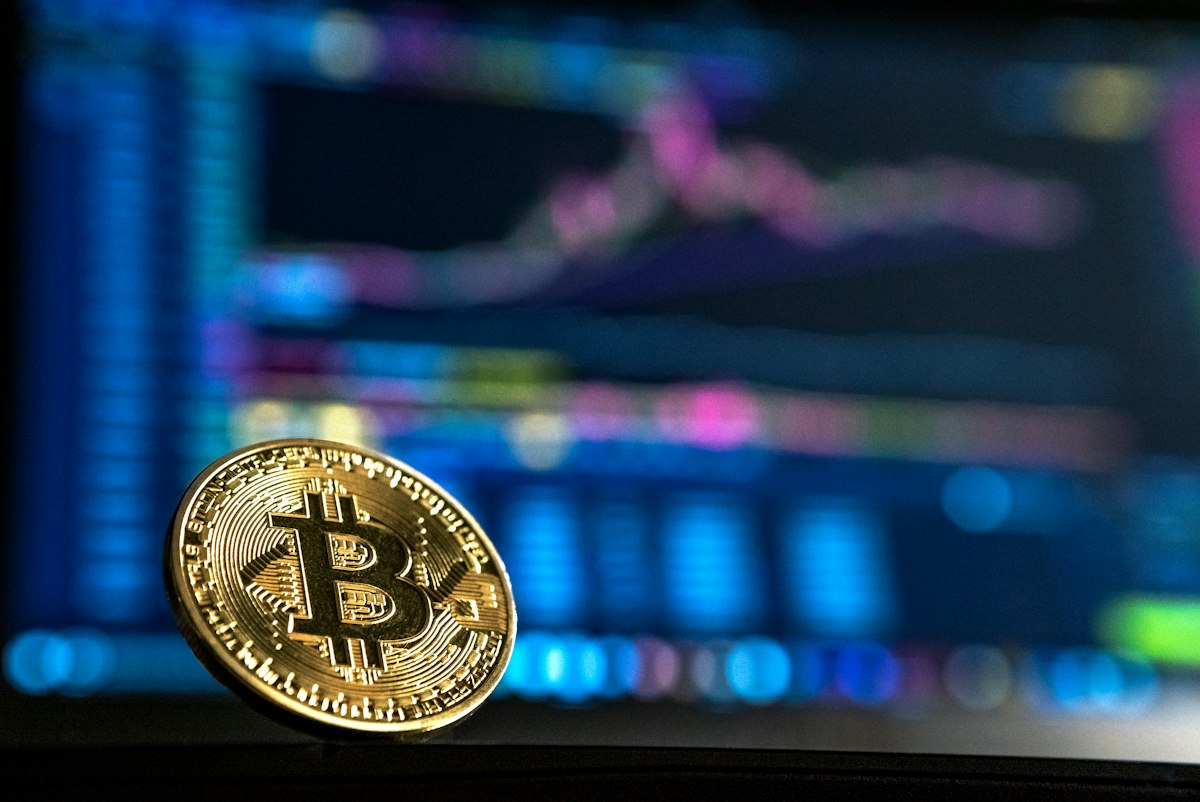
The coordinated global squeeze on offshore exchanges marks a structural shift in how regulators approach crypto jurisdiction-shopping. (Unsplash)
Altseason Is Dead (For Now) - And Why That's Actually Bullish
There was a counterintuitive signal buried in Friday's market data that deserves attention. According to Santiment data, social media mentions of "altseason" have dropped to their lowest level in two years. (CoinDesk, March 6, 2026)
Santiment has tracked this metric for years, and the pattern is consistent: altseason euphoria peaks during altseasons, not before them. When traders are universally calling for altseason, it typically means the move is over or about to reverse. When altseason talk disappears from social media - as it has now - it has historically preceded the next round of speculative rotation from Bitcoin into altcoins.
This is not a call for an immediate altcoin pump. The macro environment is hostile: rising unemployment, war premium on oil, Fed rate cut expectations being pushed back, and regulatory pressure on the offshore exchanges that typically provide the highest leverage and the most obscure altcoin pairs. All of those factors suppress speculative risk appetite.
But the sentiment signal is real. The retail crowd that drove the November 2024 altseason and the brief Q1 2025 rotation has largely left the market. Volume on altcoin pairs has collapsed. Open interest in perpetual futures for everything outside BTC and ETH is near 12-month lows. That is not the setup for an immediate rally - but it is exactly the setup that preceded previous altcoin breakout cycles when macro conditions eventually shifted.
The implication for traders: the altcoin market is not dead, it is compressed. Compressed springs release when the pressure changes. The pressure right now is maximum - Iran war, jobs miss, regulatory crackdowns, bond yields rising. When any of those factors reverses, the compression releases fast.
What Comes Next for Offshore Exchanges
KuCoin faces a decision tree with limited good options. It can attempt to accelerate licensing applications in the markets where it has been flagged, acknowledging the compliance gaps and investing in the staff and systems required to genuinely meet regulatory standards. That path is expensive, slow, and uncertain - Austria's FMA made clear that a license on paper does not guarantee ongoing approval.
Alternatively, KuCoin can retreat from regulated markets, explicitly targeting only jurisdictions with minimal enforcement infrastructure, and accept a smaller addressable market. Some offshore exchanges have taken that approach, essentially choosing to be regional players in jurisdictions like certain African markets, Central Asia, and parts of Southeast Asia where regulatory frameworks for crypto remain nascent.
The third option - continuing to serve regulated markets while ignoring regulatory alerts - carries existential risk. Payment processors and banking partners do not want the compliance exposure of servicing exchanges under active regulatory sanctions in major markets. That is ultimately what killed exchanges faster than any regulatory action historically: loss of banking relationships.
For Binance, the Senate probe is a different kind of risk. Binance already has its 2023 settlement compliance program in place, with a court-appointed compliance monitor reviewing its operations. A Senate investigation that finds the exchange misled regulators about Iran-linked transaction volumes would be a direct attack on that compliance program's credibility - and potentially trigger DOJ action that reverts Binance to the pre-settlement enforcement posture. The legal stakes of the $1.7 billion Iran number are not hypothetical.
The week ending March 6, 2026 will be remembered as the moment the offshore exchange era entered its final phase. KuCoin banned from Dubai. KuCoin frozen in Europe. Binance defending its Iran compliance record to the United States Senate. Bitcoin unable to hold $74,000 against a 92,000-job miss and rising oil. The regulatory walls are closing. The macro walls are closing. The exchanges that survive will be the ones that either genuinely invested in compliance infrastructure - or the ones small enough to fly under the radar in jurisdictions that still have it.
The middle path - big enough to attract regulatory attention, but not compliant enough to pass scrutiny - is disappearing. KuCoin is learning that the hard way. Others are watching.
Get BLACKWIRE reports first.
Breaking news, investigations, and analysis - straight to your phone.
Join @blackwirenews on Telegram