Sovereign Accumulation vs. Retail Pain: Kazakhstan Banks $350M on Crypto While Bitcoin Bleeds Below $68K
Kazakhstan's central bank just disclosed a $350 million digital asset investment plan. At the same moment, 43% of Bitcoin's circulating supply sits underwater, the dollar just logged its best week in 12 months, and one institutional research firm is calling for another 30% crash from here. The "institutions will save us" thesis has never looked more hollow - or more interesting.

The Paradox Nobody Wanted
Here is the trade nobody modeled: institutional accumulation accelerating as price collapses. Kazakhstan's National Bank announced Thursday it will deploy roughly $350 million from its gold and foreign exchange reserves into digital assets. Not direct Bitcoin. The plan - according to reporting by CoinDesk citing the central bank's disclosure - targets crypto infrastructure firms, technology stocks tied to digital assets, and investment funds with blockchain exposure.
That announcement landed while Bitcoin was busy giving back every dollar it gained during what was supposed to be its best macro week in months. The asset touched $74,000 on Tuesday following a flurry of institutional headlines and a brief diplomatic pause in the Iran conflict. By Friday close in New York, it was below $68,000 and bleeding through Saturday morning.
The juxtaposition is the story. A sovereign central bank in Central Asia - one of the world's top Bitcoin mining countries by hashrate share - makes the most concrete state-level crypto allocation announcement since El Salvador's 2021 Legal Tender experiment. And the market doesn't care. Price keeps falling. Forty-three percent of circulating supply is now sitting at a loss, per on-chain analytics firm Glassnode. That is not a minor dip. That is a sustained drawdown that has real holders in real pain.
Kazakhstan is not a minor player in crypto. The country holds roughly 13-15% of global Bitcoin mining hashrate after a wave of Chinese miners relocated post-2021. The National Bank of Kazakhstan (NBK) has watched Bitcoin get mined inside its borders for four years without putting reserves into the asset class. That it is moving now - during a drawdown, not a bull run - is either brilliant contrarian timing or a sovereign institution doing exactly what retail traders do: buying the narrative, not the chart.
What Kazakhstan Is Actually Buying
The $350 million figure represents a slice of the NBK's gold and foreign exchange reserves, which were reported at approximately $35 billion as of late 2025. This is roughly 1% of total reserves - a cautious, diversified bet, not a commitment to Bitcoin maximalism.
Critically, the NBK is not buying spot Bitcoin directly. The plan is exposure through three channels: crypto infrastructure firms (exchanges, custodians, blockchain service providers), technology stocks that have substantial digital asset business lines, and regulated investment funds that provide structured crypto exposure. Think Coinbase equity, not Bitcoin on a cold wallet.
This distinction matters enormously. It means the $350M announcement is not adding buy pressure to BTC spot markets. It is adding capital to the crypto-adjacent equity ecosystem - the companies that profit when crypto volumes are high, regardless of price direction. Exchanges make money on volatility. Infrastructure providers earn fees. Funds take management and performance cuts.
"The central bank plans to invest in crypto infrastructure firms, tech stocks and funds tied to digital assets." - CoinDesk, citing NBK disclosure, March 6, 2026
Kazakhstan is essentially running a venture play on crypto infrastructure at discounted prices. If the sector recovers - and sovereign capital is one of the signals that tends to precede recovery - these bets compound hard. If crypto enters a prolonged bear market, infrastructure firms cut costs and survive while retail traders capitulate. It is not the same risk profile as buying BTC at $74,000.
Context on Kazakhstan's economy: the country has a GDP of approximately $220 billion (2025 estimate), a currency - the tenge - that has been under sustained pressure from commodity price cycles and regional geopolitical spillover from the Russia-Ukraine conflict. The Russian invasion created a window for Kazakhstan to quietly position itself as a capital relocation hub for Russian wealth while maintaining plausible deniability about sanctions exposure. Crypto infrastructure was already a known vector. The NBK moving formally into digital asset funds is a natural extension of that economic positioning.
Bitcoin's Technical Picture: $68K and Fading

The current Bitcoin price structure is not encouraging for bulls. The asset ran from approximately $63,000 to $74,000 this week on a combination of positive institutional flows and optimism around U.S. crypto legislation - specifically the GENIUS Act stablecoin framework and CFTC jurisdiction clarity around Bitcoin perpetual futures. Both were real catalysts.
But the reaction at $74,000 was immediate and brutal. Short-term holders - defined by Glassnode as coins held for 155 days or less - cashed out at scale. The profit-taking was not marginal. On-chain data shows the short-term holder cohort was sitting on substantial unrealized gains entering the $74k print, and they used the liquidity. This is textbook behavior in a damaged bull market structure: every new high is a selling opportunity, not a conviction buy.
Investment research firm (unnamed per CoinDesk report) issued a note Friday calling for Bitcoin to fall another 30% from current levels in 2026, citing strengthening of the four-year cycle bear phase. If accurate, that targets approximately $47,000-$48,000 before the next cycle bottom.
The four-year cycle thesis has taken a beating lately among crypto analysts, largely because institutional ETF flows were supposed to have smoothed it out. That has not happened. The halving in April 2024 followed by 12-18 months of accumulation, a blow-off top, and a 30-40% correction is playing out roughly on schedule, with the Iran war providing the geopolitical accelerant to the downside pressure.
Current price structure: Bitcoin has lost the $70,000 level on a daily close basis. The 50-day moving average sits around $71,500. Price is trading below it. The 200-day MA is closer to $65,000. Bulls need to reclaim $70k with conviction to change the narrative. Every rally that fails below $74k reinforces the downtrend thesis.
Derivatives markets paint the same picture. Open interest in Bitcoin perpetual futures remains elevated but funding rates have turned slightly negative, indicating shorts now paying longs - a sign that traders are positioned for continued weakness. Options market skew has tilted toward puts (downside protection) for the first time in weeks. This is not the positioning of a market about to break out.
The Dollar Stranglehold - Steepest Weekly Gain in 12 Months
The real killer is the dollar. The DXY - the U.S. dollar index against a basket of major currencies - posted its steepest weekly gain in approximately 12 months this week. Every professional macro trader knows what this means for risk assets: trouble.
The catalyst was a combination of events that landed simultaneously, creating a dollar demand surge that squeezed everything priced in USD. First, the U.S. February jobs report came in shockingly weak on Friday. The U.S. economy unexpectedly shed 92,000 jobs, a dramatic reversal from consensus expectations of moderate job growth. Unemployment ticked up to 4.4%, the highest level since 2021.
Normally, weak jobs data weakens the dollar - it implies Fed rate cuts are coming, which reduces the yield advantage of holding dollars. But this is not a normal rate environment. The Iran war has oil trading above $90/barrel. Supply chain disruptions across the Gulf are pushing goods prices higher. The combination of rising inflation expectations and a suddenly weakening labor market is the definition of stagflation - and stagflation is the scenario where the Fed has no clean move.
"The outlook for the Fed grew cloudier on Friday, as the employment market weakened appreciably even as inflation could be worsening." - CoinDesk, March 6, 2026
In stagflation, investors historically flee to the dollar - not because it is a great asset, but because it is liquid, safe, and short-term rates are still elevated. The Fed can not cut into rising inflation. So dollar yields stay high. And anything in competition with the dollar - crypto, gold, equities - faces structural headwinds.
Trump's Friday statement - "No deal with Iran, unconditional surrender" - sent oil surging and Bitcoin lower simultaneously. The geopolitical risk premium is now fully baked into the oil price but only partially reflected in crypto. The potential for supply disruptions in the Strait of Hormuz, through which roughly 20% of global oil transits, keeps inflation expectations elevated. Every day the Iran conflict continues without resolution is another day the dollar holds its bid.
For Bitcoin specifically, the dollar correlation has strengthened during risk-off episodes. The narrative that Bitcoin is "digital gold" and therefore a dollar hedge has been thoroughly disproved in every major risk-off event since 2020. Bitcoin moves like a high-beta tech stock when fear enters the market. The DXY's best week in a year is precisely the environment where Bitcoin underperforms.
43% of Supply at a Loss - Who's Underwater
Glassnode's on-chain data showing that 43% of circulating Bitcoin supply is now held at a loss is the most important number in this report. Let's decompose it.
Bitcoin's total circulating supply is approximately 19.8 million coins. Forty-three percent means roughly 8.5 million BTC is held by wallets whose last acquisition price is above $67,664. These holders are in the red. They are experiencing unrealized losses. And at some point - either through forced selling, margin calls, or capitulation - a portion of that supply becomes motivated selling pressure.
The cohort breakdown matters. Long-term holders (LTHs) - wallets that have not moved coins in 155+ days - are, by and large, still in profit. Most LTHs accumulated during 2022-2023 at sub-$30,000 prices. They are not the source of the 43% underwater figure. The underwater holders are predominantly medium-term accumulators: those who bought in the $70,000-$74,000 range during October-December 2025, the retail wave that chased the ETF approval pump.
This is not unprecedented. During the 2022 bear market, the underwater cohort eventually reached 55-60% before the capitulation low near $15,600. By that measure, 43% is deep in bear territory but not yet at the extreme pain threshold that historically marks a tradeable bottom.
The ETF dynamic complicates the picture. BlackRock's IBIT, Fidelity's FBTC, and the other spot Bitcoin ETFs hold approximately 1.1 million BTC collectively. These coins are custodied on behalf of institutional investors who can exit through share redemptions - a mechanism that does not involve them personally making a wallet move but absolutely creates sell pressure when outflows spike. The BlackRock private credit fund stress reported Friday is creating risk-off sentiment that is bleeding into ETF outflow pressure.
The private credit market - a $3.5 trillion asset class that has boomed since 2022 - is showing early signs of stress. Default rates in middle-market lending are creeping higher. Liquidity in that market is seizing. When institutional money managers who own both private credit and Bitcoin ETFs need to raise cash, the liquid assets get sold first. Bitcoin is liquid. Private credit is not.
Altseason Is Dead - And That Might Be the Signal
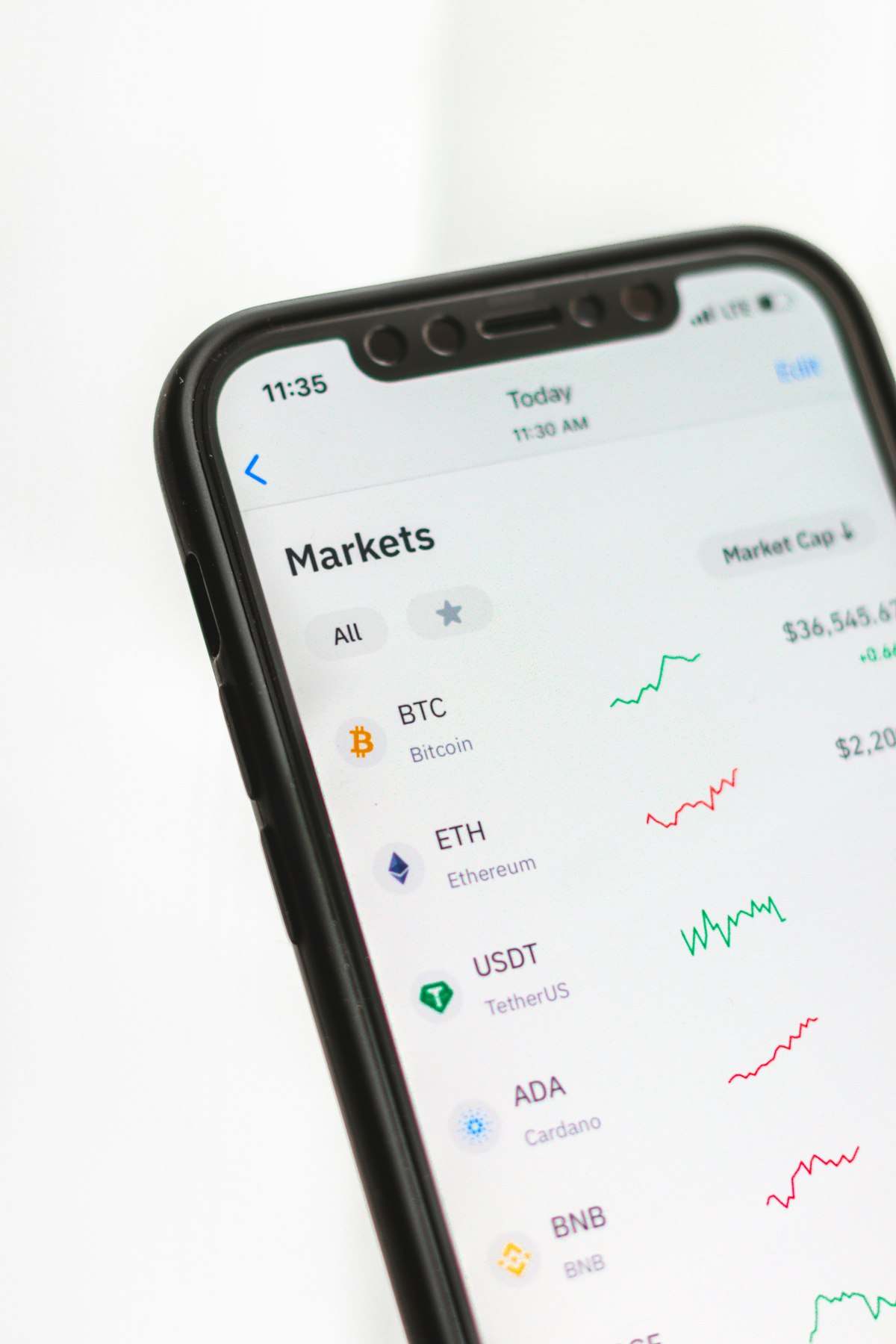
Crypto analytics firm Santiment dropped a counter-intuitive data point this week: social media mentions of "altseason" have dropped to their lowest level in two years. Nobody is talking about altcoins running. Nobody expects it. The narrative is dead.
Santiment and several other on-chain analytics services have historically used sentiment extremes as contrarian indicators. When everybody is talking about altseason, it usually does not come. When nobody is talking about it - like now - the setup for a surprise can quietly build.
The current altcoin picture is ugly on the surface. ETH is at $1,973, having failed to hold $2,000. SOL is at $84, down from peaks above $250 in late 2024. Layer-2 tokens are uniformly down 20-40% over 30 days. DeFi tokens like AAVE dropped 6.6% on Friday alone. The CoinDesk 20 index - a market-cap-weighted index of the top 20 crypto assets - had every single constituent trade lower on Friday.
But look at 30-day performance on selected assets: DOGE is up 37.75%. SOL is up 12.9%. Uniswap (UNI) is up 18%. NEAR Protocol is up 23.58%. Mantle (MNT) is up 9.71%. These are not bear market numbers. They are numbers that suggest capital is selectively rotating into specific narratives even while the broad market takes heat.
The divergence between 24-hour pain and 30-day reality is the key tension. Daily traders are getting wrecked. Monthly accumulators who bought the February lows are sitting on solid gains. The market is bifurcating by time horizon.
Bank of Canada and its largest commercial banks also announced this week they completed the first tokenized bond trial - Project Samara - testing issuance, trading, and settlement of bonds using digital Canadian dollars on a distributed ledger. It is not market-moving news for crypto prices. But it is another institutional brick in the infrastructure wall that the Kazakhstan central bank and others are buying exposure to.
Sovereign Bitcoin Reserve Divergence: Kazakhstan vs. El Salvador
El Salvador made history in September 2021 by declaring Bitcoin legal tender and beginning direct BTC accumulation into its national treasury. President Nayib Bukele turned the country into a Bitcoin maximalist state. The experiment has been costly: at Bitcoin's bear market lows in 2022, El Salvador's BTC holdings were deeply underwater. The IMF made reducing Bitcoin exposure a condition of its $1.4 billion loan deal with San Salvador in early 2025, forcing Bukele to sell down the direct treasury reserve.
Kazakhstan is doing this differently. No political theater. No Bitcoin maximalism. No legal tender declaration. Just a quiet 1% allocation from gold and forex reserves into a diversified basket of digital asset exposure - funds, stocks, infrastructure. The sovereign wealth playbook, applied to the emerging asset class.
The contrast matters because it shows how institutional crypto thinking has matured. In 2021, you either "got Bitcoin" or you didn't. In 2026, sophisticated state actors are finding middle-ground positions: get exposure to the ecosystem without the idiosyncratic risk of direct BTC custody, regulatory headaches, and political drama.
"The NBK's approach represents the pragmatic sovereign route - institutional-grade funds, infrastructure equity, and structured exposure - rather than direct reserves allocation. It is the difference between owning a gold mine and owning a futures contract." - Market analyst note, CoinDesk, March 6, 2026
Other sovereigns are watching. Norway's Government Pension Fund Global - the world's largest sovereign wealth fund at $1.7 trillion - already has indirect Bitcoin exposure through equity holdings in companies like MicroStrategy and Bitcoin mining operations. Singapore's GIC has crypto exposure through venture funds. The trend is unmistakable even if the amounts are still small relative to total reserves.
The question is whether Kazakhstan's announcement sparks a wave of EM central bank copycat moves. Countries with large commodity-linked reserves - Azerbaijan, Uzbekistan, Nigeria, and Gulf states outside the dollar bloc - have incentive to diversify. If three or four EM central banks announce similar $200-400M crypto infrastructure allocations in the next six months, the narrative flips from "sovereign interest story" to "structural demand driver." Not overnight. But the trend has a direction.
Timeline: How This Week Played Out
What Comes Next: Inflection or Capitulation?
Two scenarios are live right now. Both have credible evidence behind them.
Scenario A - Capitulation and Flush. The four-year bear market thesis plays out. Bitcoin loses $65,000, triggering stop-losses and forced liquidations from leveraged positions. The 43% underwater cohort grows to 55-60%, reaching historical capitulation levels. Price finds a floor somewhere in the $47,000-$55,000 range before the cycle turns. Duration: 6-12 more months of grinding lower. Catalyst to watch: ETF outflows accelerating past $500M weekly, open interest collapsing, funding rates deeply negative.
Scenario B - Institutional Floor Holds. The combined weight of Kazakhstan, sovereign wealth funds, corporate treasuries, and pension fund allocations creates a structural demand floor around $60,000-$65,000. Every dip into that zone gets bought by institutions following the exact playbook Kazakhstan just announced. The bear market becomes a prolonged consolidation rather than a deep crash. Price grinds sideways for months before the next catalyst - likely a Fed rate cut or Iran resolution - triggers the next leg up. Catalyst to watch: ETF inflows resuming consistently, Glassnode supply-at-loss metric stabilizing below 45%.
$65,000: 200-day moving average vicinity. Loss of this level changes the long-term technical structure significantly.
$70,000: Must-reclaim for bulls. Three consecutive daily closes above this level would shift short-term momentum.
$74,000: The week's high and the distribution ceiling. A break above here on volume would invalidate the bear thesis.
The wildcard is Iran. Every market is hostage to the war right now. A genuine ceasefire or diplomatic resolution - however unlikely given Trump's "unconditional surrender" posture - would be a simultaneous risk-on signal across every asset class. Oil drops. Dollar softens. Fed rate cut probability rises. Bitcoin gets a multiple expansion event. The gap between $68k and $74k closes in hours, not weeks.
But war resolution is not a trading strategy. It is an event you position for with optionality, not a thesis you lever up on. The base case remains: dollar strong, oil elevated, Fed stuck, crypto in the penalty box. Kazakhstan's $350M signals the smart institutional money is positioning for the next cycle, not the next week. Retail has to decide which time horizon they are trading on.
The sovereign accumulation thesis and the retail pain are not contradictory. They are the same market at two different time horizons. Kazakhstan is buying the five-year trend. The short-term holder who bought at $73,500 is selling the Friday close. Both are rational. The question is which clock you are running.
Get BLACKWIRE reports first.
Breaking news, investigations, and analysis - straight to your phone.
Join @blackwirenews on TelegramSources: CoinDesk (market data, Kazakhstan NBK announcement, Glassnode figures, Santiment sentiment data), CryptoSlate (live price data), Santiment (altseason social metrics), Glassnode (supply-at-loss on-chain analytics). All prices as of March 7, 2026, 08:30 CET.