Somewhere in Tehran right now, a woman is listening to explosions. She has been listening to them for eight nights. In 2022, she was in the streets chanting "Zan, Zendegi, Azadi" - Woman, Life, Freedom - after the morality police killed Mahsa Amini for wearing her hijab wrong. She risked a bullet or a prison cell to demand the most basic thing: the right to exist on her own terms.
Tomorrow is International Women's Day. She will not be marching.
The US-Israeli operation named "Epic Fury" - launched on February 28, 2026 - has killed at least 1,332 people in Iran as of Saturday morning, according to the Iranian Red Crescent Society. Internet access inside the country is down to approximately 1%, according to the monitoring group NetBlocks. The supreme leader, Ayatollah Ali Khamenei, is dead. The regime that tortured and imprisoned and executed women for refusing to cover themselves is crumbling.
And yet this is not the liberation Iranian women spent four years building toward. This is something else entirely - something louder and more chaotic and infinitely more dangerous.
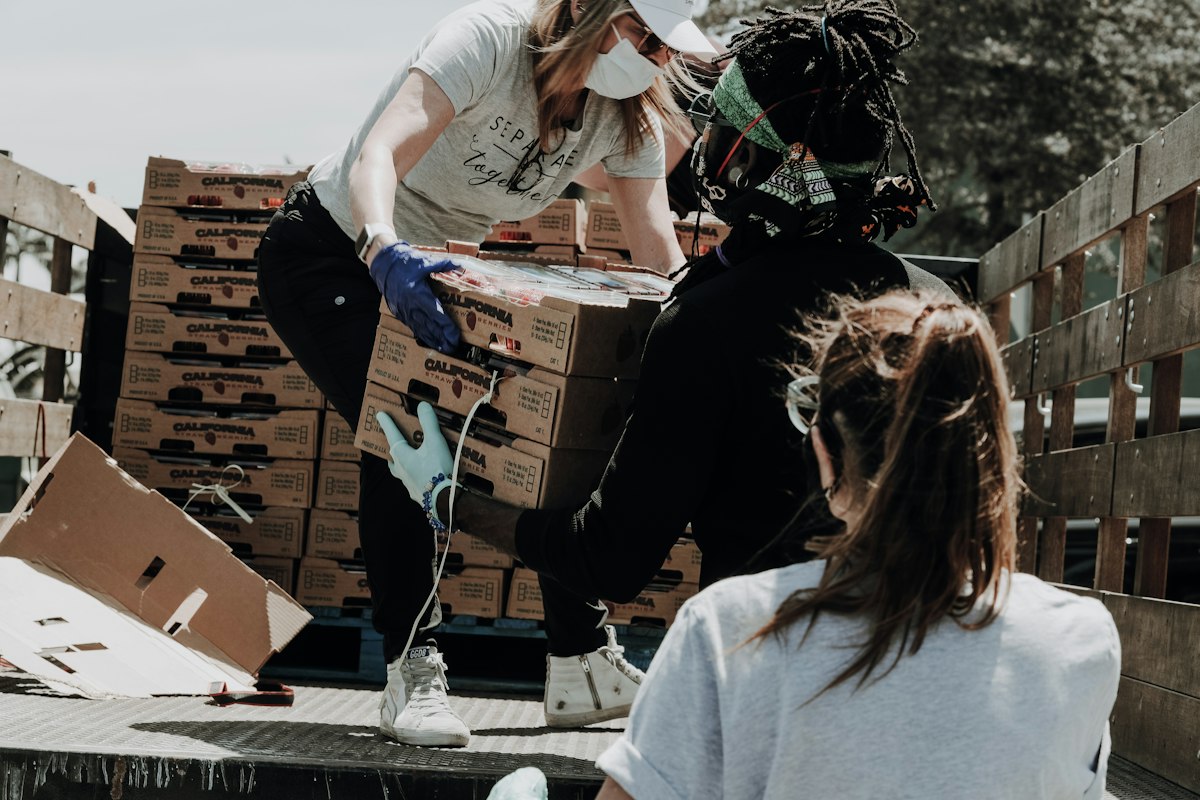
Women-led protests have defined the political landscape of the 2020s across dozens of countries. (Photo: Unsplash)
Woman, Life, Freedom - And Then the Bombs Came
The "Woman, Life, Freedom" movement that erupted across Iran in September 2022 was not just the largest civil uprising in the Islamic Republic's history - it was a seismic shift in how the world understood what Iranian society actually wanted. Young women burned their hijabs. Men cut their hair in solidarity. Protesters chanted outside police stations, on university campuses, in high schools. The regime responded with live ammunition, mass arrests, and more than 500 executions in 2023 alone. (Amnesty International, "Iran: Death Toll of Protesters 2022-2023")
The movement never fully died. It changed shape, going underground, becoming encrypted conversations and quiet acts of defiance - a woman riding the Tehran metro without a headscarf, a schoolgirl refusing to sing regime songs. When the war started eight days ago, these same women found themselves in a surreal position: their oppressor falling, yes, but falling under bombs they did not invite and do not control.
"I messaged my best gay friend who lives not far from the compound where Khamenei was hit. I worry that he and others are safe - but I also know the excitement they finally feel for futures we have dreamed of. 'Are you OK?' I wrote. 'Congratulations, he is finally dead,' he replied. 'You have no idea how we are feeling!'" - An Iranian exile writing in The Guardian, March 7, 2026, describing contact with friends still inside Tehran
That quote - from a gay Iranian man writing under a pen name because revealing his identity "would still be dangerous" - captures the impossible emotional math of this moment. Joy and terror in the same breath. Liberation and bombing in the same week. The person writing it is a doctor in London now, having fled years ago. His friends are still there, in apartments shaking from US and Israeli strikes.
The girls' primary school bombed in Minab, southern Iran, on March 1st - killing dozens of children in what the Guardian called "the worst mass-casualty event of the Iran war" - was not a military target by any coherent definition. The children who died there were not the regime. They were the daughters of the country the regime oppressed.
International Women's Day 2026 arrives inside this particular anguish: that the people most desperate for freedom are often the last to get it cleanly, and the first to pay for it in blood they didn't choose to shed.

Vigils for Iranian civilians killed in airstrikes have been held in dozens of cities across Europe and North America this week. (Photo: Unsplash)
Strikes, Marches, and the "No Kings" Connection
While the Middle East burns, March 8 protests and strikes are being organized across North America, Europe, Latin America, and South and Southeast Asia. Organizers in more than 40 countries have registered events with the global feminist coordination network that has used the International Women's Strike framework since 2017. (International Women's Strike organizing communications, March 2026)
In the United States, the IWD marches this year are explicitly fused with the "No Kings" movement that has been building since January - the loose, decentralized network of protests against the second Trump administration's dismantling of federal institutions, deportation programs, and rollback of civil rights protections. The connection is not incidental. The same executive orders that gutted the Department of Education's Title IX enforcement, ended federal funding for abortion access in health clinics, and eliminated DEI programs in federal contracting are the ones that animated the No Kings protests.
For many organizers, the distinction between an IWD march and a No Kings march has become largely ceremonial. "These aren't separate conversations anymore," said one organizer in Austin, Texas, in messaging distributed to local groups this week. "You cannot talk about the rights of women in this country without talking about who is attacking them, and you cannot talk about democracy without talking about who it leaves out."
In Madrid, the annual March 8 feminist march - one of the largest in Europe, regularly drawing hundreds of thousands - has adopted explicitly anti-war themes this year, with organizers declaring solidarity with Iranian, Lebanese, and Palestinian women caught in military campaigns. Spain's socialist prime minister Pedro Sanchez, who has been among the most vocal European leaders opposing the US-Israel strikes on Iran, is expected to express support for the marches in a statement.
In South Korea, a country that just emerged from its own constitutional crisis following the brief martial law declaration in late 2024, IWD 2026 carries added weight. The country's highest court issued a landmark ruling last month convicting a man of murder for performing an illegal abortion on a woman without her knowledge - a case that exposed the profound legal vacuum left by the decriminalization of abortion without accompanying rights legislation. (BLACKWIRE, "South Korea's Abortion Murder Verdict and the Legal Vacuum," February 2026)
Women's legal vulnerability in moments of political transition is one of the consistent threads running through IWD organizing globally this year. The pattern is familiar: regimes fall or are deposed, democracies wobble, and women's rights are often among the first casualties of whoever fills the power vacuum.
The Manosphere Goes Mainstream - Louis Theroux Notices
In a remarkable piece of cultural timing, Netflix released "Inside the Manosphere" - Louis Theroux's first documentary for the streaming giant - on March 7, 2026. The day before International Women's Day.
Whether this scheduling was intentional or simply the calendar doing its work, the juxtaposition is hard to ignore. The documentary, which Theroux calls "the final boss subject in the video game of my career," examines the network of online content creators, influencers, and ideologues who have built an audience of tens of millions of young men around a worldview that ranges from "traditional masculinity" to explicit misogyny.
The cast of characters includes HSTikkyTokky, Sneako, and the "looksmaxxing" figure known as Clavicular - all of whom BLACKWIRE has reported on separately. Andrew Tate, reportedly the movement's most famous figure globally, declined to appear in the documentary. "I suppose I should be flattered that Andrew Tate didn't want to be in the programme, in a weird way," Theroux told the Guardian on Saturday. (The Guardian, "Louis Theroux interview: Inside the Manosphere," March 7, 2026)
"I'll get in trouble for saying this, but there's so much Savile overlap. Savile would always say - 'I can't live with women. They're brain-damaged. It doesn't mean I don't like them, but I can't be around them too long.' That's kind of a manosphere concept." - Louis Theroux, speaking to The Guardian, comparing Jimmy Savile's rhetoric to manosphere talking points, March 7, 2026
The Theroux comparison to Jimmy Savile is deliberately provocative - and deliberately important. What the documentary is trying to map is not just a collection of offensive YouTube channels. It is documenting the mainstreaming of a worldview that has filtered into teenage bedrooms across the English-speaking world and far beyond, carried by algorithms that reward engagement over harm reduction.
The documentary's release on the eve of International Women's Day puts the conversation it tries to start in direct dialogue with the one happening in the streets tomorrow: what has changed in the past decade, and what has gotten worse? The feminist movements of the 2010s made extraordinary gains in public awareness, in legislative language, in corporate accountability. The #MeToo era, however imperfect, shifted institutional behavior in measurable ways. But simultaneously, a counter-movement was building in the same digital infrastructure - and it has reached a scale that cannot be hand-waved as fringe.
Theroux's three sons - now 20, 18, and 11 - were his personal gateway into understanding the manosphere's reach. "Like everyone else, I realised they were on the phone consuming some of this content," he told the Guardian. If a 55-year-old documentary filmmaker who has spent his career embedded in American extremism was blindsided by what his own children were absorbing, that says something about the speed and invisibility of the pipeline.

The manosphere's reach has expanded through algorithmic amplification on YouTube, TikTok, and Instagram, targeting boys as young as 11. (Photo: Unsplash)
The Diaspora Dimension: Two IWDs at Once
For women in the Iranian diaspora - scattered across the UK, Germany, Canada, Sweden, and the United States after decades of emigration - International Women's Day 2026 is experienced in double vision.
There is the IWD they participate in as citizens of their adopted countries: the marches, the social media posts, the workplace conversations about pay gaps and representation. And then there is the other IWD - the one happening in their minds, watching news footage of a city they grew up in being bombed by governments that are supposed to represent liberal democratic values.
Maryam Rajabi, a 34-year-old Iranian-German nurse who has been in Berlin since 2018, described the feeling to a German news outlet this week as "grief-flavored hope, which is maybe the worst kind of hope." She was part of the Berlin protests in 2022 after Mahsa Amini's death. She was in the streets again last week, this time at an anti-war vigil, holding a sign that read: "Free Iran Means No Bombs."
"I don't know how to celebrate tomorrow," she said. "I don't know if I should celebrate at all. The women inside Iran right now - some of them are celebrating because the regime is ending. Some of them are in bomb shelters. Some of them are both."
This tension has split some diaspora communities. In online Iranian women's spaces, arguments have erupted over whether to support the US-Israeli campaign as the only realistic force capable of dismantling the theocracy, or to condemn it as another instance of Western military power deciding the fate of Middle Eastern civilians without their consent. These are not hypothetical positions. They are the lived experience of people trying to hold both things true at once.
The broader pattern holds across the diaspora of any country currently in conflict. Lebanese women in Europe and North America - many of whom fled Hezbollah-dominated areas or Israeli bombardments in 2006 and after - are again watching images of Beirut in ruins. More than one million people fled their homes in Lebanon this week alone after Israel issued its most sweeping evacuation orders yet, according to the Guardian's reporting on Friday. The women of Dahiyeh, Hezbollah's stronghold in southern Beirut that is also home to more than 600,000 civilians, were given hours to leave. (The Guardian, "Hundreds of Thousands Flee Israeli Bombs in Beirut," March 6, 2026)
A Timeline of Women's Rights Under Pressure: 2022-2026
Key Events
What Does "Solidarity" Mean When the World Is This Complicated?
Every year, the same predictable critiques of International Women's Day emerge. That it's performative. That it's co-opted by corporations. That it reduces complex political struggle to a hashtag and a cupcake in the office kitchen. These critiques have merit - particularly the one about corporate capture. The UN itself distanced itself last year from the official IWD.com website after it emerged that the site - which millions of people visit for official-sounding "themes" and resources - is actually run by a London business with no institutional connection to the UN whatsoever. (The Guardian, "UN distances itself from IWD website winning corporate partnerships," December 2025)
But the critiques have never felt less relevant than in this particular week. The question of what IWD means in 2026 is not whether corporations are being insincere. It is whether the global framework of women's rights and feminist solidarity can hold any coherent meaning when the women it claims to champion are experiencing such radically different realities simultaneously.
A woman in New York is marching tomorrow against federal policies that defund her local Planned Parenthood. A woman in Tehran is hoping the bombs stop before her building collapses. A woman in Beirut left her home on foot with nothing but her children and whatever clothes she was wearing. A woman in Seoul is navigating a legal system that prosecuted a man for forced abortion while offering no positive right to termination. A woman in a London suburb is watching Louis Theroux's documentary tonight and recognizing the things her teenage son's friends say at the dinner table.
These are not the same problem. They share structural roots - male violence, political exclusion, the treatment of women's bodies as sites of public policy rather than personal sovereignty - but they manifest so differently across geography and class and nationality that the instinct to unify them under a single banner can feel like flattening rather than connecting.
What the best feminist organizers have argued for years is that solidarity does not require sameness. It requires seeing the thread that connects disparate experiences without pretending those experiences are equivalent. The woman in Tehran does not need the woman in New York to pretend they are in the same situation. She needs her to understand why the school in Minab mattered, and to say so loudly in spaces where it can be heard by people with power.
The Gay Iranian at the Party, and What Music Does
In a personal essay published in the Guardian on Saturday - the day before IWD 2026 - an Iranian-born doctor writing under a pen name described the underground gay party scene in Tehran that kept him alive in the years before he emigrated to London. The parties happened in apartments transformed with sound systems and homemade alcohol into something like freedom behind closed doors. The music that defined them, the song he calls "ours" with his closest friend, was Rihanna's "Don't Stop the Music."
"Don't Stop the Music became a mainstay," he wrote. "Whenever it came on, my best gay friend and I would exchange a look that said: 'It's our song, let's go.' Rihanna, Britney and Madonna were the mark of a good party."
He is careful not to over-romanticize the memory. The parties were hidden. The threat of the morality police was constant. His parents still do not know he is gay - "they know, but it remains unspoken." Publishing anything under his real name would still be dangerous, even now.
But when Khamenei was killed last week, he reached out immediately to the friend who is still in Tehran, not far from where the bombs fell. And the friend's response - "Congratulations, he is finally dead. You have no idea how we are feeling!" - is the kind of thing that no policy paper and no march chant and no IWD corporate partnership can adequately contain. It is a human being, in a war zone, finding a moment to communicate jubilation to someone they love who made it out.
This is also what International Women's Day is for, or should be - not the cupcakes and LinkedIn posts, but the harder, stranger work of holding space for what people go through when they are fighting for their lives in the most literal sense. The "Woman, Life, Freedom" movement was never just about hijabs. It was about whether women in Iran could exist as full human beings with interiority and desire and the right to their own bodies and identities. Gay men were marching alongside women in those protests not because they thought the political categories were the same, but because the oppressive architecture was shared.
Rihanna playing in an underground Tehran apartment in the mid-2000s was a small act of defiance against a system that wanted to regulate not just what women wore but what music people danced to. The fact that one of those people is now a doctor in London, writing publicly about that time, is a testament to what survives even the most suffocating authoritarian structures. Culture survives. Memory survives. The desire to dance survives.
What March 8, 2026 Will Actually Look Like
Across Spain, hundreds of thousands will march in Madrid, Barcelona, and dozens of smaller cities - the Spanish feminist movement remains one of the most organized and sustained in Europe, rooted in years of labor union coordination and a mainstream feminist culture that has no equivalent in the Anglophone world. The marches will likely be anti-war as well as domestic-focused, reflecting Prime Minister Sanchez's positioning as a voice of European dissent on the Iran campaign.
In the United States, the IWD protests will be unevenly distributed and loudly focused on the Trump administration's domestic policies. Reproductive rights, deportation, LGBTQ+ protections, and federal labor rights will drive attendance. Many events are co-organized with No Kings movement chapters. The risk is that the specifically international dimension - the war, the Iranian women, the Lebanese displacement - gets subordinated to a domestic US political fight, which has been a consistent criticism of American feminist organizing for decades.
In the UK, the climate is complicated by the Ramadan calendar overlap and ongoing debates about how the British left handles conflicts within Muslim communities around gender and LGBTQ+ rights. BLACKWIRE reported last month on the rise of Islamophobic targeting in right-wing media during Ramadan, which tends to subsume these genuinely complex internal conversations into a bad-faith culture war framing. (BLACKWIRE, "UK Ramadan Islamophobia and the Hard Right," March 2026)
In Iran itself, what happens on March 8 is genuinely unknowable right now. Internet access is near zero. The regime is in its death throes or transformation. The bombs are ongoing. There may be women dancing in apartments tonight - jubilant at what is ending, terrified of what comes next, sending encrypted messages to friends in London and Berlin and Toronto. There may be women in bomb shelters, or in hospitals, or simply standing at windows trying to understand what they are hearing.
They will not be marching tomorrow in any official sense. But they have been marching for four years. They will not stop now - not for bombs, not for whatever interim council or successor government emerges from the wreckage of the Islamic Republic, not for the next set of men who decide their country's future without asking them first.
That refusal - to stop, to accept the version of liberation someone else has designed for you - is the original meaning of March 8. It predates the hashtags and the corporate campaigns by about a century. It has survived every attempt to soften it.
Tomorrow it walks into the most complicated year of this century so far. And it doesn't stop the music.
Get BLACKWIRE reports first.
Breaking news, investigations, and analysis - straight to your phone.
Join @blackwirenews on Telegram