Seven days in, the Iran war is no longer just a military confrontation. It has become a weapon aimed at the global energy system.
On Friday morning, Iranian drones struck Qatar's North Field - the largest natural gas deposit on Earth and the source of roughly a third of global LNG supply. The strike did not destroy the facility, but it set it alight and halted operations. Qatar's energy minister Saad al-Kaabi, speaking to the Financial Times, issued a warning that reverberated across commodity markets and into the treasuries of a dozen import-dependent economies: even if the war ended immediately, resuming normal exports could take "weeks to months."
Oil hit $84 a barrel by Friday - up 15% since the war began Saturday. Al-Kaabi put the realistic ceiling at $150 if the conflict drags on and the Strait of Hormuz closes fully.
That same morning, the US military set a converted Iranian container ship on fire in the Gulf of Oman. Before dawn, B-2 stealth bombers - flying from the continental United States or Diego Garcia - dropped dozens of 2,000-pound bunker-penetrating bombs on deeply buried ballistic missile launchers inside Iran. Defense Secretary Pete Hegseth told reporters the campaign would "surge dramatically" in the days ahead.
This is what Day 7 looks like.

The Drone Carrier Burns
In the early hours of Friday, US Central Command released grainy black-and-white footage of a large vessel engulfed in flame on the Gulf of Oman. The ship was the IRIS Shahid Bagheri - Iran's most ambitious asymmetric naval asset and, until this week, a source of serious concern for US military planners.
The Shahid Bagheri is a converted civilian container ship, 180 meters long - roughly the size of a World War II aircraft carrier. Iran commissioned it in 2025 after years of quiet conversion work. It carries a 180-meter runway for launching Iranian Shahed-series attack drones, as well as helicopter launch platforms and long-range sensors. Its range: up to 22,000 nautical miles without refueling. It was designed to project Iranian drone power far from Iran's own coastline, giving Tehran the ability to threaten adversaries anywhere in the Indian Ocean and beyond.
Admiral Brad Cooper, head of US Central Command, confirmed the strike at a press conference Friday. "As we speak, it's on fire," Cooper said. He described the Shahid Bagheri as "roughly the size of a World War II aircraft carrier" and characterized its destruction as a significant degradation of Iran's ability to sustain long-range drone operations.
The Iranian military did not immediately acknowledge the attack.
This is the second major Iranian naval vessel destroyed in under a week. On Wednesday, a US submarine torpedoed the IRIS Bushehr - an Iranian frigate that had been sailing home from a joint naval exercise hosted by India's navy, an exercise that US warships also participated in. Sri Lanka's navy rescued 32 crew members and recovered 87 bodies. The incident has sent shockwaves through New Delhi, which hosted an event that became, in retrospect, the last port call before the warship's destruction. (AP)
In eight days of fighting, the US has sunk, crippled, or set ablaze what amounts to a significant fraction of Iran's surface fleet. CENTCOM's naval campaign appears designed not just to degrade Iran's warfighting capacity in the Gulf, but to eliminate its ability to project power remotely - stranding the threat on Iranian shores.
The Bunker-Busters: A Qualitative Escalation
The B-2 Spirit stealth bombers that struck Iran in the pre-dawn hours of Friday were not dropping ordinary munitions. They were carrying GBU-57 Massive Ordnance Penetrators - the 30,000-pound bunker-buster - or more likely the 2,000-pound BLU-109 and GBU-28 variants described by Admiral Cooper. Whatever the specific variant, the targeting profile was explicit: deeply buried ballistic missile launchers inside Iran's fortified underground complex system.
Iran has spent two decades hardening its missile infrastructure against exactly this kind of attack. The Fordow nuclear facility - now largely destroyed according to earlier CENTCOM statements - was built under a mountain. Iran's solid-fuel ballistic missile launchers have increasingly been moved into underground silos and tunnel networks designed to survive conventional strike packages.
The deployment of B-2 stealth bombers in this role is significant. The B-2 is one of only two platforms capable of delivering the GBU-57 Massive Ordnance Penetrator. The other is the B-52 - which cannot penetrate advanced air defense systems. Flying a B-2 means the US believes Iran's air defense network has been sufficiently degraded to allow the platform's deployment, or that the target was worth the risk. Either interpretation signals confidence.
Cooper told reporters that "dozens" of 2,000-pound penetrator bombs were dropped in a single pre-dawn sortie, targeting "deeply buried ballistic missile launchers." Iran had continued firing ballistic missiles into Israel and across the Gulf even as the campaign entered its seventh day. The US appears to be betting that the bunker campaign will degrade Iran's ability to continue that sustained barrage.
Whether those buried launchers are destroyed or merely damaged is a question that will only be answered when - or if - Iran's ballistic missile rate of fire declines. As of Friday morning, Iran was still launching. Missiles and drones were inbound toward Kuwait, Qatar, Saudi Arabia, Bahrain, and Israel simultaneously.

Qatar's Warning: The Economic Weapon
The military strikes are frightening. The economic implications may be worse.
Qatar is the world's largest exporter of liquefied natural gas. Its North Field, which lies under the Persian Gulf just offshore from the Qatari coast, is the single largest known natural gas reservoir on the planet. Qatar Energy - the state-owned operator - supplies LNG to Japan, South Korea, the United Kingdom, Belgium, India, and dozens of other nations. European economies that scrambled to replace Russian gas after 2022 leaned heavily on Qatari LNG to fill the gap.
When an Iranian drone strike hit the North Field facility Friday, it did not deliver a knockout blow. But it delivered something almost as dangerous: operational uncertainty. Qatar Energy suspended loading operations while the fire was being assessed and suppressed. Tankers that had been in queue to load LNG cargoes were told to hold position.
Qatar's energy minister Saad al-Kaabi did not minimize the situation. In an interview with the Financial Times published Friday, he warned that the war could "bring down the economies of the world." He noted that if the Strait of Hormuz - the 33-kilometer-wide choke point through which roughly a fifth of global oil trade and more than 80% of Persian Gulf LNG passes - was fully closed, the consequences would be catastrophic and fast-moving.
"The crisis, with the closure of the Hormuz Strait as the latest development, would not only raise oil and gas prices but also grind global economic activity to a halt."- Zulfikar Yurnaidi, ASEAN Centre for Energy, per AP
Al-Kaabi's warning was precise and specific: even if the war ended immediately, it could take "weeks to months" to resume normal export volumes. The infrastructure needs inspection. Damaged facilities need repair. Insurance underwriters - who have already designated most of the Persian Gulf as a war risk zone - need to recertify ships and terminals before they will cover voyages. The logistics chain, once disrupted, does not snap back overnight.
Brent crude was trading at $84 per barrel on Friday, up 15% since fighting began Saturday. That number, while significant, represents a market still pricing in the hope of a relatively short war. Al-Kaabi's $150 ceiling represents a scenario where that hope proves wrong - where the Hormuz Strait is fully mined or blocked, where Qatar and Saudi Arabia's energy infrastructure sustains serious damage, and where insurance and shipping companies decline to risk vessels in the zone for an extended period.
The $150 scenario would be the largest single energy shock since the 1973 Arab oil embargo. It would trigger recessions across import-dependent economies in Asia, accelerate inflation in Europe and the United States, and impose brutal costs on developing economies in Africa and South Asia that have no strategic reserves and limited ability to absorb price spikes.
Asia on the Brink: Energy Security Calculations
If the Gulf shuts down, the pain radiates eastward first and fastest.
Japan imported 2.34 million barrels of crude per day in January 2026 - roughly 95% from Middle Eastern sources, according to its Ministry of Economy, Trade and Industry. Japan is also the world's second-largest LNG importer by volume. It has limited strategic reserves and no domestic oil production of consequence. Tokyo has been in emergency consultations since the war began Saturday, and the government has quietly begun drawing on its strategic petroleum reserves to buffer domestic supply.
South Korea is in a similar position. It relies on the Middle East for approximately 70% of its crude oil and 20% of its LNG, according to the Korea International Trade Association. Unlike Japan, South Korea also has a major petrochemical export industry that feeds directly into global supply chains - a Hormuz closure would compress both its energy input supply and its downstream manufacturing output simultaneously.
Taiwan imports nearly all of its LNG and has been watching the war with particular anxiety. The island's calculation is strategic as well as economic: any precedent of a US-Iran confrontation that escalates without a decisive outcome could embolden Beijing's calculations about Taiwan's own security environment.
India faces a different version of the same problem. It holds less than 30 days of strategic crude reserves, according to the Institute for Energy Economics and Financial Analysis. Its currency, the rupee, has weakened against the dollar as commodity prices spike. New Delhi was already navigating pressure from Washington to reduce its purchases of Russian crude oil. With Iranian crude and Gulf LNG both disrupted, India's energy diplomacy is being squeezed from multiple directions simultaneously. (AP)
"It is a very, very volatile situation. The next two weeks will be critical and the situation could deteriorate quickly, driving up fuel costs and broader inflation if the conflict drags on."- Vibhuti Garg, Institute for Energy Economics and Financial Analysis, New Delhi
China occupies the most complex position. It is the world's largest crude oil importer and the biggest buyer of Iranian oil - importing roughly 1.4 million barrels per day from Iran in 2025, representing about 13% of its total seaborne crude imports according to energy consultancy Kpler. Most of those Iranian cargoes are already at sea and will cover four to five months of demand. China also maintains substantial strategic petroleum reserves - the exact volume is a state secret, but estimates from the International Energy Agency place it at 80 to 100 days of consumption. Beijing can wait longer than almost anyone else before feeling acute pain.
The catch: China is also the most dependent on a stable post-war outcome. If Gulf energy infrastructure is materially damaged and takes 12-18 months to rebuild, China's industrial economy - still running hot to meet domestic growth targets of 5% - will feel the squeeze regardless of how much reserve buffer it has accumulated. Its "teapot" refinery network, which has processed sanctioned Iranian, Russian, and Venezuelan crude at discount prices, is watching its cheapest inputs evaporate.
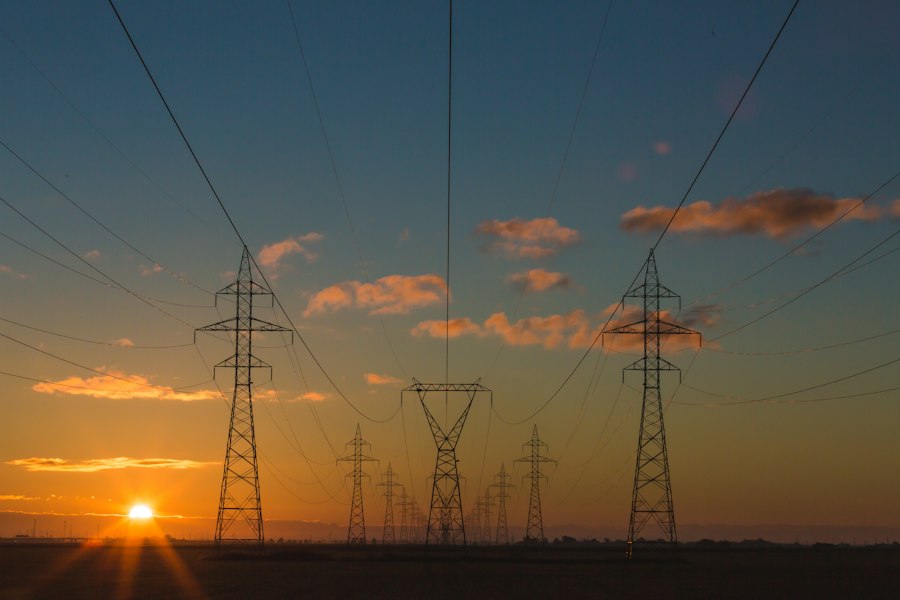
Iran's Strategy: Exhaust Everyone
Iran lost its Supreme Leader in the opening hours of the war. Ayatollah Ali Khamenei was killed in Saturday's initial US-Israeli strike package - the defining act of a war whose declared goal, per President Trump, is to "destroy Iran's missile capabilities, wipe out its navy, prevent it from obtaining a nuclear weapon and ensure that it cannot continue to support allied armed groups."
What Iran does not have in this war is a path to military victory. What it has, instead, is the capacity to make winning extremely expensive for everyone else.
Ellie Geranmayeh, deputy director of the Middle East and North Africa program at the European Council on Foreign Relations, described Iran's logic precisely: the regime is "upping the costs for this US military campaign and regionalizing it from the get-go, as they promised they would if America restarts the war again with Iran."
"The Iranians are banking on basically out-stomaching him, and exhausting him and his allies to the point where they would basically have a diplomatic off-ramp."- Ellie Geranmayeh, European Council on Foreign Relations, per AP
The strategy has a certain brutal coherence. Iran cannot win a conventional fight against the US and Israeli air forces. What it can do is target every piece of energy infrastructure in the Gulf, drain the air defense inventories of six countries simultaneously, kill civilians in Gulf capitals to politically destabilize US-aligned regimes, and extend the economic pain long enough that domestic audiences in the US and Europe begin demanding a settlement on terms Iran can accept.
Iran struck targets in Kuwait, Qatar, Saudi Arabia, Bahrain, the UAE, and Israel on Friday - simultaneously. Six countries running simultaneous air defense systems, some firing interceptor missiles that cost $3 million each to knock down Shahed drones that cost $20,000. The economic logic alone is punishing for the defense side. Iran needs to expend cheap drones. Its enemies need to expend expensive missiles to stop them.
Iran has also expanded the geographic footprint of the war deliberately. Missiles have been fired toward Turkey and Azerbaijan - both countries that border Iran and both nervously watching a war they did not ask for arrive on their doorsteps. Oman - which mediated the last round of nuclear talks and has maintained a diplomatic channel with Tehran for decades - has seen its port at Duqm targeted. The message is universal: nowhere near Iran is neutral.
Whether the strategy works depends on Trump. Geranmayeh notes that he is "unpredictable" but appears, for now, to be pressing for "unconditional surrender to his demands, rather than a negotiated settlement." Hegseth's declaration that US strikes will "surge dramatically" suggests the administration has no intention of offering an off-ramp on Iran's terms.
Beirut Reopens: The Lebanon Front
The strikes that hit Beirut on Friday were the heaviest since the 2024 ceasefire ended the last war between Israel and Hezbollah. Lebanese civil defense reported multiple explosions in the southern suburbs of Dahiyeh - Hezbollah's traditional stronghold and, under the 2024 ceasefire, a zone that was supposed to have seen the group's military infrastructure dismantled.
Israel issued sweeping evacuation warnings covering Beirut's southern suburbs and large sections of southern Lebanon. Tens of thousands of people were reported fleeing north - echoing the displacement patterns of the 2006 and 2024 conflicts, but at higher speed.
Hezbollah fired rockets at Israel in the opening days of the Iran war. The logic was predictable: when Iran is under attack, Hezbollah activates. The group's fundamental identity is tied to the "axis of resistance" that Iran built over four decades, and its survival as a political-military force requires demonstrating solidarity even at enormous cost to Lebanon.
Israel's response has been characteristically disproportionate in the strategic sense. Rather than pursuing a limited counter-battery campaign against rocket launch sites, Israeli air strikes appear to be targeting Hezbollah's military infrastructure broadly - including weapons storage, command nodes, and what the Israeli military described as "precision guided munitions factories" in the Bekaa Valley.
The UN High Commissioner for Human Rights Volker Turk called Friday for immediate de-escalation, warning that "the world urgently needs to see steps to contain and extinguish this blaze." The UN Security Council held an emergency session Thursday that produced no resolution, blocked by US veto.
A Lebanese government spokesman told Reuters that over 120 people had been killed in Lebanon since the war began - a number that is rising. The Lebanese army has maintained its traditional posture of deliberate non-engagement, watching the airstrikes from barracks while managing civilian evacuations. Beirut's airport remains technically open but most commercial carriers have suspended operations.
Diplomatic Signals: Flickering, Not Lit
Iran's President Masoud Pezeshkian said Friday that "some countries" had begun mediation efforts in the conflict, without elaborating on which countries or what framework they were proposing. The comment was notable - it was the first public acknowledgment from Tehran's civilian government that any diplomatic process was underway.
Oman and Qatar have historically served as back-channel intermediaries between Iran and the United States. Qatar's North Field strike complicates that role severely. Doha is now a war victim as well as a potential mediator. Whether al-Kaabi's public $150 oil warning was purely economic commentary or also a signal to Washington - "the cost of this war is too high, end it" - is a matter of active interpretation among diplomatic analysts.
Trump's own public statements have moved in a contradictory direction. At the White House on Friday, he again urged the Iranian people to "help take back your country" and promised them "total immunity" - though he offered no details on what that meant in practice or which institution would guarantee it. Cooper and Hegseth, in the same press conference, immediately cautioned Iranians not to take to the streets while the conflict was still active.
The message from the US side is therefore simultaneously: help us overthrow your government, but not right now, and also we are surging our air campaign. It is not an obvious recipe for diplomatic progress.
Trump told Axios Friday that he expected to be "involved in choosing Iran's next leadership" - a statement that is either strategic signaling designed to fracture the Iranian political class, or a genuine expression of regime change ambition that would require a ground occupation neither the US military nor the American public has any appetite for. The Iranian Revolutionary Guard Council, which retains command of the missile and drone forces currently striking six countries, would need to be neutralized for any such transition to occur.
Timeline: Seven Days of War
What Comes Next: The Surge and the Off-Ramp
The United States is demonstrating, with each escalation, that it has significant military depth remaining. The B-2 deployment on buried missile sites signals that Washington is moving up the escalation ladder with intention rather than reactivity. The destruction of the Shahid Bagheri removes a key instrument of Iranian power projection. The combination of these actions with Hegseth's "surge dramatically" statement suggests the administration believes it can degrade Iran's conventional military capacity to the point where Tehran's calculus changes.
The risk is that the calculus never changes - or changes in the wrong direction. Iran's internal political situation is opaque. Pezeshkian is the civilian president, but the Islamic Revolutionary Guard Corps controls the weapons. The IRGC's institutional identity is bound up with resistance to the United States. The people firing the missiles on Friday are not calculating rational deterrence models - they are executing a doctrinal commitment to asymmetric attrition that predates the current war by decades.
The energy dimension may ultimately determine the outcome more than the military one. Qatar's warning is not merely economic commentary - it is a description of a world that several of America's most important trade partners and allies cannot sustain. Japan's economy, South Korea's industrial base, India's inflation trajectory, and Europe's hard-won energy security: all of them are now contingent on how quickly this war ends and how much Gulf infrastructure remains intact when it does.
Trump, meanwhile, has lost his Homeland Security Secretary. Kristi Noem was fired Thursday, her tenure ending after a Congressional grilling over immigration enforcement deaths in Minneapolis and a $220 million ad campaign Trump said he never authorized. He nominated Oklahoma Senator Markwayne Mullin as her replacement. The DHS leadership transition is happening simultaneously with a seven-front active war, a domestic government that has been partially shut down for 20 days, and an energy crisis that is beginning to register in US pump prices.
Hegseth's promise to surge the campaign may be sincere. It may also be a negotiating position designed to force a faster Iranian capitulation. The intelligence community's assessment of how much military capacity Iran retains is not public. What is public is the burn rate: 1,230 Iranians dead, dozens of military facilities struck, the navy being methodically eliminated, and still the drones keep flying, and still the oil keeps rising, and still Qatar's LNG facility is on fire on Day 7.
Iran's President Pezeshkian mentioned mediation. The UN's Turk called for de-escalation. The Omani foreign ministry issued a carefully worded statement urging restraint. None of it has yet produced a ceasefire conversation. The off-ramp exists somewhere. Finding it, and whether both sides are willing to take it, is the only thing that matters now.
Get BLACKWIRE reports first.
Breaking news, investigations, and analysis - straight to your phone.
Join @blackwirenews on Telegram