500,000 Displaced, Foreign Workers Dying, Kuwait's Towers Burning: Day 9's Civilian Catastrophe
Nine days in, the Iran-US-Israel war has crossed a threshold that military strategists feared and diplomats warned against: the systematic targeting of civilian infrastructure, the mass displacement of hundreds of thousands, and the death of workers from South Asia who came to the Gulf for a paycheck and found themselves inside a war they had no part in starting.

Smoke from oil depot fires visible across Tehran. Witnesses said the smoke was so thick Sunday morning that "it looked as if the sun had not risen." (Unsplash / illustrative)
Sources: Lebanese Health Ministry, CENTCOM, Iranian Red Crescent Society, AP, March 8, 2026
Lebanon's Half-Million: The Displacement Nobody Expected This Fast
In the 2006 Lebanon War, which lasted 34 days, roughly one million Lebanese were displaced. That war has since been used as the baseline for what large-scale conflict in Lebanon looks like. Nine days into the current fighting, Lebanon has already registered 517,000 displaced people through its government's online portal - and officials acknowledge the actual number is considerably higher, as many have left without registering.
The Lebanese Health Ministry broke the numbers down further: among the 397 confirmed dead in Lebanon, 83 were children and 82 were women. Those figures represent not a military front but an entire civilian population caught inside Israeli bombardment of Hezbollah-held territory in southern Lebanon and the Beirut suburb of Dahieh.
Israel's military has been issuing evacuation orders across dozens of villages in southern Lebanon and across the entirety of Dahieh - Hezbollah's administrative and residential stronghold south of Beirut. The pace of these orders, combined with the scale of the strikes, has produced a displacement wave that the Lebanese state is not equipped to manage. The government announced Sunday it would open a sports stadium in Beirut as a mass shelter, joining schools, community centers and open areas near the seafront that are already packed with displaced families.
"In Beirut, sheltering families crammed into schools, slept in cars or in open areas near the Mediterranean Sea, where some burned firewood to keep warm." - AP report, March 8, 2026
This is not a temporary inconvenience. It is a humanitarian collapse in slow motion. Many of the displaced are from the same villages that were evacuated during the 2006 war, only to return and rebuild over two decades. Some of those families are now on the move for the second time in their lives. Some for the third - they also fled during the series of Israeli operations in 2023 and 2024 that preceded the November 2024 ceasefire.
Lebanon's Health Minister Rakan Nassereddine confirmed the 83 children killed figure without attributing blame publicly - a careful political calculation in a country where any statement about Hezbollah carries existential risk. Israel has continued near-daily strikes primarily targeting what it describes as Hezbollah military infrastructure. The strikes resumed in force after Hezbollah fired rockets toward northern Israel during the war's opening days, breaching the November 2024 ceasefire that had held for approximately three months.

Displaced families in improvised shelters. Lebanon's government opened a stadium to absorb overflow from overwhelmed schools and community centers. (Unsplash / illustrative)
Saudi Arabia's First Deaths: The Invisible Victims of Someone Else's War
Saudi Arabia entered the conflict's casualty ledger on Sunday for the first time. The kingdom's civil defense authority confirmed that two people were killed when a military projectile fell on a residential area. The victims: one Indian national, one Bangladeshi national. Twelve more Bangladeshis were wounded.
That is not a footnote. It is the story.
The Gulf's economic model depends on an enormous and largely invisible workforce of South and Southeast Asian migrant labor. In Saudi Arabia, foreign nationals comprise roughly 38% of the population - but in the lower-wage service and construction sectors, the percentage is dramatically higher. In the UAE, approximately 88% of the total population are expatriates. In Qatar, it exceeds 85%. In Bahrain, roughly 55%.
These workers did not choose to be in a theater of war. They came for remittance income that sustains families in Manila, Dhaka, Mumbai, Colombo and Kathmandu. Millions of them are now living inside a conflict zone with no evacuation flights, no national government with sufficient leverage to extract them quickly, and limited resources to relocate within the region. The Indian Embassy in Riyadh has been coordinating with the Ministry of External Affairs in New Delhi, which has been monitoring the situation - but as of Sunday, no mass evacuation had been announced from Saudi Arabia.
In the UAE, where an estimated 3.5 million Indians live and work, the situation is similarly fraught. A drone crashed near Dubai International Airport last week - verified by BBC - raising fears about aviation safety across the Gulf's busiest transit hub. The UK government opened a charter flights booking portal specifically for Britons stranded in Dubai after thousands of commercial flights were cancelled across the region over the past week.
The Arab League's secretary-general Ahmed Abouel Gheit addressed the civilian impact directly Sunday, describing Iran's strikes on Arab neighbors as a "reckless policy." The statement was pointed and rare - Arab League criticism of Iran is expected, but the language of "recklessness" framed specifically around civilian damage signals an escalating political pressure that Gulf governments are applying on Tehran through multilateral channels.
"The more pressure they impose on us, the stronger our response will naturally be. Our Iran, our country, will not bow easily in the face of bullying, oppression or aggression - and it never has." - Iranian President Masoud Pezeshkian, statement March 8, 2026 (AP)
Kuwait's Burning Tower: Drones Hit the Heart of Government
In Kuwait City on Sunday morning, an Iranian drone struck a government high-rise building in the city center. Video verified by BBC showed flames tearing through the structure in the early hours of Sunday, following what Kuwaiti authorities described as more attacks on the Gulf state. No casualty figures were immediately released by Kuwaiti authorities.
Kuwait has been among the most heavily targeted Arab states outside of Lebanon. In the first days of the war, Iranian strikes hit port infrastructure at Shuwaikh, damaged a desalination facility at Doha West, and struck military-adjacent sites. Sunday's high-rise strike was different in character - it targeted a government administrative building in a built-up urban area, a deliberate escalation in the nature of targets being selected.
Kuwait sits in a uniquely exposed position. It shares a 254-kilometer border with Iraq, which has itself seen Iranian-affiliated militias reactivate in the conflict's early days. It hosts a significant US military presence at Camp Arifjan and Ali Al Salem Air Base - both of which Iran's military command has explicitly threatened. Kuwait, which has attempted to maintain neutrality and has not allowed US strikes to be launched from its territory, is nonetheless absorbing Iranian retaliation for US presence it did not invite and cannot easily remove.
Iran's judiciary chief Gholam Hossein Mohseni-Ejei wrote on social media Saturday that "the geography of some countries in the region - both overtly and covertly - is in the hands of the enemy, and those points are used against our country in acts of aggression. Intense attacks on these targets will continue." That statement functions as a direct threat to all Gulf states that host US bases or facilitate logistics - which is essentially all of them.

An Iranian drone struck a Kuwaiti government high-rise on Sunday morning. Video verified by BBC showed flames tearing through the structure. (Unsplash / illustrative)
Tehran on Fire: Oil Depots, Toxic Smoke, and the Acid Rain Warning
Overnight Saturday into Sunday, Israeli aircraft struck four oil storage tankers and a petroleum transfer terminal in the outskirts of Tehran. The strikes set off fires that burned through the night. When Sunday morning arrived in the Iranian capital, residents described the sky as abnormally dark.
"You can smell the burning," one Tehran woman told BBC. Witnesses said the smoke was so dense it appeared the sun had not risen.
The Iranian Red Crescent Society issued two distinct public health warnings. First: approximately 10,000 civilian structures across Iran have been damaged since the war began, including homes, schools, and at least 30 health facilities. Second - and more alarming - the Society warned Tehran's residents to take precautions against toxic air pollution and the risk of acid rain following the petroleum facility strikes.
Acid rain from burning petrochemical facilities is not a theoretical risk. When hydrocarbons combust incompletely and sulfur dioxide mixes with atmospheric moisture, it falls back as dilute sulfuric acid. The immediate health impacts include respiratory irritation and eye damage. For agriculture - crucial in Iran's peripheral regions - even light acid rain events can damage crops and contaminate water collection systems. For a population already under the stress of nine days of airstrikes, the warning carries weight beyond its environmental specificity.
Israel's military described the oil depots as active military fuel sources being used to launch Iranian missile salvos. Iran's National Oil Products Distribution Company managing director Veys Karami stated publicly that Iran maintains sufficient fuel reserves. Iranian parliament speaker Mohammad Bagher Qalibaf gave a bleaker assessment: the war's impact on oil industry infrastructure would "spiral," and it would soon become "harder to produce and sell oil."
Qalibaf's statement is significant precisely because it came from inside Iran's political establishment. The Islamic Republic's senior leadership does not typically acknowledge vulnerabilities publicly. His warning - that supply and production capacity are genuinely at risk - signals that the sustained campaign against Iranian energy infrastructure is achieving measurable strategic effect, nine days in.
Day 9 - Civilian Timeline (March 8, 2026)
The Pezeshkian Reversal: Leadership Council Under Internal Pressure
One of the more revealing political dynamics of Day 9 was the public reversal of Iranian President Masoud Pezeshkian. On Saturday, Pezeshkian had made what observers described as conciliatory remarks - specifically, he apologized for Iranian attacks on Gulf neighbors' territory. The statement represented a potential diplomatic opening, however narrow.
Within hours, Iranian hard-liners contradicted him openly. Senior figures made clear that war strategy would not change, and that apologies to Gulf neighbors were not part of official policy. By Sunday morning, Pezeshkian had reversed course entirely. "The more pressure they impose on us, the stronger our response will naturally be," he said.
This sequence tells a specific story about the structure of power inside Iran right now. Khamenei's death on the war's opening day left a vacuum that the three-member leadership council - composed of Pezeshkian, judiciary chief Mohseni-Ejei, and parliament speaker Qalibaf - is attempting to fill. But the council is not unified. Pezeshkian represents the reformist wing; Mohseni-Ejei and Qalibaf represent the hardliner establishment. The Saturday-to-Sunday reversal demonstrates that on war strategy, the hardliners hold effective veto power.
Iran also awaits the selection of a new supreme leader - a process that, under normal circumstances, involves the 88-member Assembly of Experts deliberating in private. Under current circumstances, with Israeli and US strikes disrupting communications infrastructure and killing senior officials, the process is in suspended animation. No timeline for a successor has been announced. The leadership council is governing a country at war with the legitimacy of crisis-management caretakers, not a consolidated command authority.
US President Donald Trump, in an interview with ABC News, complicated matters further by stating that he wants "a say in who comes to power in Iran once the war is over," and that any new leader "is not going to last long" without his approval. That kind of public statement - effectively announcing Washington's intention to shape Iran's post-war political settlement - hands Iranian hard-liners exactly the argument they need: that this war is about regime change, not security, and that capitulation means permanent subordination to US preferences.
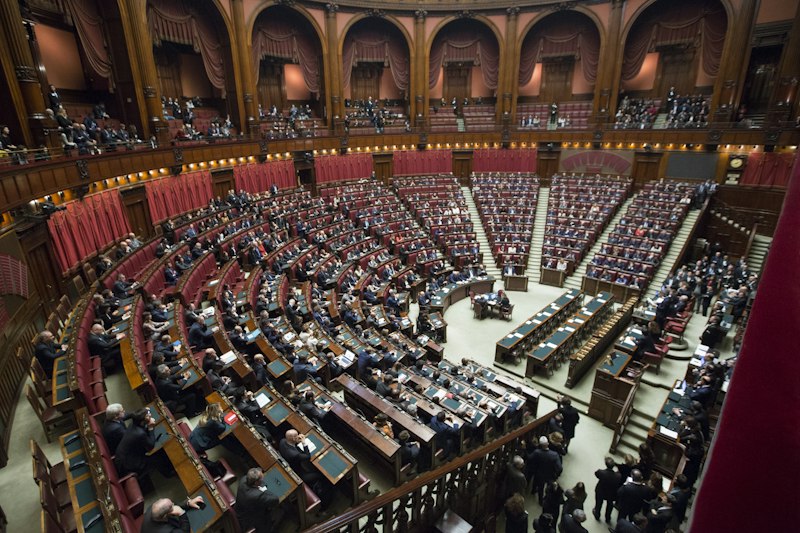
Iranian leadership faces internal divisions as the three-member council managing the country since Khamenei's death struggles to maintain a unified war posture. (Unsplash / illustrative)
The International Workers Left Behind
The Saudi Arabia deaths crystallize a humanitarian dimension of this war that has received almost no systematic coverage: the exposure of the Gulf's vast migrant labor force to a conflict they did not choose, with minimal institutional protection.
India's Ministry of External Affairs has been tracking the situation. India has approximately 3.5 million nationals in the UAE, 2.4 million in Saudi Arabia, 900,000 in Kuwait, and 300,000 in Bahrain. The total Indian diaspora in Gulf states most directly affected by the war exceeds 8 million people. Bangladesh, Pakistan, Nepal, the Philippines and Sri Lanka each have hundreds of thousands more nationals in the same countries.
These workers live mostly in labor camps and shared accommodations - concentrated housing that becomes a vulnerability when drone fragments and missile debris land in residential zones. The Saudi deaths on Sunday were of workers in a residential area, not a military zone. The Iranian projectile - whether a missile fragment, intercepted drone debris, or direct strike - did not distinguish between a Saudi military asset and a housing block for Indian and Bangladeshi construction workers.
Gulf governments have taken varying approaches to foreign national safety. The UAE issued evacuation advisories for some nationalities in Sharjah after early strikes. The UK government opened a charter booking portal specifically for British nationals stranded in Dubai after commercial aviation effectively collapsed across the region. But for low-wage workers without British passports, without employer-funded evacuation, and without the savings to self-fund departure, the options are limited.
UNHCR and IOM have both issued monitoring statements but have not yet announced emergency operations in Gulf states - the crisis infrastructure is focused on Lebanon, where the displacement numbers are more concentrated and the humanitarian apparatus more established. For the Gulf's migrant workers, the protection gap is real and growing.
What Comes Next: The Logic of Escalation and the Absence of an Off-Ramp
Nine days in, every escalation dynamic points toward continuation rather than de-escalation. Israel and the United States have stated they will press ahead with the coordinated campaign. Iran's hardline leadership has publicly overruled any conciliatory signals from Pezeshkian. Russia - which signed a "comprehensive strategic partnership" with Iran in January 2025 - is providing what US intelligence officials describe as targeting intelligence that could help Iran hit American warships and aircraft in the region. Trump publicly downplayed the significance of that intelligence sharing on Friday, telling reporters it was not "that big a deal."
The Gulf states are caught in the logic of impossible positioning. They host US bases and logistical infrastructure. They are absorbing Iranian strikes as a result. They cannot ask US forces to leave without fundamentally undermining their own security architecture. They cannot ask Iran to stop without publicly endorsing the war, which would inflame their Shia populations and risk further Iranian retaliation. Several Gulf governments are quietly urging ceasefire through back-channels - the Kuwaiti foreign minister has been in contact with both Tehran and Washington - but no framework for negotiations has emerged publicly.
Lebanon has no strategic exit either. The Lebanese state cannot compel Hezbollah to stand down, cannot protect its population from Israeli strikes it cannot intercept, and cannot process 517,000 displaced people through infrastructure that was already overwhelmed by the country's decade-long economic collapse. The Lebanese pound has lost 98% of its value since 2019. The country has been running on remittances and donor aid. A half-million displaced people represent a food, water, and shelter crisis on top of an already-failed state.
The Iranian Red Crescent's estimate of 10,000 damaged civilian structures - including 30-plus health facilities - represents a healthcare system that was already fragile being systematically degraded. Hospitals that are still standing are treating war casualties while operating under toxic air warnings and the disruption of medical supply chains. Iranian parliament speaker Qalibaf's warning that oil production and sales capacity is eroding signals an economic spiral that will compound civilian suffering long after the last strike lands.
In nine days, the numbers have moved from military operation to regional catastrophe. The next nine days will determine whether the word "catastrophe" gets replaced with something worse.
Get BLACKWIRE reports first.
Breaking news, investigations, and analysis - straight to your phone.
Join @blackwirenews on Telegram