Tehran Blanketed in Smoke: Israel Hits Oil Storage Network as US Warns of Bigger Bombings
Multiple Israeli strikes overnight hit oil storage facilities across the Iranian capital, blanketing Tehran in thick black smoke visible across hundreds of kilometers. Day 11. Death toll past 1,200. Washington warns the hardest strikes are still ahead. Oil prices are in crisis - and Trump is refusing to open the strategic reserves.

Smoke rises over Tehran following overnight Israeli strikes on oil storage facilities. March 8, 2026. (Illustrative)
Before dawn on Sunday, March 8, Israel struck multiple oil storage facilities inside Tehran in what military analysts are calling the most consequential single night of the 11-day-old war. The strikes were different from previous attacks on refineries and military sites. These targets - massive above-ground petroleum storage tanks clustered on the capital's southern edge - ignited fires so large and so sustained that thick black smoke engulfed the entire city by sunrise.
Residents across Tehran reported waking to darkness at 7 AM. Satellite imagery shared by open-source analysts showed a smoke plume extending more than 200 kilometers east of the city by late morning. The Iranian Red Crescent confirmed at least 47 people killed in the overnight strikes, with hundreds more injured, many from secondary explosions as storage tank fires spread.
The day's bigger story may not be what happened in Tehran. It may be what Washington said was still coming.
Pentagon Advisory - March 8, 2026
US Central Command issued a rare public advisory Saturday night warning that military operations in the Iran theater were "entering an intensified phase." The language - "intensified phase" - has not been used publicly by CENTCOM at any prior point in the conflict. It was not accompanied by any elaboration from the Pentagon podium.
The Strikes: What Burned and Why It Matters
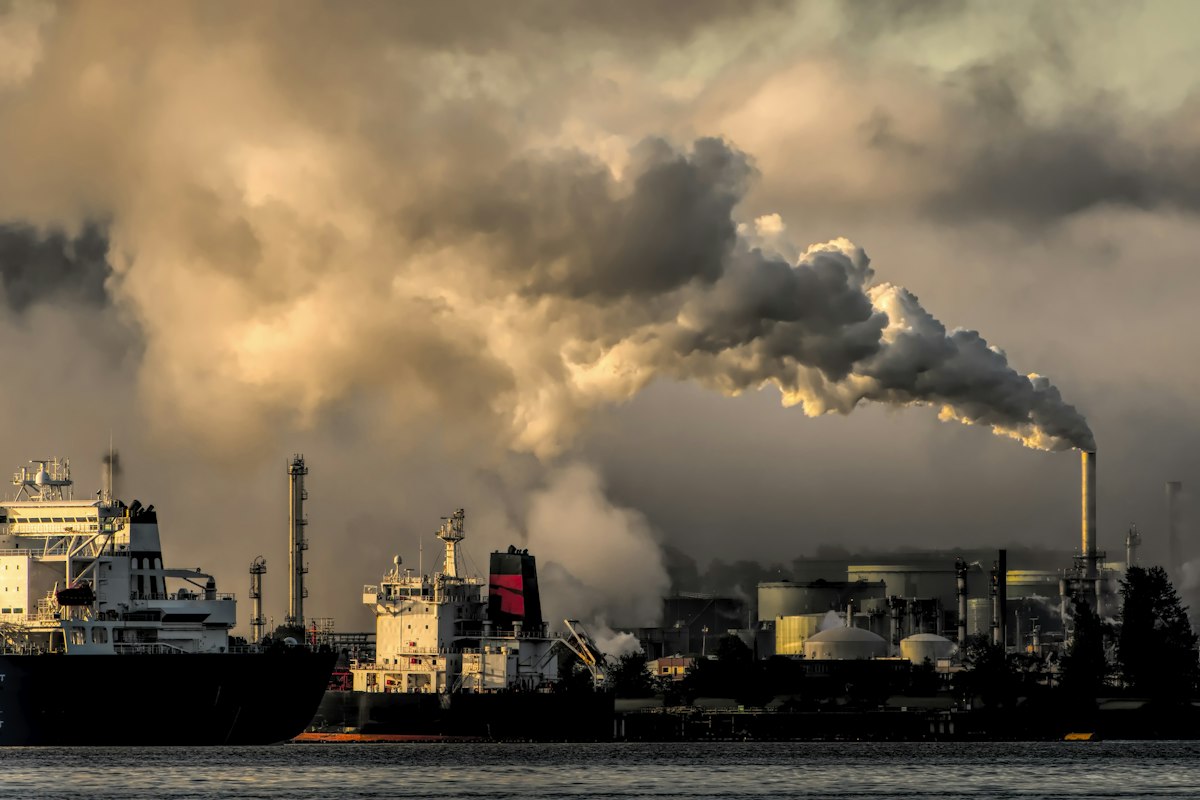
Oil storage fires burn through the night. Tehran, March 8. (Illustrative)
Israel has been systematically disabling Iran's energy infrastructure since Day 9, when the first oil storage facility outside Tehran was struck. Day 10 saw the country's largest refineries set ablaze. But Sunday's overnight operation was something different in scale and intent - a coordinated strike across at least four confirmed petroleum storage sites.
The targets were not military. They were the civilian energy backbone of Iran's capital - the fuel stockpiles that heat homes, run generators, supply hospitals, power transport networks. Striking them in early March, as temperatures in Tehran remain below 10 degrees Celsius at night, is a choice with direct civilian consequences.
Iranian state media confirmed fires at the Shahran terminal, the Kan storage complex, and two additional sites southeast of the city near the Varamin industrial zone. The Shahran terminal alone, according to pre-war satellite assessments published by the Foundation for Defense of Democracies, held approximately 800,000 barrels of refined petroleum products. It burned for more than six hours before IRGC fire suppression units could contain the primary blaze.
The Israeli Defense Forces, in a brief statement issued at 04:47 AM local time, said the strikes "targeted strategic fuel infrastructure used to supply and sustain IRGC operations." The IDF did not comment on civilian fuel supplies. It did not comment on the smoke.
"What Israel has done is effectively turn Tehran's southern districts into a no-go zone for the foreseeable future. You cannot conduct normal civilian life in a city blanketed in that level of toxic particulate." - Dr. Hamid Sultani, senior fellow at the Center for Strategic and International Studies (CSIS), speaking to Reuters on background
The World Health Organization issued a public health advisory Sunday morning urging Tehran residents to shelter indoors, seal windows and doors, and avoid unnecessary outdoor exposure. The advisory noted that petroleum storage fires produce benzene, toluene, and polycyclic aromatic hydrocarbons - carcinogens with acute toxicity at high exposure levels. There is no mass-evacuation infrastructure in Tehran. There is no civilian emergency broadcast system of the kind that exists in Israel or the United States. There are 9 million people in the capital city.
The Death Toll: What We Know and What We Don't
The Iran Human Rights Activists News Agency (HRANA), the most consistently cited non-governmental source for casualty figures in this conflict, updated its running total to 1,247 confirmed civilian deaths as of Sunday afternoon. That number covers the full 11 days, across all theaters - Tehran, Bandar Abbas, Qom, the Gulf coastal cities.
It is almost certainly an undercount. Iran has not permitted independent journalism inside the country since Day 3 of the conflict. The last foreign correspondent with confirmed physical access to Tehran was expelled on March 1. What HRANA tracks comes primarily from family networks, encrypted communications with in-country contacts, and diaspora sources. It is rigorous, well-sourced, and incomplete.
The Iranian government's official death toll, released through state media, stands at 319 - a figure that excludes IRGC personnel and has not been updated in 72 hours. No independent analyst believes that number is accurate. The US State Department, in a background briefing Thursday, told reporters that US intelligence assessed total Iranian casualties "in the low thousands," including military losses - but would not provide a breakdown between combatants and civilians. (Source: AP, citing unnamed State Department official)
The 165 deaths at a school in Minab remain among the most contested and charged incidents of the conflict. New evidence emerged Saturday suggesting the strike that killed those students - mostly girls aged 12-16 - may have originated from US munitions, not Israeli. The US has denied involvement. Iran says the evidence is conclusive. Three independent arms analysts who reviewed imagery told AP the fragments were "consistent with" US-manufactured GBU-39 small-diameter bombs. The White House press office did not respond to questions.
None of that gets better with more fire in Tehran.
US Warning: 'Intensified Phase' Ahead

US carrier group operations continue in the Persian Gulf. March 2026. (Illustrative)
The CENTCOM advisory issued Saturday night was unusual in multiple respects. Public statements from US Central Command typically follow standard patterns: they confirm operations that have already concluded, use approved terminology, and go through a public affairs review process. Saturday's advisory used the phrase "intensified phase," a characterization that implies future operations - not reporting on past ones.
Three current US defense officials, speaking without attribution to AP on Sunday, described a significant expansion of strike planning underway. Two characterized it as targeting Iranian nuclear infrastructure, which the US and Israel have previously held in reserve as a final-option category. The third described it differently: as a planned campaign against Iranian air defense systems, intended to degrade Iran's ability to respond to Israeli strike aircraft.
The distinction matters. Striking air defense systems is escalatory but stops short of nuclear site strikes. Striking nuclear infrastructure crosses a threshold that Iran has repeatedly stated would trigger its most extreme response options - including, according to Iranian military doctrine reviewed by the Arms Control Association, a declaration of national emergency and authorization to use "all available means of resistance."
"We are calling on Congress to be briefed fully on what the administration is planning. The American people deserve to know if we are about to expand this war in ways that have not been authorized, not been debated, and not been approved." - Senator Chris Murphy (D-CT), speaking Sunday on CNN's State of the Union
The War Powers Act debate is back. Five Democratic senators filed a formal request Sunday demanding a classified briefing on US military planning in the Iran theater. Under the War Powers Resolution of 1973, the president must notify Congress within 48 hours of introducing armed forces into hostilities and can sustain combat operations for no more than 60 days without congressional approval. The US has been actively engaged in strike operations against Iran for 11 days. The 60-day clock is at 18 percent.
Trump dismissed the requests in a Truth Social post Sunday morning, calling the senators "professional obstructionists" and saying "we are winning this war and they want to hold meetings." His national security advisor, Waltz, said separately that the administration "remained in full compliance with all applicable law."
The Weapons Stockpile Alarm
Behind the public debate over the war's legal framework, a more urgent and less publicized concern is circulating among defense officials and congressional oversight committees: the United States is burning through its precision munitions inventory at a pace that is straining readiness in other theaters.
The concern is not hypothetical. The US burned through Tomahawk inventory faster than anticipated during the 2017 Syria strikes and again during early operations in Libya. The Iran campaign - now 11 days old, involving strikes across a country four times the size of Iraq - has required sustained high-volume precision munitions expenditure across two carrier strike groups and multiple Air Force assets flying from bases in Qatar, Bahrain, and Kuwait.
Two members of the Senate Armed Services Committee told AP Sunday that they had received preliminary assessments indicating "significant drawdown" of GBU-series guided bomb inventory and Tomahawk land-attack cruise missiles. They did not characterize exact figures, citing classification. But both described the concern as "urgent."
"We are not just fighting Iran. We are also deterring China in the Pacific and managing NATO commitments in Europe. Every GBU we drop on an IRGC barracks is a GBU that is not available for Taiwan scenarios. These are real tradeoffs and they are not being discussed publicly." - Senior Democratic member of Senate Armed Services Committee, speaking to AP on background
The Trump administration pushed back on the framing. Defense Secretary Pete Hegseth, in a Sunday morning media appearance, said the US military "maintains the most lethal and well-stocked arsenal in human history" and called the stockpile concerns "enemy-empowering defeatism." He did not address specific munitions categories.
The Pentagon's own budget submissions from 2024 and 2025, reviewed by analysts at the Center for a New American Security, had flagged Tomahawk and JASSM-ER inventory as potential "readiness vulnerabilities" in any sustained high-intensity campaign. Those were peacetime assessments. The war is 11 days old.
Oil Prices, the SPR Fight, and the Economic Pressure

Oil markets hit crisis levels as Iran war disrupts Persian Gulf energy flows. March 2026. (Illustrative)
Brent crude topped $118 per barrel Sunday morning, its highest price since the COVID-era supply crunch of 2021. The Iran war has disrupted approximately 3.2 million barrels per day of Persian Gulf oil flows - not through direct attacks on tanker traffic, but through insurance withdrawal, voluntary carrier avoidance, and port closure risks in UAE terminals that have been under intermittent Iranian missile threat since Day 4.
The US Strategic Petroleum Reserve holds approximately 350 million barrels, enough to cover roughly 35 days of total US consumption. Using it does not solve the global supply problem - the SPR exists to stabilize domestic US supply, not world markets - but its deployment is a traditional signal that the White House takes the price spike seriously and is willing to act.
Trump is refusing to deploy it. In a Sunday morning post, he said releasing the SPR would be "admitting weakness" and that oil prices would "come down when we win the war." He predicted that would happen "very, very soon." Oil markets did not react to that prediction. Prices were up 2.3 percent on the day when European markets opened Sunday afternoon.
The political pressure is significant. Average US gasoline prices hit $4.28 per gallon as of Friday, up from $3.41 at the start of February. In nine swing states that carried the 2024 election, gas prices are above $4.50. Republican strategists, speaking off-record, are increasingly worried about the economic narrative entering the spring. The midterms are eight months away.
There is also the downstream effect. Every 10-dollar increase in crude oil adds roughly 0.3 to 0.5 percentage points to the US Consumer Price Index over the following six months, according to the Federal Reserve's own modeling. The Fed, which has been holding rates steady since December, is now facing a renewed inflationary threat it cannot resolve with monetary policy. Chairman Powell, in a scheduled Wednesday appearance before the Senate Banking Committee, will face questions that have no clean answers.
The Human Toll at Home: Trump Receives Fallen Soldiers
Amid the strategic debates and oil market alarms, Sunday brought a different kind of reckoning. President Trump traveled to Dover Air Force Base in Delaware to receive the remains of US servicemembers killed in the Iran war theater - the first such transfer ceremony of the conflict to receive presidential attendance.
The ceremony involved three military families. The Pentagon has not released full casualty figures for the Iran war, citing operational security. But the Dover arrival, combined with fragments in Congressional briefings, points to at least 12 confirmed US servicemember deaths - largely from Iranian ballistic missile counterstrikes against bases in Iraq, Kuwait, and one incident aboard a naval vessel in the Gulf of Oman on Day 6.
The Oman incident involved a hit on the USS Bataan, an amphibious assault ship that sustained damage to its flight deck from an Iranian anti-ship missile. Three sailors were killed, 17 were injured, and the ship was withdrawn from the theater. The US military confirmed the incident but did not confirm the casualty figures, which were first reported by NBC News citing senior defense officials.
Trump's Dover visit was not publicized in advance. The White House announced it retroactively, with photographs released to media showing the president and First Lady Melania Trump standing with gold star families on the tarmac. In a brief statement afterward, Trump said the fallen soldiers "died for a cause that will make America, Israel, and the whole world safer." He did not take questions.
"My son believed in what he was doing. But I need to know - everyone needs to know - what exactly he was doing there. Was this war authorized? Was it legal? Was there another way?" - Mother of a US servicemember killed in the Iran war theater, speaking to AP at Dover
War of the Nights: How Israel Changed the Conflict's Tempo
A pattern has emerged across the 11-day conflict that military analysts are beginning to analyze with some urgency: Israel is conducting its most consequential strikes at night, specifically in the window between 1 and 4 AM Tehran time. This is not coincidental. It is doctrine.
Israeli Air Force night operations have been refined over 40 years of low-level conflict, from the 1982 Bekaa Valley campaign to the sustained air war over Gaza and Lebanon in 2024. Night strikes serve several functions simultaneously: they minimize civilian casualty risk (fewer people on streets and in industrial zones), they degrade Iranian air defense response times (which rely on visual tracking in some legacy systems), and they generate the maximum psychological effect by having the population wake to destruction rather than witness it in real time.
The psychological dimension is not peripheral. Iran's internal political situation, according to assessments published by the Institute for the Study of War and the Carnegie Endowment, is more fragile than the regime's public posture suggests. The IRGC and the elected government of President Pezeshkian have been visibly out of sync since Day 7, when Pezeshkian publicly apologized to Iran's Gulf neighbors for missile strikes - apologies the IRGC immediately contradicted by launching additional attacks. The morning-smoke effect of the oil storage strikes - waking up 9 million people to darkness and chemical haze - is a form of pressure that reaches beyond the IRGC's walls.
The question on Day 11 is whether that pressure is building toward something - an Iranian decision to seek ceasefire conditions, or an Iranian decision to escalate past the thresholds the US and Israel have been carefully avoiding. Both remain possible. Neither is certain. And the next night is coming.
Iran War - Key Escalation Timeline
What Happens Next: Escalation Paths and Off-Ramps
The conflict now sits at a juncture where multiple futures are simultaneously possible - and where the decision points are compressing. Three distinct escalation paths and two potential off-ramps are visible from the current position.
Escalation Path One: Nuclear Site Strikes. The possibility that Israel, with or without explicit US approval, moves to strike Iranian nuclear enrichment facilities at Fordow, Natanz, or Parchin cannot be dismissed. The CENTCOM "intensified phase" language points in this direction. Iran has hardened these facilities extensively - Fordow is buried under 80 meters of granite - but hardening is not invulnerability. The political consequences of striking nuclear infrastructure, including Russian and Chinese response, would be severe. The military consequences for Iran's nuclear timeline could be decisive.
Escalation Path Two: Iranian Closure of the Strait of Hormuz. Iran has not moved to close the Strait of Hormuz - the narrow waterway through which 21 percent of the world's seaborne oil passes. If it does, oil at $118 per barrel looks like a nostalgic baseline. The US Fifth Fleet in Bahrain and carrier assets in the Gulf are explicitly positioned to prevent this. An Iranian attempt to close the Strait would almost certainly trigger direct conventional naval combat between the US and Iran - a category of engagement the conflict has not yet crossed.
Escalation Path Three: Iranian Ground Proxy Activation. Iran maintains proxy networks in Iraq, Syria, and Yemen that have been relatively restrained in this conflict. Mobilizing them for sustained ground attacks on US bases would expand the conflict's geographic and casualty footprint significantly. The weapons-stockpile concerns already circulating in Congress would become acute.
Off-Ramp One: Qatari/Omani Mediation. Qatar and Oman both maintain diplomatic channels with Tehran that have survived the conflict's first 11 days. Both have been quietly hosting shuttle diplomacy. No framework for ceasefire talks has emerged publicly, but multiple sources familiar with the diplomatic track told Reuters on Saturday that "both sides have been willing to receive messages" - a very low bar, but a bar that exists.
Off-Ramp Two: Iranian Internal Fracture Producing New Leadership. The visible split between Pezeshkian's government and the IRGC raises the theoretical possibility of an internal Iranian political resolution - a scenario where the non-IRGC civilian government takes control of the war decision and seeks terms. This is speculative and requires conditions that don't yet exist. But it is not impossible.
On Day 11, the smoke still rising over Tehran, none of those futures are determined. What is determined: the war has crossed the threshold from a military campaign into a humanitarian catastrophe, oil markets are in crisis pricing, and Washington is warning that the hardest phase is still ahead.
Day 11 - Confirmed Developments
- Multiple Israeli strikes on Tehran oil storage facilities overnight - 4+ confirmed sites
- Tehran blanketed in smoke across full metropolitan area - WHO issues public health advisory
- At least 47 additional civilians killed in overnight strikes (Iranian Red Crescent)
- Total civilian death toll: 1,247+ (HRANA) as of Sunday noon
- CENTCOM issues "intensified phase" advisory - first use of this language in conflict
- Democrats demand classified briefing on weapons stockpile drawdown
- Brent crude reaches $118/bbl - highest since 2021
- Trump attends Dover AFB ceremony for fallen US servicemembers
- New fragment evidence in Minab school strike points toward US munitions (AP/independent analysts)
- Iran maintains all diplomatic and military channels closed to ceasefire proposals
Sources: AP (live war coverage), Reuters (oil markets, diplomatic track), US Central Command advisory (March 7-8, 2026), HRANA casualty database, Israeli Defense Forces statement, Iranian Red Crescent emergency bulletin, WHO public health advisory March 8, Foundation for Defense of Democracies (Tehran infrastructure assessment), Institute for the Study of War (Iran political assessment), Carnegie Endowment for International Peace, Center for a New American Security (US munitions readiness), Senate Armed Services Committee member statements, Pentagon background briefings.
Get BLACKWIRE reports first.
Breaking news, investigations, and analysis - straight to your phone.
Join @blackwirenews on Telegram