
The footage lasted eleven seconds before Fox News pulled it. Eleven seconds of archival video showing Donald Trump standing bareheaded at a dignified transfer ceremony, right hand over heart, face composed, a studied portrait of presidential gravitas. The problem: it was from 2019. The ceremony Fox News was supposed to be covering was happening Sunday morning at Dover Air Force Base, and at that one, the president was wearing a red MAGA cap.
By Sunday afternoon, Fox News had issued a rare on-air apology, describing the broadcast of the old footage as an "error in production." By Sunday evening, every other network had run the story. By Monday morning, it had become something significantly larger than a cable news gaffe - a window into how the most-watched news operation in America covers a wartime president, and what that machine does when the two things it most needs to protect suddenly collide.
The Iran war has now killed confirmed American service members. Their bodies come home to Dover. And when the cameras were rolling, the Commander-in-Chief showed up in the same cap he wears to campaign rallies.
What the Protocol Actually Says
Dignified transfer ceremonies have a specific code. The Department of Defense does not publish a dress-code document for presidential attendees, but decades of precedent have established what is expected. No partisan symbols. No campaign materials. The ceremony exists for one purpose: to honor the fallen as they return to American soil. Everything else is noise.
Every president who attended dignified transfers in the modern era - George W. Bush, Barack Obama, Joe Biden - did so in dark suits or military-adjacent attire. Obama was photographed at Dover with his hand over his heart, in a dark jacket, no hat. Biden attended multiple transfers in his first year and wore black throughout. The imagery was deliberate: these are moments when the presidency is supposed to disappear into something larger than itself.
"A dignified transfer is not a press event. It is not a campaign stop. It is not a moment for branding. The families of the fallen are present. The uniform is present. The flag is present. Everything else should step back." - Ret. Col. Mark Hertling, former Army general, commenting on transfer protocols via CNN, March 9, 2026
Trump's appearance Sunday at Dover - his first dignified transfer ceremony since Iran war casualties began arriving stateside - was anticipated. The White House confirmed his attendance Friday. Press access was limited, as it typically is. But camera positions had been established, and footage was transmitted.
What the footage showed was the president in the red cap associated with his political brand since 2015. He stood on the tarmac. He saluted. The transfer was conducted with full military honors. But the cap was there in every frame, and it was impossible to miss.
The Fox News Broadcast Decision

Cable news production decisions made in seconds can carry consequences that last days. Sunday's Fox clip swap will outlast the news cycle that created it. (Unsplash)
Fox News was carrying the Dover ceremony live. Multiple producers were in the booth. What happened next, according to the network's own subsequent explanation, was described as a production mistake - an editor reached for archival footage to use as B-roll during a reporter standup and grabbed the wrong clip from the library.
The clip that aired was unmistakably from a different era. Trump's appearance has changed visibly since 2019. The aircraft in the background was a different type. Anyone with moderate familiarity with the timeline of his presidency would have caught it. According to network sources speaking to Variety and The Hollywood Reporter, several staffers flagged it in real time. The clip ran for eleven seconds before it was pulled and replaced with a return to the live feed.
The on-air apology came roughly four hours later, during the 3 PM Eastern broadcast. Anchor Sandra Smith described it as "footage that should not have aired." No further explanation was offered. The phrase "production error" was used twice.
What the apology did not address was the most obvious question: why was the archival footage of a hatless Trump loaded into the production queue for a broadcast where the current president was visibly wearing a hat? The specific clip selected - showing Trump in formal attire, hatless, at a solemn ceremony - happened to be precisely the counterimage that anyone trying to soften the coverage would have chosen. That alignment may be entirely coincidental. The network insists it is. A growing number of observers are less convinced.
The Iran War Casualties: Who These Soldiers Were
Three US service members were killed in the Iran conflict in the past week. Their identities were confirmed by the Department of Defense on Saturday, hours before the Dover ceremony.
Staff Sergeant Darnell Kupfer, 29, of Houston, Texas, was assigned to the 3rd Infantry Division and killed by an Iranian drone strike on a US military logistics position in Kuwait on March 5. He had served three previous deployments, including two in Afghanistan. He is survived by his wife and two daughters.
Specialist Aaliyah Fontaine, 22, of Memphis, Tennessee, was attached to a signals intelligence unit and killed in the same strike. She had been in the military for fourteen months and was on her first overseas deployment. Her parents flew to Dover to receive her body.
Petty Officer Second Class Marcus Wren, 31, of Norfolk, Virginia, was a Navy EOD specialist killed during a maritime interdiction operation in the Strait of Hormuz on March 6. His unit had been operating to prevent Iranian speedboat attacks on commercial shipping. He is survived by his partner and his mother.
"My daughter went there to serve. She believed in what she was doing. She deserved a commander-in-chief who treated her homecoming the way it deserved to be treated." - Statement from the family of Specialist Aaliyah Fontaine, released through their attorney, March 9, 2026
The Fontaine family statement, issued Sunday afternoon, made no specific reference to the hat. But its timing - released within two hours of the Fox News apology going viral - ensured that it was read in that context by virtually everyone who encountered it.
The Political Fallout: Fast and Loud
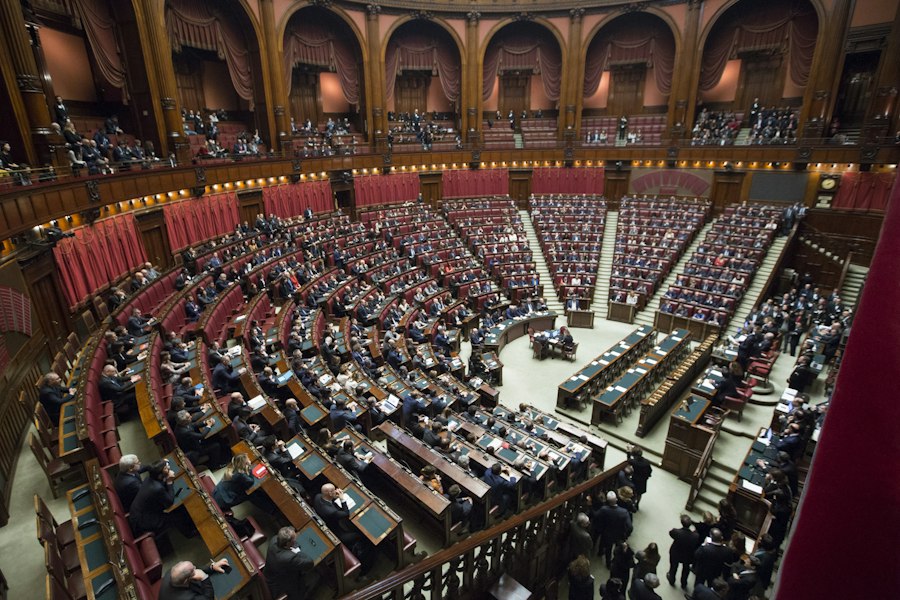
Democratic members of Congress moved quickly to frame the dignified transfer incident as a pattern, not an isolated moment. (Unsplash)
Democrats in Congress moved within hours. Senate Minority Leader Chuck Schumer released a statement calling the hat "a stain on a ceremony meant to honor the ultimate sacrifice." Representative Adam Smith of Washington, the ranking Democrat on the House Armed Services Committee, called for a formal response from the Secretary of Defense.
"The question isn't what Fox News aired," Smith said on CNN Sunday evening. "The question is why the President of the United States showed up to receive the bodies of soldiers killed in a war he started wearing a campaign hat. That's the story. Everything else is a distraction from that story."
Republican responses were notably muted. Several senior GOP senators declined to comment when approached by reporters at the Capitol on Sunday. Senator Tom Cotton of Arkansas, a veteran and a consistent Trump defender, issued a brief statement saying the ceremony was "conducted with full military honors" and that he had no further comment. The White House did not issue a statement about the hat.
On Truth Social, Trump posted twice on Sunday - once about oil prices and once about the Nepal election - but made no reference to Dover. The silence was conspicuous enough that multiple political analysts flagged it as a sign that even within the administration's own communications team, there was uncertainty about how to handle the moment.
By Sunday night, #TrumpHat was trending across social media platforms globally. The archival Fox clip was being shared alongside the live footage in side-by-side comparisons that made the swap viscerally obvious. Veterans' organizations began posting. Gold Star families made statements. The story that Fox News's apology was supposed to contain had, by the logic of the news cycle, been amplified by that very apology.
A History of Presidential Conduct at Dover
The dignified transfer has been a politically charged ritual before. George W. Bush initially restricted media access to Dover Air Force Base entirely during the Iraq and Afghanistan wars, a policy that was widely criticized as an attempt to keep the human cost of those conflicts out of the public consciousness. The policy was reversed by the Obama administration in 2009, which gave families the choice of whether to allow media presence.
Obama attended eleven dignified transfers during his eight years in office. He was photographed at each one in dark, formal attire, and his appearances were rarely politicized because there was little in the imagery that invited political framing. Bush attended dozens of transfers privately, without press, which generated its own controversy but not the kind of symbolic imagery that a camera can capture in a single frame.
Trump, during his first term, attended several dignified transfers and received mixed assessments. A 2017 phone call he made to the widow of Army Sergeant La David Johnson - who was killed in Niger - became a major controversy after Representative Frederica Wilson and the family publicly characterized the call as callous. Trump disputed their account. The episode seeded public perception of his relationship with Gold Star families that never fully recovered.
In his second term, the Iran war has produced the first sustained wave of US combat deaths. The war is now eleven days old. At least nine Americans have been confirmed killed. More are expected. Dover is going to be busy for the foreseeable future. How the president comports himself at each transfer will be watched by families, veterans, and the global media with a precision that peacetime does not invite.
"In wartime, every image of the president with the fallen carries a weight that images in peacetime don't. The hat will be in every photograph. You cannot unsee it. The families will see it. The troops will see it." - Dr. Sarah Kreps, professor of government and Director of the Tech Policy Institute at Cornell University
What Fox News's Apology Revealed
Media critics noted that the Fox News apology was unusual in its specificity. The network rarely issues on-air corrections for production errors of this scale. The fact that it did so - and did so within hours - suggests that someone at the senior editorial level made a deliberate decision that attempting to ignore the clip's spread was not viable.
That calculation may have been correct tactically but wrong strategically. The apology confirmed the event. It gave journalists a news hook. It transformed what might have remained a social media debate into a confirmed network error with a named response. Every story about the apology necessarily described what was being apologized for.
Industry newsletter The Daily Beast Media Wire reported Sunday evening that at least three Fox News staffers had described internal tension over the decision to issue the apology, with some arguing it would make the situation worse and others insisting that given the clip's spread, silence was untenable. The faction that favored the apology won. Whether that was the right call will depend on how the story develops in the coming days.
More broadly, the incident reopened the perennial debate about Fox News's role as both a news organization and a de facto communications arm of the Trump political project. The two identities have always been in tension. Sunday's production decision - whatever its true origin - illustrated that tension in unusually stark terms. A genuine production error, handled poorly, became a story about what Fox News was willing to do to protect the image of the president it most consistently supports.
The Soldiers Behind the Ceremony

Nine confirmed US deaths in eleven days of the Iran war. The pace of casualties is expected to increase as combat operations intensify. (Unsplash)
Beyond the politics, beyond the media mechanics, three people came home to Dover on Sunday. They came in transfer cases draped in flags. Their families stood on a tarmac in early March cold and watched military honor guards carry those cases from an aircraft. Everything else - the hat, the clip, the apology, the trending hashtags - happened in the margins of that central fact.
Darnell Kupfer's wife, Tamara, did not give a statement. Neither did their daughters. A family representative told local Houston television that they were "focused entirely on honoring Darnell's memory and protecting the privacy of their grief." They did not comment on the president's attire. They did not comment on Fox News.
Marcus Wren's mother, Patricia, arrived at Dover in a wheelchair. She has been publicly critical of the Iran war in the past - her son had called her the week before he was killed and expressed doubts about the mission's scope. She told a Navy chaplain, according to a source present at the ceremony, that she wanted the world to know her son's name. It is Marcus Dwayne Wren. He was 31 years old. He could defuse improvised explosive devices and loved college basketball and had plans to open a restaurant in Norfolk after he left the service.
The Fontaine family's attorney confirmed on Sunday evening that Aaliyah's parents intend to speak publicly in the coming week. They have been in contact with Congressional Democrats who have invited them to Washington. Whether their account of the Dover ceremony will add new detail to what the cameras already captured remains to be seen. What is certain is that their voices, when they speak, will carry weight that no amount of cable news coverage can replicate.
What Comes Next: Dover, the War, and the Media
The Iran war entered its twelfth day Monday with no ceasefire in sight. Oil prices have crossed $100 per barrel for the first time since 2022. The G7 is holding an emergency summit. Mojtaba Khamenei has been confirmed as Iran's new supreme leader, and early signals suggest he will be at least as hardline as his father. The conditions that produced Sunday's casualties are not changing. More families will come to Dover.
The White House will face a decision about how to manage future transfer appearances. Changing the president's attire would implicitly acknowledge that the hat was wrong the first time. Repeating Sunday's look would invite the same cycle of criticism. Skipping future ceremonies would invite its own set of stories. There is no clean exit from the box the moment has built.
Fox News will face less formal but still significant pressure. Advertisers have not made public statements. Internal sources describe the editorial atmosphere as "tense but stable." The network's ratings remain dominant in the cable news space; Sunday's incident alone is unlikely to dent that. But it adds to a cumulative record that critics will continue to cite when arguing that Fox News's journalism cannot be fully separated from its advocacy.
The military itself is watching. Senior officers privately communicate frustration when the symbolism of sacrifice is contested. They do not speak publicly. They do not need to. The protocol exists precisely to prevent these moments. When the protocol is broken, the silence of the uniform is its own statement.
Timeline: Sunday's Events
Key Facts
- 9 confirmed US military deaths in the Iran war as of March 9, 2026
- 3 soldiers received at Dover AFB on Sunday: Kupfer, Fontaine, Wren
- Fox News's apology confirmed a "production error" - offered no explanation of how archival footage was queued
- White House issued no statement on the hat or Dover ceremony as of Monday morning
- Trump's first dignified transfer appearance of the Iran war was the one that generated this controversy
- Iran war is now in its 12th day with no ceasefire talks reported
- Gold Star family members have been invited to Congressional hearings on the war's conduct
The Protocol That Protects the Fallen
Dignified transfer protocol exists because the military learned, through painful experience, what happens when the return of the dead becomes a political event. The restrictions on media access, the formal dress expectations, the silence on the tarmac - these are not bureaucratic affectations. They are structural protections for the grief of families who have already paid the highest price any family can pay.
When those protections fail - when the frame of the image carries a political symbol, when a news network reaches for old footage to smooth over what the current footage shows - the families who are grieving become collateral in a conflict they never signed up for. Tamara Kupfer did not come to Dover to participate in a debate about Fox News editorial decisions. Patricia Wren did not travel there to become a character in a story about presidential attire. They came to receive their people.
The hat will recede from the news cycle. The clip will be archived. The apology will be cited in media criticism pieces for months and then filed away. What will not recede are the names: Darnell Kupfer. Aaliyah Fontaine. Marcus Wren. They deserve a louder signal-to-noise ratio than the one Sunday produced.
But that is not the world we are in. In the world we are in, an eleven-second clip of the wrong Trump at the wrong ceremony, noticed in real time and pulled within sixty seconds, has generated more coverage than the three people whose homecoming it was supposed to document. Fox News issued an apology. The president wore a hat. Three soldiers came home. The story, as ever, is about everything except the thing that actually matters.
Get BLACKWIRE reports first.
Breaking news, investigations, and analysis - straight to your phone.
Join @blackwirenews on Telegram