
Pick any Tuesday. Any random weekday where nothing feels particularly historic. March 11, 2026 was exactly that - a Tuesday where most people scrolled past the news, drank coffee, complained about meetings. And in that same unremarkable 24-hour window, the world produced a new family of AI chips, a surgical AI image editing tool, Intel's most credible comeback benchmarks in years, a major music production release, a redefinition of what Xbox means, the first genuine gaming use case for Apple's most expensive product, and a Google assistant expansion that reached three more countries and 50 new languages.
Seven launches. One Tuesday. Zero fanfare.
This is not a coincidence. This is the baseline. Every single day, multiple new technologies are born - some trivial, some tectonic, most somewhere in between. The problem is not that the inventions are hidden. The problem is that the pace of invention has outrun the human capacity to pay attention to it.
We built tools that move faster than our ability to register what they are doing. The result: a world that reinvents itself daily while most of us experience it as static.
The Invisible Tuesday: How the World Slips Past You
There is a useful thought experiment. Think back to March 11, 2016. What do you remember about that day? Probably nothing. It was a Wednesday. It was also the day a dozen products shipped, patents were granted, research was published, infrastructure was upgraded. All of it invisible to most of the people alive on Earth.
Now run that experiment at the scale of 2026, where AI tools ship on weekly cycles, chip architectures turn over faster than they can be deployed, and software updates carry entire paradigm shifts bundled inside version numbers that nobody reads.
The acceleration is not metaphorical. It is measurable. According to the World Intellectual Property Organization, global patent filings hit a record 3.46 million in 2023 - and the rate has been climbing every year since. That is roughly 9,500 patents filed per day. Not all of them become products. But enough do to ensure that on any given Tuesday, the technological floor has shifted beneath you without announcement.
March 11, 2026 produced at least seven publicly announced developments worth tracking. This report covers all of them. Not because they are all equally important - they are not - but because cataloguing a single day at full resolution reveals something the news cycle never shows you: the sheer density of invention that humanity is generating continuously, and quietly, and without waiting for anyone's permission.
March 11, 2026 - Invention Count
Meta MTIA 300: The Chip War Comes Home
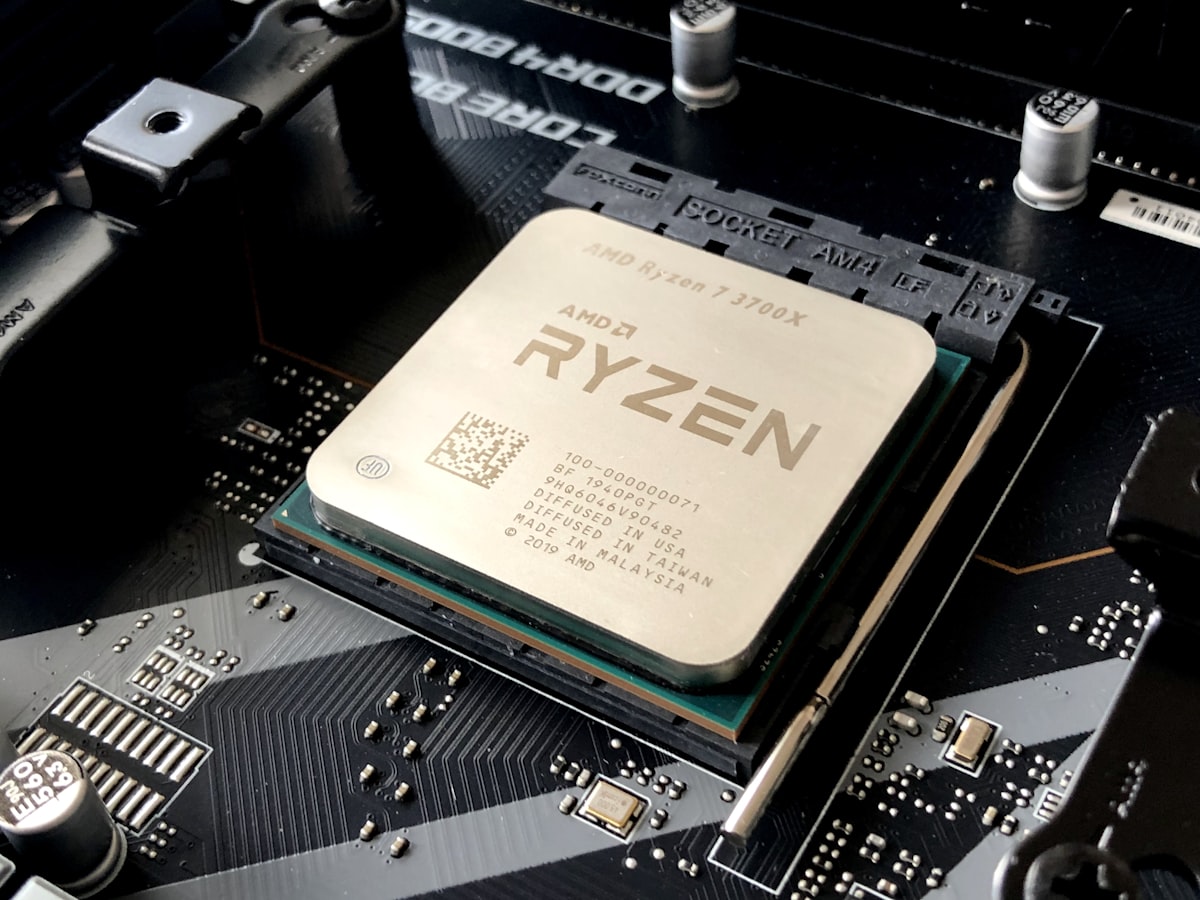
The most consequential announcement of March 11 came from Menlo Park. Meta officially launched the MTIA 300 - its custom AI training and inference accelerator - and in doing so, announced something larger than a chip. Meta announced that it no longer intends to be dependent on Nvidia.
The MTIA 300 is the first in a named family. The 400, 450, and 500 are already on the roadmap. This is not a one-off engineering experiment or a research prototype. This is a silicon strategy - the same kind of multi-generation commitment that Apple made with the M-series, Google made with the TPU, and Amazon made with Trainium and Inferentia. Meta is now playing that same game.
Why does this matter? Because Nvidia's market position in AI compute has been built largely on the inability of large technology companies to build competitive alternatives fast enough. That window is closing. Apple already runs its own chips in every device and has extended that architecture into its data centers. Google has been training its frontier models on TPUs for years. Amazon's Trainium 2 chips have been powering AWS workloads at scale. Now Meta - the company running more AI inference than almost anyone else on Earth, across billions of recommendation systems, content filters, translation pipelines, and now its own large language models - is bringing that capability in-house.
The MTIA 300's specific performance numbers were not publicly disclosed at launch, which is itself informative. Meta is not positioning this chip against Nvidia's H100 or H200 in a benchmark war. They are positioning it for their own workloads - optimized for the specific inference patterns that Meta's systems require. That kind of purpose-built silicon almost always outperforms general-purpose compute for the workloads it was designed for. It is also significantly cheaper to run once amortized, because Meta owns it.
"We are building AI infrastructure that lets us move faster and operate more efficiently at our scale. Custom silicon is a core part of that strategy." - Meta Engineering, MTIA 300 launch statement, March 11, 2026
The broader implication: as more hyperscalers build their own chips, Nvidia's total addressable market contracts. Not because Nvidia is failing - their hardware remains the gold standard for frontier model training - but because the largest buyers are becoming smaller customers. The MTIA 300 is a single chip. But it represents a structural shift in the economics of AI compute that will compound across the 400, 450, 500, and whatever comes after that.
Watch this chip family the way you would watch a startup that just shipped its first product. The first version is never the important one. The third or fourth version - built with lessons from real-world deployment - is where the capability gap closes.
Magic Layers: The Surgical Edit That Changes AI Content Creation
The second launch of the day was quieter but carries implications that will show up faster in people's daily workflows. Magic Layers is a new AI tool that solves one of the most persistent frustrations in AI image generation: the inability to change one specific element of a generated image without regenerating the entire thing.
Until now, if you generated an AI image and wanted to change the color of a jacket, or swap a background, or replace a face while keeping everything else identical, you had two options. You could use inpainting - masking a region and letting the model refill it, which often produces inconsistencies in lighting, style, and composition. Or you could re-prompt and hope the new generation happened to match the one you wanted to change. Neither approach is reliable at a professional level.
Magic Layers introduces a layer-based editing paradigm to AI-generated content. Each element of an image - background, foreground subject, specific objects, lighting conditions - can be addressed independently. You are not patching over a pixel region. You are editing a semantic layer that understands what it contains and how it relates to the rest of the image.
The practical applications are immediate. Advertising and commercial photography workflows that currently use AI for concept generation but require manual compositing will now have a faster pipeline. Character consistency across scenes - the nightmare of anyone using AI for illustration or narrative content - becomes addressable without multi-step workarounds. Game asset creation, product visualization, architectural rendering: all of these workflows just got a cleaner tool.
More broadly, Magic Layers represents the maturation of AI image generation from a "generate and hope" process to a proper creative tool with predictable, controllable output. That shift - from stochastic output to deterministic editing - is what professional adoption actually requires. The models have been powerful enough for a while. The control layer was missing. March 11 is the day it started arriving.
Intel vs Intel: The Benchmark War Nobody Expected
Intel's announcement on March 11 was simultaneously impressive and absurd in the most useful way. The company published benchmark results claiming its new chips finally beat its own older-generation chips in performance.
Read that sentence again slowly.
For a period that stretched longer than it should have, Intel was shipping new processors that were not meaningfully faster than what came before them. The company that defined Moore's Law lived through a painful chapter where Moore's Law appeared to have abandoned it specifically. AMD's Ryzen architecture ate into Intel's market share. Apple's M-series chips demolished the performance-per-watt benchmarks that Intel had held for decades. Nvidia made Intel's data center compute business look like a historical footnote.
Intel's March 11 benchmarks are not a full comeback story. Claiming you beat your own previous generation is a low bar, and Intel's communications team knows it. But the significance is directional: the architectural decay has stopped, the execution has resumed, and the gap between Intel's promise and Intel's delivery is closing. In a competitive landscape where Intel's relevance in AI compute and high-performance client silicon is genuinely at stake, "we are back on track" is not a small statement. It is an existential one.
Intel has been here before - promising recoveries that stalled. The market will require several quarters of consistent delivery before the benchmark claim translates into market credibility. But the announcement exists, the numbers are public, and the direction has changed. That matters.
Bitwig Studio 6: The Musician's Machine Gets Smarter

Bitwig Studio 6 launched officially on March 11. For the minority of people who make music with software, this is a significant release. For everyone else, it is a useful window into how professional creative tools are evolving across the board.
The two headline features are automation clips and key signature locking. Automation clips are not new in concept - most digital audio workstations have supported automation for years - but Bitwig's implementation treats automation as a first-class compositional element rather than an afterthought attached to a track. Automation patterns can be created, reused, modified, and arranged the same way audio and MIDI clips are. That makes complex, dynamic mixes - where dozens of parameters are evolving simultaneously over time - far easier to build and iterate on.
Key signature locking is the kind of feature that sounds boring until you understand what it prevents. In a software environment without it, transposing a section, changing a chord progression, or moving a melody to a different key requires manually adjusting every note that plays outside your target scale. With key signature locking, the software understands the harmonic context and adjusts intelligently. Accidentals that would create dissonance get corrected automatically. Musical structure is preserved even when the key changes.
Combined, these features represent something that creative software across all domains is moving toward: a system that understands the semantics of the work being created, not just its surface data. Bitwig Studio 6 does not generate music for you - it has no AI composition features in the current release. But it reduces the mechanical friction between musical intention and musical execution. That is what every professional creative tool should be doing, and increasingly they are.
The music production software market is small compared to enterprise software, but its trajectory mirrors what is happening in video editing, graphic design, architecture, and game development. The tools are getting smarter about context. They are starting to understand what you are trying to do, not just what you are literally doing with your mouse.
Microsoft's Xbox Pivot: Build for PC First, Console Second
At GDC on March 11, Microsoft made a declaration that reframes the Xbox business entirely. The message was direct: the future of Xbox is PC-first, cross-platform, and not locked to any specific hardware. Build for Xbox on PC. Build for everyone. The console is the optional add-on, not the anchor.
This is a strategic repositioning that has been building for years but has never been stated this bluntly. Xbox Game Pass, the streaming-first approach, the acquisition of major game studios, the consistent messaging that "Xbox is a service not a box" - all of it was pointing here. March 11 is the day Microsoft said it out loud at one of the industry's largest developer conferences.
The signal that hardened this declaration into something concrete: Project Helix. Microsoft is teasing new hardware under that name, and the surrounding language suggests a device that blurs the line between handheld gaming PC and console. The framing of "build for Xbox on PC" makes more sense in that context. If your next piece of hardware runs Windows and plays PC games natively, then developers who target PC are already targeting your platform. You have eliminated the porting tax and the platform fragmentation problem simultaneously.
For game developers, this is unambiguously good news. Building once for PC and having that game run on Xbox hardware without significant additional work reduces cost and risk. For Sony, it is a signal that Microsoft is done competing on traditional console terms. The PlayStation ecosystem is built around exclusive hardware and exclusive software. Microsoft is dismantling the premise that those exclusivities are what consumers actually want.
Whether Project Helix materializes as announced, ships on time, and performs as described - all of that is unknown. But the strategic direction is clear and it was articulated in public on March 11, 2026. The Xbox as a dedicated gaming console is phasing out. The Xbox as a PC gaming platform that happens to also have consumer hardware is phasing in.
Nvidia CloudXR 6.0: Vision Pro Finally Has a Reason
Apple Vision Pro launched in February 2024 as the most technically impressive piece of consumer hardware anyone had shipped in years - and immediately ran into the problem of not having anything compelling to do with it. The killer app question was never answered. Enterprise use cases were demonstrated. Productivity workflows were pitched. But the device that Apple's marketing positioned as the future of computing was being used, by most of its owners, as an extremely expensive way to watch movies on a virtual big screen.
Nvidia CloudXR 6.0, announced on March 11, changes the calculus. The platform enables streaming of high-end PC games from the cloud directly to the Vision Pro. Full PC gaming - titles running on data center hardware that the Vision Pro's own processor could never handle - streamed to the headset with low latency and rendered in the Vision Pro's extraordinarily high-resolution displays.
This is the first genuinely compelling gaming use case for the Vision Pro, and it matters for several reasons. Gaming is the most demanding real-time interactive application category. If CloudXR 6.0 delivers acceptable latency for gaming - the strictest test case - it will work perfectly for everything below that bar. The Vision Pro goes from being a productivity and media device to being a platform for the full range of PC software, including the most technically demanding games in existence.
"With CloudXR 6.0, any game in your PC library is now a Vision Pro game. The compute happens in the cloud. The experience happens on your face." - Nvidia CloudXR product team, launch documentation, March 11, 2026
The secondary effect is what happens to the Vision Pro's market position. A $3,500 device that can stream any PC game from the cloud is a premium gaming headset that also does everything else a Vision Pro does. That is a different product from the one that launched 24 months ago. Not because the hardware changed. Because the software layer finally arrived.
There is still the question of latency. Cloud gaming has improved dramatically but it remains sensitive to network conditions in ways local rendering is not. The premium Vision Pro audience - which skews toward high-income, likely high-bandwidth users - is the population best positioned to handle this limitation. Nvidia CloudXR 6.0 is not for everyone. But it is for exactly the people who already own a Vision Pro and have been waiting for something to justify the purchase.
Google Gemini in Chrome: The Browser Learns Three More Languages
The quietest launch of the day was also the widest in reach. Google expanded Gemini integration inside Chrome to Canada, New Zealand, and India on March 11, with support for more than 50 languages. The expansion took Gemini from an English-dominant browser assistant to something approaching a global tool in a single update.
The significance here is not technical novelty - the Gemini Chrome integration has been live in the United States and the United Kingdom for months. The significance is the distribution. India alone represents hundreds of millions of Chrome users. Adding 50+ language support - which for India includes Hindi, Bengali, Tamil, Telugu, Marathi, and dozens of others - means the AI assistant built into the world's most widely used browser is now accessible to populations that have historically been underserved by English-first AI products.
This is not a minor update. Accessibility in AI is not just about disability accommodations - it is about whether the technology works for the vast majority of the human species that does not communicate primarily in English. When Google ships Gemini to India with native language support, they are not expanding a product. They are changing who has access to AI-assisted browsing, search, and information synthesis.
The competitive dimension: Microsoft's Copilot has been integrated into Edge with similar ambitions. The browser AI race is now a language coverage race, and March 11 is the day Google made a major move on that front. New Zealand and Canada were addons to the announcement. India was the story.
March 11, 2026 - Full Invention Log
Meta MTIA 300
Meta's custom AI accelerator chip. First in a four-generation family. Meta joins Apple, Google, and Amazon in owning its own silicon stack. Direct challenge to Nvidia's hyperscaler dominance.
Magic Layers
Layer-based surgical editing for AI-generated images. Change specific elements without regenerating. Moves AI image generation from stochastic to deterministic for professionals.
Intel New Chip Benchmarks
Intel announces performance benchmarks that beat its own prior-generation hardware. Recovery signal after years of execution struggles. Direction has changed - delivery pending verification.
Bitwig Studio 6
Music production DAW adds automation clips and key signature locking. Treats creative intent as first-class data. Professional workflow upgrade for electronic music production.
Microsoft Xbox PC-First Declaration
At GDC, Microsoft announces cross-platform PC-first as the Xbox future. Project Helix hardware teased. Console era transitioning to PC gaming platform era.
Nvidia CloudXR 6.0 for Vision Pro
PC game streaming to Apple Vision Pro via Nvidia's cloud. First compelling gaming use case for the Vision Pro. Turns a $3,500 productivity device into a premium PC gaming headset.
Google Gemini Chrome Expansion
Gemini in Chrome expands to Canada, New Zealand, and India with 50+ language support. India's hundreds of millions of Chrome users now have native-language AI browser access.
The Acceleration Pattern: Why Every Day Looks Like This

The question worth asking is not "why did so much happen on March 11?" The question is "why does so much happen every day, and why does it feel like nothing is happening?"
The answer has two parts.
The first part is structural. The number of people working on technology globally has never been higher. The tools for building technology - cloud compute, open source frameworks, AI coding assistants, global hiring pipelines - have never been more powerful or accessible. A team of five people today can build what required 500 people twenty years ago. That compression of production cost means more teams are building, more products are shipping, more launches are happening per day than at any previous point in history.
The second part is attentional. Human attention capacity has not scaled with the invention rate. The information surface we are expected to monitor - social media, news feeds, product launches, research publications, regulatory filings, earnings calls - has expanded by orders of magnitude since 2010. The result is a systematic undercount of what is actually happening. We notice the launches that break through the noise - the ChatGPT moments, the iPhone announcements, the rare events that achieve escape velocity. We miss everything else.
But "everything else" is where most of the compounding actually happens. The Meta MTIA 300 will not be the headline when Meta's AI products leapfrog the competition in 2028 because of proprietary silicon efficiency. That headline will cite capability and speed and market share. The chip announcement that enabled it will be a footnote - the footnote that was the actual cause.
This is the pattern of accelerating invention: the causes are invisible, distributed, and continuous. The effects are visible, concentrated, and sudden. We see the effects. We mistake them for the story. The story is the daily churn of causes that nobody covered.
What the Invention Rate Means for the Next Decade
Zoom out from March 11 and the picture becomes more disorienting. The technologies announced on a single Tuesday in 2026 represent compounding investments in silicon, software, AI distribution, spatial computing, and creative tooling. Each of these trajectories will interact with the others in ways that are not predictable from any individual announcement.
Meta's custom silicon reduces its dependence on external AI compute supply chains. As that chip family matures through the 400, 450, and 500 generations, Meta gains the ability to run increasingly capable AI models at increasingly lower marginal cost. That cost curve improvement will show up in its products - more capable AI features, lower latency responses, more aggressive model updates - long before anyone outside Meta understands why the quality gap with competitors is widening.
Nvidia CloudXR 6.0 and the Vision Pro convergence opens a market that has been dormant since the headset launched. If high-end spatial gaming becomes viable through cloud streaming, it changes the economics of both headset hardware and cloud gaming infrastructure. Successful spatial gaming creates demand for better cloud streaming, which improves the technology for non-gaming spatial applications, which expands the Vision Pro use case, which drives more headset sales, which creates a larger installed base for future spatial applications. The feedback loop starts from a Tuesday announcement that most people processed as a niche gaming story.
Google's Gemini expansion to 50+ languages in India is not just a distribution story. It is the beginning of AI-assisted information access for populations that have historically had to navigate the internet through language that was not their own. The quality of search results, the utility of browser AI, the ability to ask complex questions and receive nuanced answers - all of this improves significantly when the AI understands your first language. The long-term effects of that expansion on education, commerce, healthcare access, and civic participation in India alone are too large to forecast with confidence. But they are real, and they started March 11.
The timeline of invention does not wait for comprehension. The world does not pause to let you catch up before shipping the next thing. This is not a new feature of modernity - the textile mills of the 18th century did not wait for economists to understand what they were doing to employment before building more of them - but the speed at which the current cycle is turning is without historical precedent.
Every Tuesday produces a new crop of causes. The effects arrive later, concentrated and visible and attributed to the wrong moment. The analyst who understood what March 11 was building toward will look prescient. The journalist who covered only the effects will have missed the story entirely.
-
2020Apple launches M1 chip - first major hyperscaler to bring CPU/GPU design fully in-house. Custom silicon strategy proved.
-
2022Google's TPUv4 pods deployed. Amazon Trainium enters production. The pattern of hyperscaler silicon independence becomes undeniable.
-
2023AI product launches accelerate to weekly cycles. ChatGPT, Claude, Gemini, Midjourney, Stable Diffusion - the consumer AI layer ships in a continuous stream.
-
2024Apple Vision Pro launches. No killer app. AI coding tools reach professional-grade quality. Cloud gaming infrastructure matures.
-
2025AI agents begin operating autonomously at scale. Browser AI integration becomes standard. Spatial computing waits for software layer.
-
March 11, 2026Meta launches MTIA 300. Nvidia ships CloudXR 6.0 for Vision Pro. Magic Layers ships. Bitwig 6 releases. Intel benchmarks recover. Microsoft redefines Xbox. Google expands Gemini to India. A Tuesday.
Paying Attention at Invention Speed
The practical question is not whether the acceleration is real - it is. The question is what to do with that knowledge.
The answer is not to try to track everything. That is impossible, and the attempt produces the anxiety of incompleteness rather than the clarity of understanding. The answer is to understand the trajectories and use individual launches as signal about where those trajectories are heading.
Meta building its own chips is not a chip story. It is a story about the long-term competitive dynamics of AI infrastructure, and which companies will have structural cost advantages in the AI product market five years from now. Track that trajectory, not the benchmark sheet.
Nvidia CloudXR 6.0 for Vision Pro is not a gaming story. It is a story about whether spatial computing will find its mass-market application through gaming - the path VR has tried to walk for a decade - or whether it will remain a premium productivity device for a small professional market. Track the trajectory.
Google expanding Gemini to India is not a product update. It is a story about whether AI becomes a genuinely global tool or whether it remains a technology primarily serving English-speaking, high-income, Western populations. Track the trajectory.
On March 11, 2026, seven trajectories moved. Most people did not notice. BLACKWIRE did.
Tomorrow, more trajectories will move. And the day after. And the day after that. The world is not waiting. It never was. It is inventing, continuously, at a speed that has no historical comparison, building a future that will feel sudden when it arrives and was actually continuous the whole time.
The only question is whether you were watching.
Get BLACKWIRE reports first.
Breaking news, investigations, and analysis - straight to your phone.
Join @blackwirenews on Telegram