DART Moved an Asteroid Around the Sun. Now Comes the Hard Part.
A new study confirms humanity's first kinetic impactor test didn't just nudge a space rock - it shifted an entire binary asteroid's path around the Sun. The physics worked. But building a real planetary defense network requires finding threats before they find us, and that half of the equation is in serious trouble.
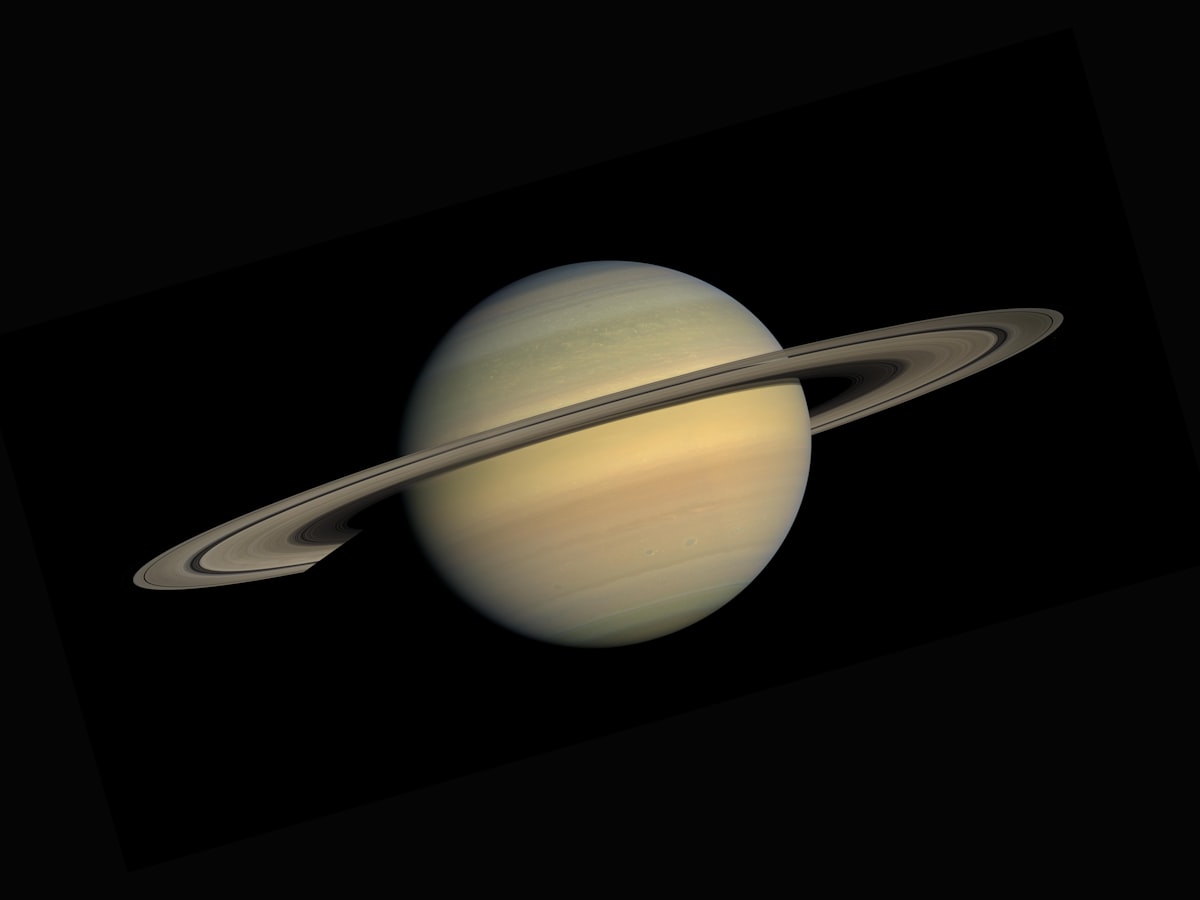
NASA's DART impact on Dimorphos in September 2022 created the first measurable human-caused change to a celestial body's orbit around the Sun. Photo: Unsplash
The headline number sounds almost comically small: 0.15 seconds. That's how much the DART spacecraft changed the orbital period of the Didymos-Dimorphos binary asteroid system around the Sun. Eleven point seven microns per second of speed change. One point seven inches per hour.
And yet that is the most important measurement in the history of planetary science.
A study published Friday in the journal Science Advances confirms that when NASA's DART spacecraft slammed into the asteroid moonlet Dimorphos at 14,000 miles per hour on September 26, 2022, the ripple effects went further than anyone initially calculated. The impact didn't just alter Dimorphos' path around its companion asteroid Didymos - it shifted both bodies' combined orbit around the Sun. For the first time in recorded history, a human-made object measurably altered the trajectory of a celestial body relative to our star.
The scientists who measured this are not being modest about what it means.
"This is a tiny change to the orbit, but given enough time, even a tiny change can grow to a significant deflection. The team's amazingly precise measurement again validates kinetic impact as a technique for defending Earth against asteroid hazards." - Thomas Statler, lead scientist for solar system small bodies, NASA Headquarters
The physics works. But physics is the easy part. What comes next - building the infrastructure to actually use that physics when it counts - is where the story gets complicated, and where the threats to success are not astronomical. They come from budget offices on Earth.
What DART Actually Did (And Why It's Bigger Than You Think)
Measuring changes in asteroid orbit required tracking stellar occultations - moments when Didymos passed in front of distant stars. Photo: Unsplash
To understand why a 0.15-second change matters, you need to understand how asteroid deflection works over time. A tiny velocity change applied years or decades before an impact date compounds through orbital mechanics. The asteroid goes slightly off course. Over time, that slight deviation becomes a miss. The Earth is safe. This is the entire premise of kinetic impactor deflection - hit it early, hit it hard, and time does the rest.
The previous DART results, published in 2022 and 2023, showed that the impact shortened Dimorphos' orbital period around Didymos by 33 minutes - a massive success. Researchers expected some change but got far more than their models predicted, because the impact blasted a huge cloud of rocky debris into space. That debris carried its own momentum away from Dimorphos, amplifying the effect. Scientists call this the momentum enhancement factor, and DART's came in at approximately 2x - meaning the debris cloud doubled the deflection punch.
The new study goes further. By tracking Didymos itself - not just Dimorphos - the team measured how the debris loss from the entire binary system affected its orbit around the Sun. The answer: an orbital speed change of 11.7 microns per second, corresponding to a 0.15-second shift in the 770-day solar orbital period.
The measurement required extraordinary precision. The team tracked 22 stellar occultations - moments when Didymos passed in front of distant background stars, causing the starlight to blink out for fractions of a second - between October 2022 and March 2025. Volunteer astronomers around the globe participated, sometimes traveling to remote regions with multiple observation stations miles apart to catch each event. Weather dependency, travel costs, zero guarantees. A global science effort spanning 2.5 years to verify a data point the size of a human hair.
The lead author, Rahil Makadia at the University of Illinois Urbana-Champaign, offered the framing that makes this viscerally real:
"The change in the binary system's orbital speed was about 11.7 microns per second, or 1.7 inches per hour. Over time, such a small change in an asteroid's motion can make the difference between a hazardous object hitting or missing our planet." - Rahil Makadia, lead author, University of Illinois Urbana-Champaign
1.7 inches per hour. Applied a decade before impact. That's the difference between Armageddon and a miss. The math actually works. We actually did it. So why isn't everyone celebrating?
The Kinetic Impactor Theory, Validated and Complicated
Before DART, planetary defense was a field based almost entirely on models. Computer simulations, scaled laboratory experiments, theoretical physics. Astronomers knew the math suggested kinetic impact deflection should work. But the universe doesn't care about what should work. DART provided the first real-world test at operational scale.
The results didn't just confirm the models - they revealed they were underestimating the effect. The momentum enhancement factor of 2x was higher than the pre-mission central estimate. The debris cloud from the impact mattered enormously. What this tells scientists: when designing future deflection missions, the composition and structure of the target asteroid will dramatically affect the outcome.
Dimorphos is what scientists call a "rubble pile" asteroid - a loosely consolidated collection of rocky debris rather than a solid monolithic rock. The new density measurements from the DART study support the theory that Dimorphos itself formed from material shed by a rapidly spinning Didymos and then clumped together under weak gravity. This loose structure is why the debris cloud was so large and why the momentum enhancement was so high.
But not every threatening asteroid will be a rubble pile. Some near-Earth objects are dense, solid rock. Others may be metal-rich. The physical response to a kinetic impactor strike varies significantly across these types. A solid iron-nickel asteroid would produce a very different debris cloud - and a very different momentum enhancement factor - than a rubble pile. This matters enormously for mission planning: the more warning time we have, the more options we have to characterize the target before choosing a deflection strategy.
Asteroid Composition Types and Deflection Implications
- Rubble piles (like Dimorphos): High momentum enhancement, large debris cloud, favorable for kinetic impact
- Monolithic solid rock: Lower ejecta, smaller momentum multiplier, may require multiple impactors
- Metal-rich M-type: Poorest response to kinetic impact, possibly requiring gravity tractor or nuclear option
- Carbonaceous C-type: Soft, absorptive material, medium enhancement, high scientific value targets
- Icy bodies / comets: Volatile-rich, unpredictable ejecta, different deflection physics
The second-order lesson from DART is about binary systems specifically. The mission targeted Dimorphos partly because its orbit around Didymos made deflection measurable without needing to track tiny velocity changes across deep space. But most threatening asteroids are not conveniently binary. Future missions will need to measure effects on a single body against a solar orbital background, which is dramatically harder. The detection and measurement infrastructure required for that challenge does not yet exist at scale.
The NEO Surveyor: The Mission That Needs to Survive the Budget War
NASA's NEO Surveyor space telescope is humanity's next major investment in finding threats before they find us. Its budget timeline has already slipped. Photo: Unsplash
NASA's planetary defense strategy rests on two pillars: detection and deflection. DART just validated the deflection pillar. The detection pillar is represented by a single mission: the Near-Earth Object Surveyor, better known as NEO Surveyor.
NEO Surveyor is a purpose-built space telescope designed to find near-Earth objects that ground-based systems miss - specifically dark asteroids and comets that absorb visible light rather than reflecting it. These objects are essentially invisible to ground-based optical telescopes until they're dangerously close. Infrared detection from space bypasses this blindspot entirely: all asteroids, regardless of color or reflectivity, radiate heat. NEO Surveyor detects that heat.
The mission is managed by NASA's Jet Propulsion Laboratory. It is, according to NASA's own planetary defense planning documents, the critical next step in reaching the congressionally mandated goal of cataloguing 90% of near-Earth objects 140 meters or larger - roughly the size that could destroy a major city and produce regional devastation. Despite being authorized and funded for development, the mission has faced recurring budget pressure. Its planned launch window has shifted multiple times.
Here's the detection gap in concrete terms: current ground-based surveys - primarily funded through NASA's Planetary Defense Coordination Office - have found roughly 40% of near-Earth objects in the 140-meter-plus category. That means roughly 60% of city-killer-class asteroids have not yet been found. Some of those unfound objects are on orbits that spend significant time near the Sun from Earth's perspective, making them nearly impossible to track from the ground. NEO Surveyor, operating in a position that would allow it to observe interior to Earth's orbit, closes that gap.
The question is whether it survives the current federal budget environment to do so.
The Trump administration's broader approach to government spending - channeled through DOGE and other austerity mechanisms - has hit science agencies hard. The Department of Education, USAID, and the National Endowment for the Humanities have already seen dramatic cuts. According to reporting by the New York Times, DOGE used a simple ChatGPT prompt ("Does the following relate at all to DEI?") to determine which NEH grants to cancel, with sweeping and sometimes bizarre results. NASA has not yet faced comparable operational cuts, but the agency's budget request for fiscal year 2026 is under review, and planetary defense programs are not immune to the general pressure.
The irony is operationally brutal: we just proved deflection works, at the exact moment the detection infrastructure funding is uncertain. A kinetic impactor is useless if we find the asteroid six months before impact. It requires years - ideally decades - of lead time to mount an effective mission.
The Detection Window Problem: Time Is the Variable Nobody Controls
Planetary defense professionals have a phrase for the core challenge: the "warning time problem." It captures a dependency that is often missed in popular coverage of asteroid threats.
Lead time determines which options are available. A 30-year warning with a large asteroid gives you multiple options - kinetic impactor, gravity tractor, solar sail, even nuclear standoff detonation for large targets. A 10-year warning narrows the menu. A 2-year warning collapses it to a single high-stakes kinetic impactor mission with minimal margin for error. A 6-month warning means evacuation plans, not deflection missions.
The current survey systems - Catalina Sky Survey, Pan-STARRS, ATLAS, the Spacewatch network - are finding new near-Earth objects at impressive rates. In 2025, ground-based surveys catalogued over 3,400 new NEOs. But these systems have a systematic blindspot: objects on orbits that keep them near the Sun in Earth's sky. The Aten asteroid class, for instance, spends much of its time interior to Earth's orbit, making daytime observations from the ground impossible. Some of these objects could approach Earth with very little advance notice.
A paper published in the journal Icarus in 2024 estimated that approximately 15% of all potentially hazardous objects in the 140-meter-and-above category have orbital geometries that make them detectable only from space-based platforms or from the southern hemisphere during brief windows. Ground-based surveys, no matter how well-funded, cannot close this gap. Only NEO Surveyor - or its international equivalents - can.
Warning Time vs. Available Response Options
- 30+ years: Full range - kinetic impactor, gravity tractor, mission to characterize and deflect
- 10-30 years: Kinetic impactor campaign feasible, time to characterize target first
- 5-10 years: Single-shot kinetic impactor, high uncertainty, no margin for failure
- 2-5 years: Emergency kinetic impactor, evacuation planning begins in parallel
- Under 2 years: Evacuation and disaster planning only - deflection physically impossible
- Under 6 months: Regional or global evacuation depending on size; no technical solution
The ESA Hera mission - Europe's follow-up to DART, designed to study the full aftermath of the impact in detail - is currently in transit to the Didymos system, expected to arrive in late 2026. Hera will measure the crater left by DART, characterize Dimorphos' changed shape and structure, and refine the momentum enhancement models that future deflection missions will rely on. It represents the scientific follow-through that makes DART's proof-of-concept permanently useful rather than a one-time stunt.
But Hera doesn't find new threats. That is NEO Surveyor's job. And NEO Surveyor still doesn't have a confirmed launch date.
The Dual-Use Problem: Planetary Defense Meets Great Power Competition
There's a dimension of planetary defense that rarely surfaces in science journalism: the overlap with military space capabilities, and how geopolitical tensions complicate what should be a purely cooperative international mission.
The kinetic impactor technique validated by DART is, at its core, a spacecraft that precisely navigates to a target and strikes it at high velocity. The technology required to deflect an asteroid is closely related to the technology required to conduct a kinetic strike against a satellite or space asset. This is not a secret. Defense analysts have written about it for years. The implications are uncomfortable but real.
The existing framework for international coordination on planetary defense runs through the United Nations Committee on the Peaceful Uses of Outer Space (COPUOS) and through the International Asteroid Warning Network (IAWN). Both are deliberative bodies that function on consensus and good faith cooperation between spacefaring nations. Both are under significant strain as the U.S.-China space relationship has deteriorated and Russia's participation in international science bodies has been curtailed following its 2022 invasion of Ukraine.
China, meanwhile, is developing its own planetary defense capabilities. The China National Space Administration announced plans for a kinetic impactor test mission targeting near-Earth asteroid 2015 XF261, with a timeline running into the late 2020s. Chinese space scientists have published research on deflection techniques and have participated in IAWN discussions. But the level of operational data-sharing between Chinese and U.S. planetary defense programs is minimal compared to the level of data-sharing between U.S. and European programs.
If a threatening asteroid were discovered tomorrow, the first 90 days of international coordination would involve diplomacy as much as physics. Which country leads the response mission? Who contributes impactors? Who has veto power over mission timing? Who decides what "acceptable deflection margin" means when deflecting an asteroid slightly changes which region of Earth it might impact if the mission fails? These questions have no agreed-upon answers. COPUOS has frameworks but no binding authority. There is no planetary defense treaty.
The DOGE Factor: When Austerity Threatens Existential Infrastructure
The political context around NASA's budget right now is worth taking seriously. The Trump administration's second term has pursued federal spending cuts with genuine aggression, deploying DOGE to slash programs across science, education, and humanitarian agencies. The National Endowment for the Humanities, the Department of Education, and USAID have all faced dramatic operational disruptions.
NASA's core budget has been somewhat insulated compared to softer targets. The agency retains bipartisan political support, and commercial space - SpaceX, Blue Origin, Rocket Lab - keeps the sector visible and economically active. But the specific line items within NASA that fund planetary defense are small enough to be vulnerable in a broad-stroke budget environment. The Planetary Defense Coordination Office operates with an annual budget of approximately $150 million - roughly what a major studio spends on a mid-tier blockbuster. The entire planetary defense enterprise, including survey programs, DART, and NEO Surveyor development, represents a fraction of the agency's $25 billion total budget.
The risk is not that someone at DOGE decides to gut planetary defense as a deliberate policy. The risk is that blunt percentage-cut mandates applied to agency budgets without line-item scrutiny delay NEO Surveyor's launch window by years. Every year NEO Surveyor doesn't launch is another year where the population of undetected threatening asteroids grows only by natural discovery, not by the accelerated survey rates the space telescope would provide.
The community around this issue is not panicking - but it is paying attention. Planetary defense advocates have learned from the history of programs that got cut or delayed: the WISE mission (which performed some asteroid survey work), the proposed NEOCAM predecessor to NEO Surveyor, and multiple Planetary Defense Coordination Office budget requests that were initially submitted higher than what Congress appropriated. The record shows that without sustained advocacy and political attention, even well-justified programs lose ground during budget cycles.
Timeline: From Impact to Paradigm Shift
What Comes After DART: The Next Generation of Planetary Defense

Mission control at Johns Hopkins APL managed DART's final approach. The next generation of planetary defense missions will be faster, smarter, and hopefully launched before they're urgently needed. Photo: Unsplash
The planetary defense community is thinking past DART now. The DART and Hera results - when fully processed - will anchor the next generation of deflection mission design. Several concepts are in various stages of development or study.
The gravity tractor approach would have a spacecraft fly alongside a threatening asteroid for years, using its gravitational pull to slowly alter the asteroid's orbit without any physical contact. It's precise, controllable, and works on virtually any asteroid composition. The downside: it requires enormous lead time and a large spacecraft. A kinetic impactor is faster and more energy-efficient when you have a rubble pile and a decade or more of warning.
For very large asteroids - say, 1 kilometer or above - neither approach may be sufficient alone. A 1-kilometer impactor carries roughly 30,000 times the energy of the Hiroshima bomb. No kinetic impactor mission yet designed would deliver enough energy to meaningfully deflect such an object unless fired years or decades before impact. The academic literature, and even NASA technical documents, acknowledge that for the largest threats, nuclear standoff detonation - not contact detonation, but a nuclear device detonated near the asteroid to ablate surface material and redirect the object - remains the only tool with sufficient energy. This is politically sensitive, involves the Outer Space Treaty, and is barely discussed in public forums. But it's real.
The more near-term frontier is AI-assisted threat characterization. The volume of new NEO discoveries is outpacing human analysis capability. Machine learning systems are being trained to classify asteroid orbital elements, flag close-approach events, and prioritize follow-up observations - essentially triage for space rocks. JPL's Center for Near Earth Object Studies (CNEOS) processes this data, but the tools being developed will increasingly automate what used to require expert astronomer review. This matters because rapid characterization of a newly discovered threatening object - determining its size, composition, and precise trajectory - is the prerequisite for any timely response.
The DART legacy also carries a psychological dimension that the science papers don't capture. Before DART, planetary defense was theoretical. After DART, it is tested technology. That changes how governments, international bodies, and the public perceive the problem. It becomes easier to fund detection when deflection is proven to work. It becomes harder to dismiss the whole enterprise as science fiction. The 0.15 seconds DART carved out of Didymos' solar year is the most valuable 0.15 seconds in the history of spaceflight, because it made the abstract concrete.
Now the question is whether the political will exists to follow the physics where it leads. The detection gap is real, the funding pressure is real, and the consequences of a surprise event - an object discovered on short-warning approach - are severe enough that the question deserves more than footnote-level attention in federal budget documents.
The asteroid is out there. We proved we can move it. We just need to find it first.
Get BLACKWIRE reports first.
Breaking news, investigations, and analysis - straight to your phone.
Join @blackwirenews on Telegram