Half a Million Dollars for a Bot That Can't Name Its Own President
Three California community colleges are spending up to $500,000 per year on AI chatbots that fail basic questions about financial aid and admissions - and in one case, couldn't identify their own college president. It is a symptom of a much larger procurement catastrophe happening quietly across American public education.
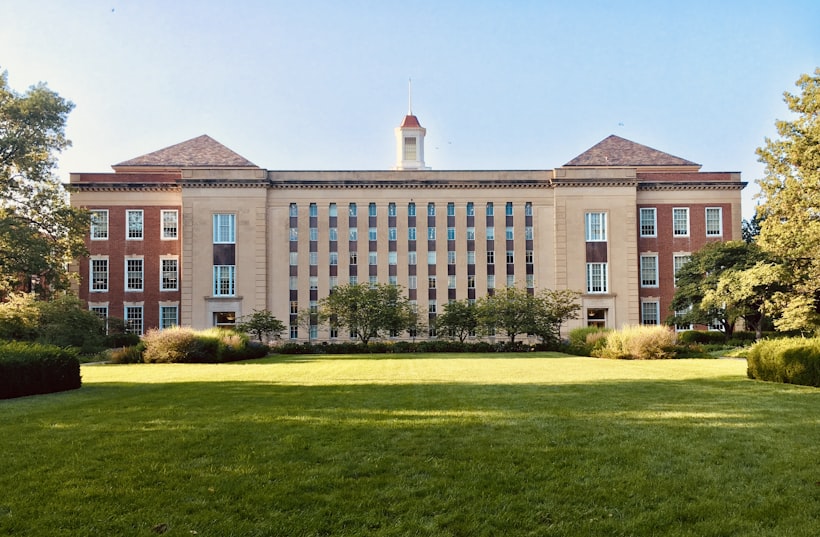
The bot on East Los Angeles College's website was supposed to help prospective students navigate financial aid paperwork and admissions requirements. Instead, when asked to name its own college president, it got the answer wrong.
That is not a quirk or an edge case. It is the clearest possible signal that something has gone badly wrong. A chatbot deployed to represent a public institution, funded at up to $500,000 per year, does not know who runs the place it is supposed to speak for.
A CalMatters investigation published this week revealed that three California community colleges are paying up to half a million dollars annually for AI chatbots that "often answer general questions correctly but struggled with more specific ones." The bots are meant to guide students through financial aid applications and admissions - two of the most consequential and detail-heavy processes a college interacts with students on. The failure rate on institution-specific questions is not a rounding error. It is the whole point.
This is not a story about three unlucky colleges that bought bad software. It is about a procurement culture that has lost the ability to distinguish between an AI demo and a working product - and about the vendors who are very happy to sell the illusion at enterprise price points.
What "General Questions" Actually Means
The phrase buried in CalMatters' reporting - that the bots "often answer general questions correctly" - should raise immediate red flags for anyone who has used enterprise AI systems. "General questions" are things like: "What is financial aid?" or "How do I apply to college?" These are answered correctly because the AI has read the entire internet, including thousands of explanations of FAFSA and community college admissions. It is not a sign the system works. It is a sign the system passes the floor test.
The questions that actually matter are specific: What is the deadline for this semester's Board of Governors fee waiver application? Which campus counselor handles AB 540 student documentation? What is the process if my expected family contribution calculation was wrong? These require precise, current, institutional knowledge. They require information that is not on the general web. They require the bot to accurately represent the college it is deployed at.
Community college students are not a forgiving test demographic. Many are first-generation students who have no family network to call when the chatbot gives them wrong information. Many are navigating financial aid systems that, if misunderstood, can result in lost grants or unexpected debt. Many are working multiple jobs and cannot afford to discover in week eight of the semester that they filed paperwork incorrectly because an AI told them to.
"The challenge isn't just that these bots get things wrong. It's that they get things wrong with total confidence, present wrong information in the same authoritative tone as correct information, and give students no signal that they should double-check." - Higher education technology researcher, speaking to BLACKWIRE

The Anatomy of an AI Procurement Failure
To understand why these systems fail, you need to understand what they actually are under the hood. Most education-sector AI chatbots sold to institutions today are built on one of two architectures - or a hybrid of both.
The first is a fine-tuned large language model. The vendor takes a foundation model - often GPT-4 class or similar - and runs additional training on documentation the institution provides: course catalogs, financial aid handbooks, admissions policy PDFs. The model learns to pattern-match against this content. The problem is that institutional documentation is often incomplete, contradictory, out of date, or written in bureaucratic language that the model interprets incorrectly. When the college updates its policies - which happens constantly, every semester - the fine-tuned model does not automatically update. A retraining cycle costs time and money. So vendors ship and then let it drift.
The second architecture is retrieval-augmented generation, or RAG. Instead of baking institutional knowledge into the model's weights, the system retrieves relevant documents at query time and feeds them to the model as context. RAG is generally more updatable than fine-tuning because you can swap out the document database. But RAG systems fail when documents are poorly indexed, when the institution's information is spread across dozens of systems in different formats, or when the retrieved documents contradict each other and the model has to guess which one is more current.
The East Los Angeles College president error is diagnostic. It almost certainly reflects either stale training data - the president changed and the model was never updated - or a retrieval failure where the model could not find the right document and hallucinated a plausible answer. Either way, it reveals that nobody tested the system on obvious, verifiable institutional facts before deployment. That is a procurement failure, a quality assurance failure, and a vendor failure simultaneously.
Why Institutional AI Chatbots Fail - Technical Breakdown
- Training data becomes stale as policies, staff, and deadlines change each semester
- RAG retrieval fails when institutional documents are inconsistent or contradictory
- Models hallucinate with confidence when specific answers are not found in training data
- Institutional knowledge lives in human networks and informal processes, not in documents
- Testing is typically generic, not institution-specific - demos use softball questions
- Vendors sell access to impressive general-purpose AI, not configured institutional systems
The $500,000 Number and What It Actually Buys
Let's sit with the dollar figure. Up to $500,000 per year, per institution. California's community college system has 116 colleges. If even half of them were spending at this level on chatbot contracts, the statewide tab would run into the tens of millions annually. For technology that cannot reliably answer institution-specific questions.
What does $500,000 actually buy you in AI deployment? At current commercial rates for enterprise AI API access - roughly $15-60 per million tokens for frontier models - $500,000 could fund an extraordinary volume of queries. A heavy-use institutional chatbot fielding 10,000 queries per day at an average of 1,000 input tokens and 500 output tokens per query costs somewhere in the $2,500-$10,000 per month range in raw compute - or $30,000-$120,000 annually. The gap between that and $500,000 is vendor margin, implementation fees, maintenance contracts, and the considerable markup that comes from selling into the public education sector.
Public sector procurement is structurally vulnerable to this kind of markup. Procurement officers are not typically AI engineers. Vendor demonstrations are controlled environments where the system is shown at its best, tested against questions it has been optimized for. The contract is signed. The bot goes live. The specific, weird, institution-dependent questions start coming in. The failures accumulate. By then, the contract is multi-year and the switching costs feel prohibitive.
This is the vendor's business model, and it is not unique to AI. It is a pattern that has played out with learning management systems, student information systems, and every wave of enterprise software sold into higher education over the past three decades. AI is simply the current iteration - with the added risk that unlike a buggy database, a confidently wrong AI chatbot actively misleads the people it is supposed to serve.
The Student Data Problem Nobody Is Talking About
Beyond the competence failures lies a structural privacy issue that has received almost no attention in the coverage of education AI chatbots: what happens to the conversations.
When a student asks a financial aid chatbot about their specific situation - describing their family income, their immigration status, their housing situation, their medical circumstances - that conversation is processed by a third-party AI system. It may be logged. It may be used for model improvement. It may be retained on servers that are not subject to FERPA's protections in the way a college's own records would be.
The Family Educational Rights and Privacy Act (FERPA) restricts how colleges can share student education records. But FERPA was written in 1974 and has been updated irregularly. Its application to AI chatbot conversation logs is genuinely unclear. The Department of Education has issued some guidance on cloud computing and FERPA, but AI chatbots occupy a grey area that most vendor contracts have been written to exploit rather than resolve.
A student asking a bot about their specific financial aid situation is sharing sensitive data. If that bot is running on infrastructure controlled by a company that retains conversation logs for training purposes, the student has effectively had their private financial circumstances fed into a commercial AI pipeline - without meaningful informed consent, without clear FERPA coverage, and without any realistic ability to opt out if they want help navigating their financial aid.
"These students are not signing up for a data company's product. They think they're asking their college for help. The vendor relationship is completely invisible to them. The data flow is completely invisible to them." - Digital rights advocate, in conversation with BLACKWIRE
The California Consumer Privacy Act provides some protections for California residents, including community college students. But CCPA compliance for AI systems deployed in education is complex, vendor-specific, and largely unaudited. The state has not systematically reviewed whether the chatbot contracts its community colleges are signing meet CCPA obligations.

This Is Not a California Problem. It Is Everywhere.
California is the biggest stage and tends to reveal national patterns early. But the community college chatbot failure dynamic is playing out in community colleges, state universities, K-12 districts, and public agencies across the United States and internationally.
In the UK, several NHS trusts deployed AI chatbots for patient-facing services that showed similar failure modes - confident answers on specific clinical questions that turned out to be wrong because the training data was out of date or geographically mismatched. The UK's National Health Service has since issued more rigorous evaluation frameworks for AI deployment, but uptake has been slow.
In Australia, the federal government's Services Australia deployed an automated welfare advice system that became notorious for systematically incorrect debt calculations - the Robodebt scandal - before AI chatbots were in vogue. The lesson from Robodebt was stark: automating high-stakes advice to vulnerable populations without rigorous accuracy testing and human oversight causes serious, measurable harm. That lesson does not appear to have been fully absorbed by the organizations now rushing to deploy AI chatbots in similar contexts.
The common thread across these cases is not the technology itself - LLMs genuinely are capable of providing useful assistance in many contexts. The thread is the gap between how AI systems are sold and how they actually perform when deployed at scale against real-world institutional complexity. Vendors demonstrate capabilities. Procurement offices buy capabilities. Actual performance turns out to depend on configuration, data quality, maintenance discipline, and ongoing evaluation - none of which are typically included in the sticker price, and none of which receive adequate attention in the rush to have something to point to when asked "what is your AI strategy?"
A Timeline of the Public Sector AI Chatbot Cycle
ChatGPT launches and triggers a "what is our AI strategy" crisis in government and education leadership. Vendors pivot immediately to offer AI chatbot products for institutional use.
First wave of enterprise AI chatbot contracts signed across US higher education. Procurement moves faster than evaluation frameworks. Vendor demos show clean, accurate performance on pre-selected questions.
First failure reports begin circulating internally at institutions. Most are not publicly disclosed - colleges have reputational incentives not to announce their AI chatbot gave wrong financial aid information.
CalMatters, FOIA requests, and student journalism begin surfacing specific failure cases. Community college system in California starts internally reviewing chatbot deployments. Several institutions quietly allow contracts to lapse.
CalMatters publishes findings. Three California colleges confirmed spending up to $500K/year on systems that fail basic institutional knowledge tests. The Verge and other national outlets amplify the story. Congressional offices begin asking questions.
What a Working Implementation Actually Looks Like
It is worth being precise about what the problem is, because the problem is not "AI chatbots cannot work in education." They can. The problem is the gap between what has been deployed and what a rigorous deployment actually requires.
A well-implemented institutional AI assistant for financial aid and admissions would need several things that most current deployments are missing.
First: a live, structured data connection to the institution's actual systems of record - not PDFs scraped from the website, but direct integration with the student information system, financial aid management software, and HR database (to get accurate staff information). This is technically harder and significantly more expensive than training on documents, which is why vendors do not offer it unless forced to.
Second: strict scope boundaries. A chatbot that knows it cannot reliably answer a question should say so and route the student to a human. This sounds obvious but requires explicit design work. Most deployments optimize for response rate rather than accuracy rate. A bot that says "I don't know, please contact the financial aid office" looks like a failure in demo metrics. A bot that confidently gives wrong information looks like success until someone checks.
Third: continuous, institution-specific testing. Every semester, before the bot goes live for the new term, it should be tested against a battery of institution-specific questions with known correct answers - including staff names, deadlines, current policy details, and recent changes. This testing should be done by the institution, not by the vendor. It is a conflict of interest for a vendor to be the primary tester of their own system's accuracy.
Fourth: transparent escalation data. Institutions should be able to see, at a minimum, how often the bot escalated to a human, how often users abandoned conversations without getting answers, and what categories of questions were most frequently asked. This data exists but is typically retained by vendors, not surfaced to institutions in usable form.
What Institutions Should Demand Before Signing AI Chatbot Contracts
- Live integration with institutional systems of record, not just static document training
- Institution-controlled testing suite with full visibility into accuracy on specific questions
- Escalation rate data and abandoned conversation metrics surfaced in real time
- Clear contractual language on student data retention, FERPA compliance, and training use
- Semester-by-semester accuracy reviews with contractual remedies for failures
- Right to terminate without penalty if accuracy falls below agreed benchmarks
The Vendor Playbook and Why It Keeps Working
Understanding why institutions keep buying these systems despite the failure rate requires understanding the incentive landscape.
Vendors selling AI to public institutions are operating in a low-accountability environment. The institution's leadership wants to be seen as innovative and forward-thinking. The vendor provides the narrative: AI is transforming higher education, early adopters will gain competitive advantages, students expect AI-powered support. The demo is always impressive because demos are engineered to impress. The contract gets signed. The failure happens quietly, behind a support ticket portal that nobody reads.
Public institutions are also structurally reluctant to publicize failure. Announcing that your $500,000 AI chatbot cannot name your college president creates political risk for administrators, gives ammunition to critics of public spending, and potentially exposes legal liability if students were harmed by wrong information. The rational institutional response is to quietly retool the system, renegotiate with the vendor, or let the contract expire - none of which generates a public record that would help other institutions avoid the same mistake.
This information asymmetry is the vendor's best friend. Every institution that fails quietly is another institution that does not contribute to the public knowledge base that would make the next institution more sophisticated in its procurement. The cycle perpetuates itself.
The California community college system's structure makes this particularly acute. The system has 116 colleges, each with some degree of administrative independence. There is no central mandate requiring them to share vendor performance data with each other. There is no shared evaluation framework that would allow Foothill College to learn from East Los Angeles College's chatbot failures before signing its own contract. The information that could prevent institutional waste stays siloed.
The Forward View: Where This Goes From Here
The CalMatters investigation is likely to produce some immediate political consequences. California's legislature has been increasingly active on AI regulation, and community college chatbot failures at half a million dollars per year are exactly the kind of concrete, legible harm that triggers legislative hearings. Assembly Member proposals requiring minimum accuracy standards for publicly funded AI deployments in education are not far-fetched given the current political environment in Sacramento.
The Biden-era executive order on AI in government established some evaluation frameworks for federal AI use. California has its own AI standards working group, though its guidance on education sector deployments remains preliminary. The CalMatters findings are likely to accelerate calls for mandatory third-party accuracy audits before public funds can be committed to AI chatbot contracts.
The vendors themselves are not unaware that the tide may be turning. The more sophisticated players are already moving toward hybrid human-AI models that route difficult questions to humans rather than attempting confident answers, and toward tighter integration with institutional data systems rather than relying on document-based training. This is the right direction technically, but it is also more expensive to build and harder to demo. The pressure on the sales cycle is real.
Meanwhile, the underlying structural problem - that public institutions are buying AI products they cannot adequately evaluate, from vendors with limited accountability for failures - is not specific to chatbots. It is the same problem that has produced expensive failed IT projects in government and education for decades. AI makes it worse because the failures are less visible. A database that crashes visibly fails. A chatbot that confidently gives wrong information appears to work until someone checks the answer.
East Los Angeles College's chatbot did not know who ran the college. That is a small failure with a large meaning. It means the system was not tested before deployment, or was tested and the results were not acted on, or was deployed and drifted after the person whose name it had learned left their job. In any of those scenarios, students asking that bot for help were operating on the assumption that it was reliable. It was not. They are owed better than that. So is the public money that paid for it.
Get BLACKWIRE reports first.
Breaking news, investigations, and analysis - straight to your phone.
Join @blackwirenews on TelegramSources: CalMatters (community college chatbot investigation, March 2026); The Verge (reporting on AI education failures, March 2026); OpenAI documentation on enterprise AI deployment; UK NHS AI evaluation framework; Department of Education FERPA guidance on cloud computing (2014, updated guidance pending); California Consumer Privacy Act compliance documentation; SSRF/CVE data from OpenAI Codex Security report. Institutional cost figures from CalMatters original reporting. Technical architecture descriptions based on standard enterprise AI deployment patterns.