Fear & Greed at 12: Whales Dumped the Rally While Retail Bought the Bag
Bitcoin touched $74,000 mid-week and is now trading near $68,000. Smart money accumulated during the Iran war panic, then sold 66% of those positions into retail buyers chasing the bounce. The divergence has historically signaled one thing: the correction is not over.
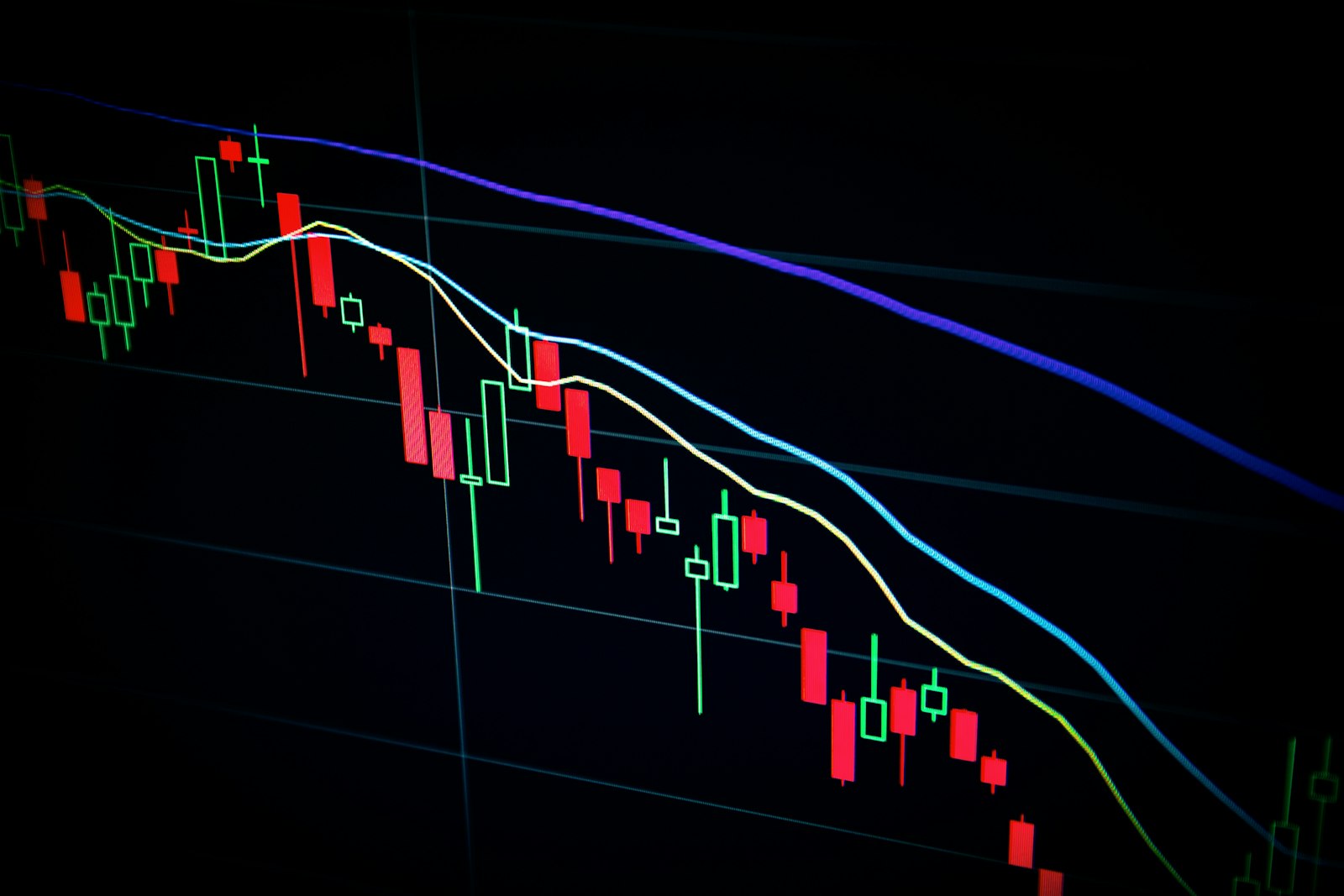
Bitcoin's weekly chart looked bullish until Friday. Then it didn't. (Unsplash)
Market Snapshot - March 8, 2026 (8:30 AM CET)
- BTC Bitcoin $67,158 -3.4% (24h) -$6,842 from weekly high
- ETH Ethereum $1,974 -4.4% (24h)
- SOL Solana $84.31 -4.0% (24h)
- XRP XRP $1.37 -2.2% (24h)
- BNB BNB $627 -2.6% (24h)
- DOGE Dogecoin $0.09 -2.9% (24h)
- Fear & Greed Index Alternative.me 12 - Extreme Fear
- BTC Supply at Loss Glassnode 43% of total supply
- Stablecoin Inflows Messari, 7-day $1.7B (+415% WoW)
The rally looked real for about 72 hours. Bitcoin punched through $74,000 on Thursday, giving every bull the ammunition they needed. Kraken just got Fed account access. Morgan Stanley named BNY Mellon as its Bitcoin ETF custodian. ICE - the NYSE's owner - invested in OKX at a $25 billion valuation. The institutional headlines were stacking up faster than any week in recent memory.
None of it mattered. By Saturday morning, $110 billion had evaporated from Bitcoin's market cap and the asset was trading where it started the week. The Crypto Fear and Greed Index, which tracks sentiment across trading volume, social media, and market momentum, fell to 12 - deep in "extreme fear" territory and one of the lowest readings since October's crash.
The mechanics of what happened tell a sharper story than the headline price. Whales bought the panic. Retail bought the bounce. Whales then sold to retail. That is the entire trade compressed into three sentences, and the data backs every word of it.
The Whale Exit: How Smart Money Played This Week
Between February 23 and March 3, wallets holding between 10 and 10,000 BTC accumulated aggressively. That window, according to on-chain analytics firm Santiment, corresponded directly with the worst of the Iran war sell-off - when Bitcoin was trading between $62,900 and $69,600 and sentiment was at its most panicked.
These are not retail wallets. Addresses in the 10-to-10,000 BTC bracket represent sophisticated holders: family offices, crypto-native funds, OTC desks, and institutional accumulators. They bought while the news was worst. That is what they do.
Then Bitcoin hit $74,000 on Thursday. The same wallets began unwinding. By Saturday morning, those whale-bracket addresses had offloaded approximately 66% of the positions they built during the February-March accumulation window, according to Santiment's weekend note. That is not profit-taking on the margin. That is a near-complete exit from a tactical position.
"When retail buys while whales sell, it typically signals that the correction is not yet over." - Santiment, weekend market note, March 7-8, 2026
While the whale wallets were distributing, wallets holding less than 0.01 BTC - the smallest retail participants - were steadily increasing their positions as Bitcoin slipped back below $70,000 on Friday and through Saturday. This is the textbook setup that precedes further downside in on-chain analysis frameworks. The pattern has appeared before every major leg down in the 2023 and 2025 cycles.
The divergence is not subtle. Large holders accumulated at the bottom, ran the price up, and offloaded to smaller buyers who arrived late chasing the move. The question now is whether the retail buying pressure sustains or exhausts itself - and the fear index at 12 suggests it is already running thin.
The Supply Overhang: 43% of Bitcoin Is Underwater

43% of all Bitcoin supply sits at a loss - creating persistent sell pressure at every resistance level. (Unsplash)
Glassnode's current data adds a structural dimension to the bearish setup. Approximately 43% of Bitcoin's entire circulating supply is now held at an unrealized loss. That is not a sentiment indicator. That is a direct measurement of how many coins are sitting in wallets that last transacted at prices higher than the current market level.
What this creates is persistent sell-side pressure at every resistance level. As Bitcoin recovered from $62,900 toward $74,000, it ran into a wall of supply from holders who had been underwater for weeks or months and were using the bounce to exit at or near their cost basis. This is why the $74,000 level failed so decisively - it was not just a technical resistance; it was a cost-basis cluster for a significant portion of the market.
This dynamic does not resolve quickly. The only ways to clear the overhang are: (1) Bitcoin pushes through resistance with enough volume that underwater holders either capitulate at a loss or become long-term believers and stop selling, or (2) the market drops far enough that the underwater holders who are going to sell have already done so, and the remaining holders are long-term oriented. Option 2 typically involves testing previous cycle lows.
Bitcoin touched $60,000 on February 6 at the worst of the Iran war shock. It touched $74,000 on March 5. It now trades at approximately $68,000. Three weeks of volatility with a net movement close to zero. This is what happens when every bounce is sold by cost-basis seekers and every dip is bought by retail hoping for a new bull run. The range compresses, volume decays, and one side eventually runs out of capital.
Based on the whale behavior this week, the large holders appear to be betting that retail runs out first.
The Macro Hammer: Dollar, Iran, Jobs, and the Fed Trap
Bitcoin's struggles this week cannot be separated from the macro environment, which has become the single most important variable for crypto price action in the post-ETF era.
The U.S. dollar posted its steepest weekly gain in a year through Friday's close. The move was triggered by a combination of elevated oil prices from Middle East disruption, stronger-than-expected inflation signals, and a Federal Reserve that now has even less political room to cut rates. As markets repriced interest rate expectations upward, the dollar strengthened against every major currency and asset class.
The jobs report released Friday made the situation even more complicated. The U.S. economy unexpectedly shed 92,000 jobs in February, with the unemployment rate rising to 4.4%. Under normal circumstances, a deteriorating labor market would be unambiguously dovish - bad jobs data means more pressure on the Fed to cut rates, which is typically bullish for risk assets. But these are not normal circumstances.
The Iran conflict has put oil prices in an upward trajectory. Elevated energy costs feed directly into consumer price indexes. With inflation still running hot from the oil shock, the Fed faces a genuine stagflation scenario: a weakening jobs market that would normally warrant rate cuts combined with inflation pressure that argues against them. In that environment, no rate cut comes, the dollar stays strong, and risk assets stay under pressure regardless of how bad the employment picture gets.
"As tensions escalated in the Middle East last week, investors moved quickly to the safety of the U.S. dollar, which strengthened as markets began pricing in higher energy prices and reignited inflation fears, potentially delaying Federal Reserve rate cuts." - Bjorn Schmidtke, CEO of Aurelion, emailed note to CoinDesk, March 7, 2026
Trump's statement on Friday - "There will be no deal with Iran" - removed any remaining premium markets had assigned to a diplomatic resolution. Oil spiked. Stocks dropped. Bitcoin followed equities down, as it has done consistently since institutional money entered the space and began treating BTC as a tech-adjacent risk asset rather than a macro hedge.
The Strait of Hormuz remains disrupted. That disruption affects roughly 20% of global oil flows. Every day it continues, the stagflation case gets stronger and the rate-cut timeline gets longer. That is the ceiling on any Bitcoin rally until something changes in the Middle East.
Private Credit Contagion: The $3.5 Trillion Time Bomb

BlackRock's $26 billion private credit fund limiting withdrawals is part of a broader contagion story hitting risk assets. (Unsplash)
Underneath the crypto market noise, a separate and potentially more dangerous story is developing in traditional finance. Bloomberg reported Friday that BlackRock's $26 billion private credit fund has begun limiting withdrawals amid rising redemption requests. This follows similar stress at Blue Owl, which sold $1.4 billion in loans last month to meet redemptions and reportedly carries exposure to a collapsed U.K. property lender.
The reaction was immediate. Shares of major asset managers cratered Friday: BlackRock (BLK), Apollo Global Management (APO), Ares Management (ARES), and KKR all slid between 4% and 6%, extending what has been a brutal 2026 for the sector.
The numbers behind private credit are staggering. According to the Alternative Credit Council, the global private credit market reached $3.5 trillion in 2025. U.S. banks alone extended nearly $300 billion in loans to private credit providers and another $285 billion to private equity funds, according to Andreja Cobeljic, head of derivatives trading at Swiss crypto bank AMINA Bank. That is nearly $600 billion in bank exposure to an asset class that is now showing redemption pressure across multiple major platforms.
"In isolation this would be manageable. But emerging in the middle of a broader global deleveraging event, alongside an energy shock and collapsing rate-cut expectations, it is a different conversation. For risk assets, including crypto, a disorderly unwind here would represent a significant second-order shock that current pricing does not reflect." - Andreja Cobeljic, Head of Derivatives Trading, AMINA Bank, March 6, 2026
If redemption pressure forces private credit funds to unwind positions, it could trigger broader deleveraging across asset classes. The mechanism works like this: funds sell liquid assets to meet redemption requests, those liquid asset sales push prices down, margin calls trigger across correlated positions, and the cascade accelerates. Bitcoin, which now trades more like a liquid tech stock than an uncorrelated asset, would not be immune.
The $110 billion Bitcoin market cap wipeout this week already captured some of this risk. The question is whether the private credit stress has peaked or is just beginning to surface.
DeFi's Hidden Private Credit Exposure
The private credit story has a direct on-chain dimension that most crypto market participants have not yet priced in. The tokenized real-world asset (RWA) market now includes approximately $5 billion in on-chain private credit products, according to data from rwa.xyz. These are loans and credit funds packaged as blockchain tokens and issued on public networks - a fraction of the $3.5 trillion traditional market, but growing fast and increasingly used as collateral inside DeFi protocols.
A recent episode demonstrates exactly how this transmission mechanism works. When U.S. auto-parts supplier First Brands Group filed for bankruptcy in 2025, it triggered a markdown at Fasanara Capital's private credit strategy. A tokenized version of that strategy, called mF-ONE, had been issued on the Midas RWA platform. Users had then deposited mF-ONE as collateral on the Morpho lending protocol to borrow other assets.
When Fasanara marked down its exposure after the First Brands bankruptcy, the mF-ONE token's net asset value dropped approximately 2%. That 2% move was enough to push highly leveraged borrowers on Morpho dangerously close to liquidation thresholds and tighten liquidity across the platform. Lenders ultimately avoided losses, but the episode showed exactly how off-chain credit stress can transmit through tokenized products into DeFi markets, according to a report by risk advisory firm Chaos Labs.
"Institutions are entering crypto, but often with products that even degens and DeFi natives don't fully grasp. Real-world credit products can carry complex risks that are not always obvious to crypto investors." - Teddy Pornprinya, Co-founder, Plume Network, March 6, 2026
Now multiply that risk by the stress hitting BlackRock and Blue Owl. If tokenized versions of these or similar private credit products are sitting as collateral inside DeFi protocols, and the underlying funds mark down NAV under redemption pressure, the cascade effect plays out on-chain in real time. DeFi liquidations, collateral price drops, protocol stress - all triggered by a bankruptcy or withdrawal freeze happening in a traditional finance boardroom thousands of miles away.
This is the second-order risk AMINA Bank's Cobeljic warned about. Current crypto pricing does not appear to reflect it.
Timeline: How the Week Unraveled
The One Green Signal: $1.7 Billion in Stablecoin Dry Powder
Not everything in this picture is bearish. Messari recorded a 415% jump in net stablecoin inflows over the past week, with $1.7 billion entering the ecosystem. Daily stablecoin transfers were up nearly 10% week-over-week. That is a significant amount of capital moving onto exchanges and into wallets - and stablecoin inflows typically precede buying activity.
The question is whether that capital deploys at current prices or waits for lower levels. Given that the fear index is at 12 and the dominant market narrative is bearish, the most likely scenario is that much of this capital is waiting. Traders who moved to stablecoins during the sell-off have dry powder, but they are not rushing to buy a bounce that large holders are selling.
If Bitcoin tests support around $60,000-$62,000 and the whale-retail divergence reverses - meaning large holders start accumulating again while the fear index stays elevated - the stablecoin firepower provides the setup for a genuine recovery. The $1.7 billion in inflows represents real capital waiting at the edge of the market. It is not nothing. But timing its deployment is the entire game right now.

Latin America's crypto markets are growing 3x faster than the U.S. - and the use case there is not speculation. (Unsplash)
Meanwhile: Latin America Is Where Adoption Is Actually Growing
While U.S. markets obsess over whether Bitcoin breaks $74,000 or revisits $60,000, a report from Argentine crypto firm Lemon published Saturday shows where real adoption is happening: Latin America, and driven by utility rather than speculation.
The region received over $730 billion in cryptocurrency transaction volume in 2025 - a 60% increase year-over-year, representing roughly 10% of global crypto activity. Monthly active crypto app users in Latin America rose approximately 18% year-over-year, which is roughly three times the growth rate seen in the United States over the same period.
Brazil dominates by transaction size. The country processed $318.8 billion in crypto value, with growth approaching 250% year-over-year, driven primarily by institutional trading and expanding regulatory clarity. Argentina shows a different pattern: despite inflation falling to around 32% in 2025 (from far higher peaks), crypto adoption continued accelerating. Average monthly users were four times higher than during the 2021 bull market - suggesting the adoption is structurally embedded rather than cyclically driven by price action.
The mechanism is stablecoins and cross-border payments. Argentine fintech companies linked crypto rails to Brazil's PIX instant payment system, allowing Argentines to pay Brazilian merchants in pesos while USDT settles the transaction in the background. This produced 5.4 million crypto app downloads in Argentina during 2025, with January 2026 hitting a record.
Peru emerged as one of the fastest-growing markets after regulatory changes in January 2026 allowed Bybit Pay to integrate with digital wallets Yape and Plin. Crypto app users in Peru doubled. Transfers between banks and wallets exceeded 540 million transactions, up 120% year-over-year.
The Latin America story matters for the global crypto narrative precisely because it validates the use case that skeptics have denied for years: that crypto, specifically stablecoins, can solve real financial infrastructure problems at scale. When Argentina's monthly users quadruple during a period when speculation is suppressed by a brutal bear market, it means those users are staying for functionality, not price appreciation. That is the foundation of permanent adoption, and it is happening outside the Western financial media's field of vision.
Two Scenarios From Here
The market's current state resolves through one of two pathways. Understanding which is more likely requires tracking the specific variables that drive each.
Scenario A - Breakout Above $74,000: The underwater supply above $68,000 gets absorbed by new buyers. The $1.7 billion in stablecoin dry powder deploys. Whale wallets return to accumulation mode. A ceasefire or de-escalation in Iran removes the oil-price and dollar-strength headwind. The Fed signals rate cuts are back on the table as jobs continue deteriorating. Under this scenario, Bitcoin breaks $74,000 with conviction, the 43% supply-at-loss figure starts declining, and the path to $80,000 and above opens. This scenario requires multiple variables to align simultaneously.
Scenario B - $60,000 Floor Test: Retail buying exhausts itself in the current $66,000-$70,000 range. Whale accumulation stays absent. Private credit stress accelerates, triggering broader deleveraging. Iran continues escalating, keeping oil elevated and the dollar strong. The Fed stays paralyzed between inflation and unemployment. Under this scenario, the $60,000 low from February 6 gets retested, and the whale behavior this week - selling 66% of their position into the $74,000 bounce - looks prescient. This scenario requires only the continuation of existing trends.
The data as of Sunday morning tilts toward Scenario B. The whale behavior is the most important signal. Large holders built a position during maximum fear, ran the asset up 17% in a week, and then sold most of it back to retail at the top. That is not the behavior of a market getting ready to break out. That is a distribution pattern.
Fear and Greed at 12. Whales distributed. Retail bought the top. 43% of supply underwater. Dollar surging. Iran unresolved. Private credit showing stress that crypto has not priced in. The correction may not be over. The data says be patient and wait for the next accumulation signal from the wallets that actually know when to buy.
Get BLACKWIRE reports first.
Breaking news, investigations, and analysis - straight to your phone.
Join @blackwirenews on Telegram