Bitcoin Holds $67K While the World Melts: Asian Indices Crater, Meltdown Odds Hit 35%, Death Cross Confirmed
Twelve hours into the Monday meltdown: South Korea's KOSPI triggered circuit breakers after plunging 9%. S&P 500 futures sank more than 2%. The VIX spiked to levels not seen since April's tariff shock. Oil held above $100. And Bitcoin - the asset that fell hardest during every major risk-off event since 2020 - is up 1.1%, trading at $67,378. Something is different. Or something is about to break. This is the full damage assessment.
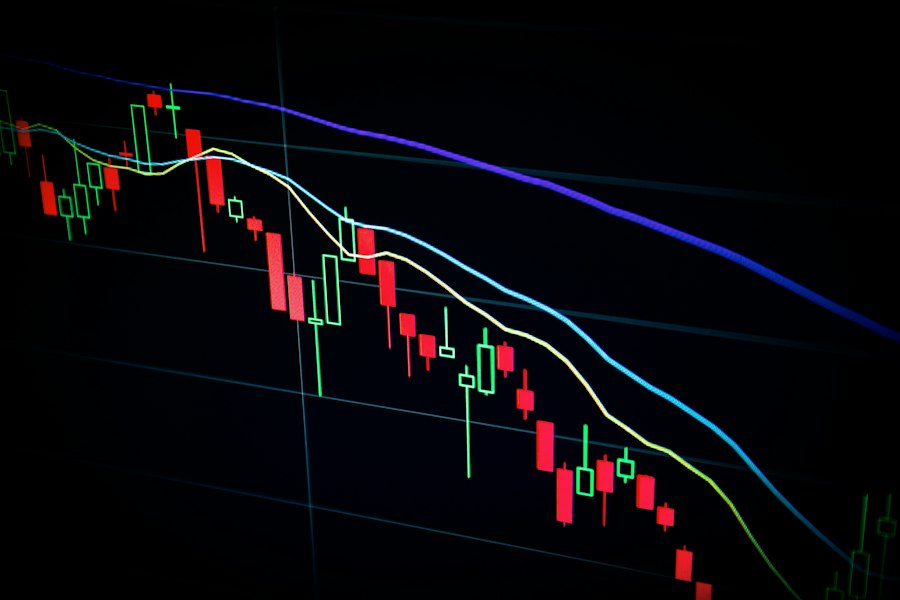
The Scoreboard at Noon: Asia Just Had Its Worst Monday in Years
The damage across Asia-Pacific equity markets on Monday, March 9, 2026 is historic. South Korea's KOSPI index plunged more than 9%, triggering automatic circuit breakers - the kind of emergency mechanism designed to halt trading when electronic selling cascades beyond what humans can manage. It is the latest blow to a market that has still not fully recovered from a record two-day crash earlier in the month, according to CoinDesk.
The immediate trigger is oil. WTI crude broke decisively through $100 per barrel over the weekend as the Iran-Israel-U.S. military conflict expanded into Saudi Arabian territory, threatening Gulf supply infrastructure that handles roughly 12% of global crude output. The move from Sunday's close of $91 to $100+ happened in hours, not days. Energy markets had priced in a geopolitical risk premium for weeks, but the actual expansion of hostilities toward Saudi Arabia was the shock that broke containment.
Asian equity markets absorb oil shocks harder than the U.S. because Asia is net energy-importing. Japan, South Korea, Taiwan - they buy crude in dollars, price their manufactured goods in competitive export markets, and run on tight industrial margins. A 10% oil spike within a week compresses margins immediately. It forces import bill revisions, credit line reviews, and it triggers algorithmic selling of correlated assets.
MSCI's global equity gauge fell 3.7% last week alone - that was before Monday's open. Hedge funds have been systematically increasing short exposure to U.S. equity ETFs throughout the past two weeks, positioning for exactly the kind of risk-off cascade now unfolding. Benchmark 10-year Treasury yields jumped six basis points as traders priced in higher inflation derived from the oil shock, per CoinDesk market data.

Yardeni's 35%: The Number Everyone Is Watching
Ed Yardeni is not a permabear. The veteran Wall Street strategist has spent most of the past three years as one of the more constructive voices on U.S. equity markets, publishing research through Yardeni Research that repeatedly proved too optimistic to critics and too right for short sellers. His opinion carries weight precisely because he is not in the business of scaring people.
On Monday, Yardeni raised his probability estimate for a full U.S. market meltdown this year to 35%, up sharply from 20% just weeks ago. He simultaneously cut his "melt-up" scenario probability to a bare 5%. The math is straightforward: he now sees a 60% probability of a "soft landing" scenario - neither crash nor boom - with the remaining 35% assigned to the downside. That 35% represents a material shift in the assessment of tail risk from one of Wall Street's most-followed strategists.
"The US economy and stock market are stuck between Iran and a hard place. If the oil shock persists, the Fed's dual mandate would be stuck between the increasing risk of higher inflation and rising unemployment." - Ed Yardeni, Yardeni Research, March 9, 2026
The Fed's "dual mandate" problem Yardeni identifies is the core tension in every macro discussion right now. The Federal Reserve is supposed to maintain price stability (inflation near 2%) and maximum employment simultaneously. Those two goals are usually compatible. They stop being compatible when oil spikes 20% in a week: energy inflation feeds directly into CPI, forces the Fed to consider rate hikes, while the simultaneous economic slowdown caused by high energy costs pushes unemployment higher. The result is stagflation - the nightmare scenario where the Fed's tools can address one problem only by making the other worse.
The dollar's move is the other macro signal. The greenback posted its steepest weekly gain in a year - not because U.S. fundamentals improved, but because global capital flees to dollars during geopolitical crises. Dollar strength compresses commodity prices in local currency terms for emerging markets, squeezes dollar-denominated debt across Asia and Latin America, and kills the earnings of U.S. multinationals who report in dollars but earn in local currencies. It is a secondary tightening mechanism the Fed does not control.
Bitcoin's Weird Calm: Divergence or Dead Cat?
Here is the thing that does not compute: Bitcoin is up on the day.
At $67,378 at 5:13 AM UTC Monday, the largest cryptocurrency was up 1.1% over the prior 24 hours. The broader crypto market showed similar resilience. Ethereum rose 2.3% to $1,981, holding just below the critical $2,000 level. BNB gained 1.4% to $624. Dogecoin added 1.8% to $0.09. Solana climbed 1.8% to $83.69. Even XRP, the weakest major on the week, was only flat at $1.35.
This is unusual. Bitcoin has historically not been immune to risk-off dynamics. During COVID's March 2020 crash, Bitcoin fell 50% alongside equities. During the 2022 Fed rate hike cycle, Bitcoin fell from $65,000 to $16,000 as risk appetite evaporated. During every tariff shock, every banking crisis, every geopolitical flare-up since 2020 - Bitcoin has correlated with risk assets and sold off hard during the acute phase of panic.
Monday is different. The explanation from NYDIG's head of research Greg Cipolaro, published Friday, provides a framework. Cipolaro argues that Bitcoin's recent parallel movement with U.S. software stocks reflects "shared exposure to the current macro regime" rather than structural convergence. His key finding: statistically, only about 25% of Bitcoin's price movements are explained by correlation to equities. The other 75% is driven by factors entirely outside traditional stock indices - Bitcoin-specific supply dynamics, on-chain accumulation, miner economics, and crypto-native capital flows.
The implication: Bitcoin can and does decorrelate when its own demand drivers are strong enough to override macro pressure. The question is whether those drivers are currently strong enough to absorb the next leg of selling if U.S. equities open 2% lower and the VIX pushes into the 40s.
Bitcoin analyst Willy Woo offered his read this week. He noted that investor flows have been recovering since mid-February. He expects the asset to consolidate and mount a rally testing resistance in the mid-$80,000 range. The catch: he explicitly labeled that rally as "a deceptive bull trap" and stressed that Bitcoin is still "solidly in the middle of its bear market" based on long-range liquidity indicators, per U.Today.
The Death Cross and the Bear Case: $45,000 Target in 10 Days
Strip away the short-term price action and the technical picture is genuinely alarming for Bitcoin bulls. A death cross has formed on Bitcoin's three-day chart - specifically, the 50-period simple moving average has crossed below the 200-period simple moving average. This is not a noisy indicator. The three-day timeframe filters out much of the intraday volatility and reflects something more structural about medium-term momentum.
Ali Martinez, a widely-followed crypto analyst who publishes on X (@alicharts), has mapped the current Bitcoin setup against three prior cycle equivalents. The pattern is disturbing in its consistency:
2013-2014 cycle: Bitcoin already 72% below peak when death cross appeared in December 2014. Subsequent decline: 52% from that level.
2017-2018 cycle: Bitcoin already 67% below peak when death cross formed. Subsequent decline: approximately 50%.
2021-2022 cycle: Bitcoin was 58% below peak when death cross appeared in May 2022. Subsequent decline: 46%.
Current situation: Bitcoin 46.4% below $126,080 ATH. Death cross confirmed March 2026. Historical precedent suggests further 40-50% decline before cycle bottom forms.
If the historical pattern holds, Bitcoin's cycle bottom would form around October 2026, per Martinez. A 40-50% decline from current $67,000 levels would put the bottom between $33,500 and $40,200 - a range that would wipe out most retail investors who bought during the 2025 bull run and held through the deterioration.
Short-term, analyst Chiefy identified the specific bull trap scenario that concerns him most. Bitcoin's recent surge from roughly $63,000 to $74,050 could represent a classic bull trap where a short-lived rally draws buyers before the market reverses. If bearish momentum intensifies from here, Chiefy expects prices to decline toward $45,000 within the next 10 days, per The Crypto Basic.
Key price levels to monitor: $63,681 (lower Bollinger Band on daily chart, immediate support), $60,000 (near-term psychological support), $50,000 (potential cycle low territory). On the upside, $71,261 is the nearest resistance (upper Bollinger Band), with $80,000 representing the threshold for meaningful bullish recovery.

The Bull Case: Iran Peace Talks, Accumulation Zones, and Willy Woo's Relief Rally
Not everyone is bearish. The bulls have their own framework, and some of it is compelling enough to explain why Bitcoin is holding ground while equity futures tank.
The most immediate catalyst: Trump peace signals. On Sunday, U.S. President Donald Trump indicated that any decision to end the U.S.-Iran war would be made in coordination with Israeli Prime Minister Benjamin Netanyahu. He stated he has been in direct communication with Netanyahu and that the final decision would be made "at the right time" after "considering all relevant factors." Per CoinGape, which cited a Reuters report, Trump specifically said: "I think it's mutual... a little bit. We've been talking. I'll make a decision at the right time, but everything's going to be taken into account."
This is not a ceasefire announcement. But it represents a material change from the posture of unconditional demands that has characterized U.S. rhetoric over the prior weeks. Markets are parsing the signal. If war resolution is plausibly on the table, oil's geopolitical premium starts deflating, and with it, much of the stagflation pressure currently driving equity selling. Bitcoin's 1.1% gain on Monday morning may partly reflect this optionality being priced in.
Bitcoin's trading volume tells a similar story. 24-hour volume reached $37.89 billion - up 53% from prior-day levels - as of the morning's data. That is a sharp increase in participation, consistent with accumulation rather than distribution. When volume spikes on stable or rising prices during a macro crisis, it typically means buyers are absorbing seller pressure rather than running from it.
The technical accumulation argument is equally interesting. Analyst Trader Tardigrade highlights that Bitcoin is currently approaching a historically important level on the monthly chart - the 20-month exponential moving average (EMA). This moving average has acted as a key accumulation zone in each prior Bitcoin cycle. The current pullback places Bitcoin in what the analyst calls "Accumulation Zone 4" - suggesting long-term buyers may be entering at levels comparable to those that preceded prior cycle recoveries, per The Crypto Basic.
Santiment on-chain data (as compiled by multiple analysts this month) shows wallets holding between 10 and 10,000 BTC - the institutional-to-high-net-worth tier - were aggressively accumulating throughout February when prices ranged between $62,900 and $69,600. Smart money bought the bear market. The question is whether they continue to absorb pressure at current levels, or whether Monday's macro shock forces even patient hands to reconsider their positions.
Nigel Farage and the Bitcoin Sovereignty Trade
One story that cuts against the bear narrative at a structural level: Nigel Farage, the British politician who led the Brexit campaign and currently heads the Reform UK party, has taken a 6% stake in Stack BTC, a U.K.-based Bitcoin treasury company, according to CoinDesk.
Stack BTC operates on the MicroStrategy model: it is a publicly-listed vehicle that holds Bitcoin as its primary treasury asset, allowing traditional equity investors to gain Bitcoin exposure without the custody and regulatory friction of holding BTC directly. Farage's 6% stake is not a passive portfolio allocation - it is a political statement about monetary sovereignty, distrust of the Bank of England's quantitative easing programs, and the belief that hard assets outperform paper currency over long time horizons.
The timing is notable. Farage has been openly critical of the U.K. government's fiscal trajectory and the Bank of England's inflation handling since at least 2022. Taking a substantial stake in a Bitcoin treasury company during a moment of maximum macro uncertainty signals conviction rather than opportunism. Whether you agree with Farage's politics or not, major political figures in Western democracies taking public Bitcoin positions is a legitimization event. It expands the audience for the asset class and creates new constituencies in parliaments and regulatory bodies who have personal financial interest in Bitcoin-friendly policy.
The pattern is consistent globally. From the U.S. Strategic Bitcoin Reserve announced by the Trump administration to sovereign wealth fund accumulation reports from the Gulf states, 2025-2026 has seen a parade of institutional and governmental actors add Bitcoin exposure. The bear market has not stopped this trend. If anything, it is accelerating it - lower prices create buying opportunities for entities with long time horizons and zero leverage.
Timeline: 48 Hours That Redrew the Risk Map
Reports emerge that Iran-backed forces have struck Saudi Arabian energy infrastructure near Abqaiq, the world's largest crude oil processing facility. Futures markets begin pricing in supply disruption risk.
WTI crude gaps from $91 to $108 in approximately 90 minutes of electronic trading when Asian markets open. The 19.1% single-session move is among the steepest in recent memory. Bitcoin falls from $69,000 to below $66,000 in sympathy. Global equity index futures turn sharply lower.
KOSPI opens -6% and extends to -9%, triggering circuit breakers. Nikkei and Hang Seng follow with sharp declines. S&P 500 futures fall more than 2% during the Asian session. VIX spikes to highest level since April 2025's tariff shock. Dollar surges - strongest weekly gain in a year.
Bitcoin has recovered to $67,378, up 1.1% on the day, in a striking divergence from equity markets. Ethereum at $1,981 (+2.3%). Ed Yardeni publishes meltdown probability note, raising odds to 35%. CoinDesk covers the divergence.
Trump comments on Iran war resolution in statement reported by Reuters. Bitcoin volume surges 53% to $37.89 billion. BTC holds above $67,000. Nigel Farage's Stack BTC stake reported by CoinDesk. Global crypto market cap recovers to $2.33 trillion.
This article published. U.S. equity open still 1.5 hours away. The real test for Bitcoin's resilience - whether it can hold above $67,000 when U.S. markets open - is about to begin. Key watch: VIX closing level, S&P 500 open print, and any Iran/Saudi news during European trading hours.
What the Fed Does Next: The Impossible Trade-Off
The Federal Reserve meets for its next scheduled policy decision in approximately two weeks. Before Monday's developments, market pricing had coalesced around "no hike, no cut" - a patient hold as the Fed waited for inflation to continue its slow normalization path. That consensus is now under severe pressure.
The oil shock changes the Fed's calculation in two simultaneous directions. Higher energy prices feed directly into CPI and PCE inflation measures within 30-60 days. Gas prices at the pump are visible. Utility bills follow. Airfares spike. Trucking costs rise. The inflation impulse from $100+ oil is not abstract - it is politically combustible in an environment where the Trump administration has made cost-of-living a central political issue.
At the same time, a market meltdown - if Yardeni's 35% scenario materializes - would destroy household wealth, tighten financial conditions, and slow economic activity in ways that historically push the Fed toward cutting rates. The Fed may be forced to choose between fighting inflation and preventing financial crisis. In 2022, it chose inflation. In 2023, it reversed. Markets will be watching every Fed official's statement in the next two weeks for signals about which direction they lean.
For Bitcoin, the Fed path matters enormously. In a rate-cut scenario driven by crisis response, hard assets and risk assets both benefit initially as liquidity floods back into markets. In a rate-hike scenario driven by inflation fighting, both suffer as dollar strength persists and risk appetite collapses. The stagflation case - where the Fed is paralyzed, unable to do either effectively - is arguably worst for equities but has historically been reasonably neutral for Bitcoin, which has its own supply mechanics unrelated to fiat monetary policy.
Current fed funds futures are pricing approximately 45 basis points of cuts by year-end - down from nearly 75 basis points two weeks ago. The dramatic repricing reflects exactly the dilemma Yardeni describes: markets no longer expect clean, uncomplicated rate relief. They expect a complicated Fed navigating between inflation and recession risk, and they have lowered their expectations accordingly.
Outlook: Three Scenarios for the Next 30 Days
The three scenarios that matter from here:
Scenario 1 - Iran Resolution (Bullish, 25% probability): Trump and Netanyahu reach an agreement to de-escalate the Iran conflict. Oil falls back below $90. VIX normalizes. Equity markets recover. Bitcoin rallies toward $80,000 on the relief and the technical setup of long-term accumulation. This is the scenario that Monday's BTC price action is partly pricing in. It requires actual diplomatic progress, not just rhetoric.
Scenario 2 - Stagflation Drift (Neutral-Bearish, 45% probability): Conflict continues but does not dramatically escalate further. Oil stabilizes in the $90-110 range. Equity markets digest the shock and stabilize at lower levels. Fed stays on hold. Bitcoin consolidates in the $63,000-$75,000 range with high volatility. Death cross signals continue to weigh. Resolution comes in Q3 or Q4 when the 20-month EMA acts as a genuine accumulation support.
Scenario 3 - Meltdown (Highly Bearish, 30% probability): U.S. equity markets enter a full bear market decline of 20%+. Oil disruption intensifies. Recession fears spike. Hedge funds unwind crypto positions alongside everything else. Bitcoin tests $50,000 and potentially $45,000 in a capitulation move. Long-term holders buy the bottom aggressively around October 2026 as cycle analysis suggests. Cycle trough forms between $35,000-$45,000.
The current price action - Bitcoin holding $67,000 while equities collapse - does not resolve which scenario unfolds. It simply buys time. The U.S. equity open in approximately 90 minutes from this writing is the first major test. If the S&P 500 opens at -2% and holds, Bitcoin likely continues its consolidation with a slight upward bias. If U.S. markets cascade into a full risk-off breakdown and the VIX pushes past 40, Bitcoin's divergence becomes untenable and the correlation trade reasserts itself violently.
Watch the VIX. Watch oil's close. Watch any Iran/Saudi headlines. The next 6 hours are decisive.
Get BLACKWIRE reports first.
Breaking news, investigations, and analysis - straight to your phone.
Join @blackwirenews on TelegramSources: CoinDesk (March 9, 2026), The Crypto Basic (March 9, 2026), CoinGape (March 9, 2026), U.Today (March 9, 2026), Yardeni Research (March 9, 2026), Reuters (March 9, 2026), NYDIG Research (Greg Cipolaro, March 6, 2026). All price data as of Monday, March 9, 2026, 05:00-12:30 UTC. This article is for informational purposes only and does not constitute financial advice.